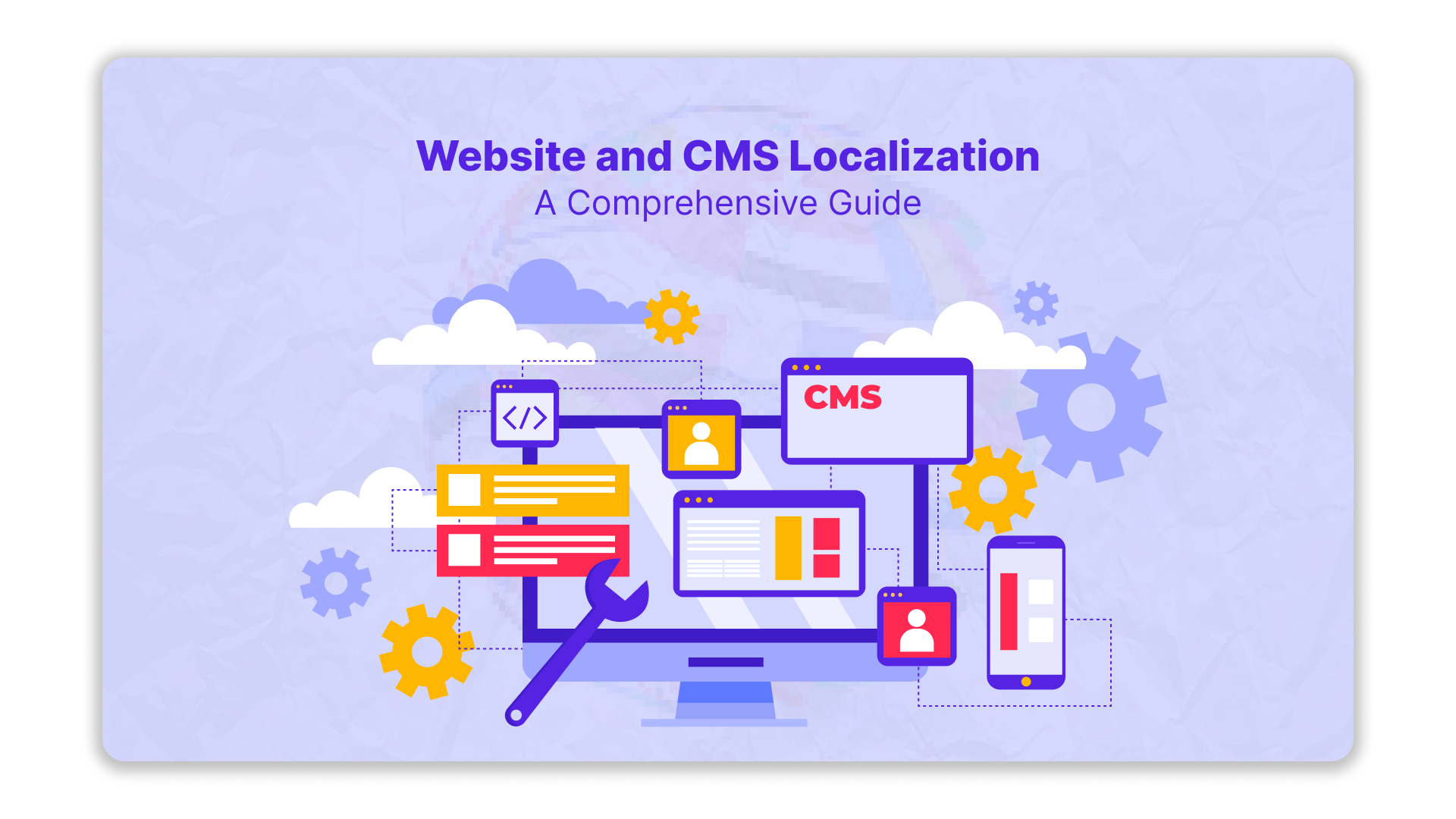
Your business serves customers across different regions and languages. You need a website that speaks to all of them effectively. This requires more than just translating your existing English pages. You need a strategy for website and CMS localisation.
Website localisation adapts your entire site for a specific cultural audience. CMS localisation is the technical process that makes this manageable. Together, they ensure a consistent and engaging multilingual experience. This guide explains both concepts and how they work together.
We will show you how to implement a successful localisation strategy. This is your guide to connecting with a broader audience. You’ll also learn how to simplify the process using appropriate tools, along with the benefits, challenges, and solutions.
Key Takeaways
- Two Distinct Processes: Website localisation adapts customer-facing content and experience, while CMS localisation is the technical backend that makes it manageable.
- Strategic Symbiosis: They are interdependent; the CMS provides the operational framework to execute your website localisation strategy efficiently.
- Beyond Translation: True localisation requires adapting visuals, formats, and cultural nuances, not just text.
- Core Operational Challenge: Maintaining synchronisation across all language versions during frequent content updates is a major hurdle.
- Platform Solution: Integrated platforms like Anuvadak unify the process, automating workflows from content extraction to publishing.
What is Website Localization
Website localisation adapts your entire site for a specific regional or cultural audience. It moves far beyond simple word-for-word translation of your content. This process considers local idioms, cultural references, and social norms.
Your site must feel native and intuitive to the target user. This comprehensive process involves adapting several key elements:
- Visual content: Review and adapt images, graphics, and colour symbolism.
- Functional elements: Adjust date formats, time zones, and currency symbols.
- Legal compliance: Ensure all content meets specific regional regulations.
- Brand messaging: Preserve your brand’s core intent and emotional appeal.
This comprehensive adaptation builds stronger connections with local customers. They will perceive your brand as culturally aware and genuinely invested in their market.
That perception directly builds greater trust and brand loyalty over time. Website localisation makes your global presence feel personal and relevant.
Now, let’s examine the technical foundation that makes this possible: CMS localisation.
What is CMS Localization

CMS localisation adapts your content management system for multilingual use. It is the technical foundation that supports your website localisation strategy. This process enables you to manage content in multiple languages efficiently. Without it, maintaining different language versions becomes a manual burden.
A localised CMS provides your team with several key capabilities:
- Centralised content management: Create, edit, and publish for all markets from one dashboard.
- Version control: The system organises and links all language versions of your content.
- Regional adaptation: It manages local formats for media, dates, and numbers automatically.
- Global content structure: This technical setup provides a scalable framework for expansion.
A localised CMS streamlines your entire multilingual content workflow. It prevents content duplication and ensures version control across all languages. Your marketing team can update all language sites from one central interface. This operational efficiency is crucial for scaling your international presence.
Understanding both concepts reveals how they combine to create an efficient workflow.
How Website and CMS Localization Work Together

Website localisation and CMS localisation form a symbiotic relationship for global expansion. One defines the strategic goal, while the other provides the operational framework. They are interdependent components of a successful multilingual digital presence. Understanding their interaction is crucial for efficient and scalable implementation.
Their collaboration creates a seamless workflow for global content management:
1. Strategic Direction and Operational Execution
Website localisation sets the strategic vision for engaging each target audience. It determines what content needs adaptation and how it should resonate culturally. CMS localisation then provides the practical tools to execute this vision efficiently. This ensures your strategic goals are technically achievable and manageable.
2. Content Creation and Workflow Management
Your CMS becomes the central hub for all multilingual content activities. It structures the workflow from initial translation to final publication and updates. The system maintains consistency across languages through shared glossaries and style guides. This eliminates the chaos of managing separate files and versions for each market.
3. Quality Assurance and Brand Consistency
The CMS provides the environment for reviewing and approving localised content. It allows your team to preview pages in different languages before they go live. This controlled process ensures every version meets your quality and brand standards. The result is a consistent and professional brand experience worldwide.
4. Scalability and Continuous Improvement
A localised CMS makes expanding to new markets a systematic process, not a project. It allows you to add new languages without rebuilding your entire content architecture. The system also provides insights into the performance of each language version. This data helps you refine your website localisation strategy over time.
This synergy delivers significant and distinct advantages for your business.
Need to simplify your CMS localisation? Anuvadak integrates directly with your CMS for seamless management. Talk to our team to see the integration in action.
The Benefits of Localizing Your Website and CMS

Investing in website and CMS localisation delivers distinct yet complementary business advantages. Website localisation drives external market growth and customer engagement directly. CMS localisation provides the internal operational efficiency to sustain that growth. Together, they create a powerful engine for scalable international expansion.
The benefits of website localisation focus on your market presence:
1. Increase Global Market Share and Revenue
A localised website directly addresses new, untapped customer segments. Customers are more likely to purchase from sites in their native language. This significantly improves conversion rates and average order values. It provides a clear return on investment through expanded sales.
2. Build Stronger Customer Relationships
Localised content shows respect for your customers’ culture and language. This builds deeper trust and emotional connection with your brand. These relationships lead to higher customer loyalty and repeat business. They also generate positive word-of-mouth in local markets.
3. Enhance Brand Perception and Authority
A professionally localised site positions your brand as an international player. It demonstrates commitment and serious investment in each local market. This improves your brand’s perceived value and competitive positioning. You become a local authority rather than a foreign entity.
The benefits of CMS localisation focus on your operational efficiency:
1. Streamline Content Management Workflows
A localised CMS centralises all multilingual content in one system. Your team can manage updates for all markets from a single interface. This eliminates the need for separate processes for each language. It significantly reduces the time and effort for content updates.
2. Maintain Brand Consistency Across Markets
The system enforces consistent terminology and style across all languages. It uses shared glossaries and translation memory for uniformity. This prevents brand dilution and messaging confusion in different regions. Your brand voice remains coherent wherever you operate.
3. Reduce Long-Term Operational Costs
Automated workflows decrease reliance on manual processes and external agencies. The reuse of translated content through memory tools cuts translation costs. Efficient processes allow your existing team to manage more markets. This makes scaling your international presence more cost-effective.
To capture these benefits, follow this structured website localisation process.
How to Localize Your Website: A Step-by-Step Process

A structured approach to website localisation ensures quality and maximises your return on investment. This process transforms a complex project into manageable, sequential actions. Following these steps prevents common errors that can undermine your international efforts. It provides a clear roadmap from initial planning to successful launch.
Follow this five-step framework for effective website localisation:
Step 1: Define Your Localisation Strategy
Begin by identifying your target markets and primary business objectives. Analyse which regions offer the best growth potential for your services. Set specific goals for each market, such as increased lead generation. This strategic clarity will guide all your subsequent technical and creative decisions.
Key actions to take:
- Market prioritisation: Select initial markets based on traffic data and opportunity.
- Goal setting: Define measurable targets like conversion rate improvement.
- Content audit: Identify which pages and assets to localise first.
- Budget planning: Allocate resources for translation and technical implementation.
Step 2: Prepare Your Source Content
Review and optimise your English content before beginning translation. Ensure your brand messaging is consistent and clearly defined. Create a comprehensive glossary of key product names and technical terms. This preparation significantly improves translation quality and reduces revision cycles.
Key actions to take:
- Content optimisation: Streamline and clarify your source material.
- Glossary development: Create a list of approved terms and definitions.
- Style guide creation: Document rules for brand voice and tone.
- Asset collection: Gather all images and media needing adaptation.
Step 3: Execute the Translation and Adaptation
This phase involves converting your content for the target market. Work with translators who understand your industry and local culture. Ensure they adapt idioms and references to maintain your message’s intent. The goal is natural-sounding content that resonates with local users.
Key actions to take:
- Translator selection: Choose linguists with relevant industry expertise.
- Cultural adaptation: Review and adjust content for local relevance.
- Visual localisation: Adapt images, colours, and design elements.
- Technical adjustment: Modify formats for dates, currencies, and measurements.
Step 4: Implement Technical Localisation
Configure your website’s technical infrastructure to support multiple languages. Set up appropriate URL structures and implement hreflang tags for SEO. Ensure your site can handle different character sets and text directions. This technical foundation is crucial for user experience and search visibility.
Key actions to take:
- URL structure: Implement subdirectories or subdomains for each language.
- SEO implementation: Add hreflang tags and local meta descriptions.
- Functionality check: Test forms, navigation, and checkout processes.
- Performance verification: Ensure site speed remains optimal across versions.
Step 5: Test, Launch, and Maintain
Conduct comprehensive testing before making your localised site live. Check linguistic accuracy, functional integrity, and design consistency. After launch, monitor performance and gather user feedback regularly. Establish a process for ongoing content updates and maintenance.
Key actions to take:
- Quality assurance: Perform linguistic and functional testing.
- User acceptance testing: Have native speakers review the final site.
- Performance monitoring: Track engagement metrics for each language.
- Update process: Establish a workflow for ongoing content changes.
A localised website requires an equally capable CMS to support it.
How to Localize Your CMS: A Step-by-Step Process

CMS localisation requires careful technical planning and configuration. This process ensures your content management system can handle multiple languages efficiently. Proper implementation creates a solid foundation for all your multilingual activities. It transforms your CMS from a single-language tool into a global content hub.
Follow this structured approach to localise your content management system:
Step 1: Assess Your Current CMS Capabilities
Evaluate your existing CMS’s native multilingual features and limitations. Check if it supports multiple languages without extensive custom development. Identify any plugins or extensions needed for full localisation support. This assessment prevents unexpected technical challenges later in the process.
Key evaluation points:
- Native features: Review built-in multilingual content handling.
- Extension needs: Identify required plugins for translation workflows.
- Technical constraints: Note any system limitations for language support.
- Integration requirements: Check API capabilities for translation tools.
Step 2: Configure Multilingual Content Structure
Set up the architectural framework for managing content in multiple languages. Create language-specific content trees and establish version relationships. Configure how different language versions connect and interact within the system. This structure maintains content organisation across all your markets.
Key configuration actions:
- Content relationships: Establish links between language versions.
- Language trees: Create organised structures for each market.
- URL management: Set up patterns for different language sites.
- Media handling: Configure localised image and file management.
Step 3: Implement Translation Workflow Systems
Integrate translation management tools directly into your content workflow. Set up automated processes for sending content to translators and reviewers. Configure approval systems and publishing controls for different user roles. These workflows ensure efficient and controlled content localisation.
Key workflow elements:
- Automation setup: Create triggers for translation requests.
- Review cycles: Establish approval processes for translated content.
- User permissions: Configure role-based access for team members.
- Notification systems: Set up alerts for workflow milestones.
Step 4: Customise User Interface and Experience
Adapt your CMS interface for users managing multilingual content. Translate administrative menus, buttons, and help text into relevant languages. Configure dashboards to show content status across different markets. This customisation improves efficiency for your content management team.
Key customisation areas:
- Admin translation: Localise interface elements for editors.
- Dashboard setup: Create views for multilingual content status.
- Editor tools: Implement in-context translation features.
- Reporting: Configure analytics for each language version.
Step 5: Test and Optimise System Performance
Verify all CMS functions work correctly across your language configurations. Test content creation, editing, and publishing in each supported language. Check system performance under multilingual content loads and user activity. Ensure the localised CMS meets your team’s practical operational needs.
Key testing activities:
- Function verification: Test all features with multilingual content.
- Performance check: Monitor system speed with multiple languages.
- User training: Ensure team proficiency with new workflows.
- Process refinement: Optimise based on initial user feedback.
Even with a good plan, being aware of common hurdles is crucial.
Common Challenges and How to Solve Them
Even with careful planning, website and CMS localisation present specific operational hurdles. These challenges often impact project timelines, content quality, and team efficiency. Recognising these issues early allows for proactive strategy development. Addressing them effectively ensures your localisation efforts deliver sustainable value.
Here are the most frequent challenges and their practical solutions:
1. Maintaining Content Synchronisation Across Languages
Your primary website content evolves constantly with new pages and updates. Ensuring all language versions reflect these changes simultaneously is operationally complex. Manual processes create information gaps and outdated content in different markets. This inconsistency damages user trust and creates a fragmented brand experience.
How to solve: Implement a centralised translation management system. This platform automatically detects content changes and manages multilingual updates. It ensures all language versions remain current through automated workflow orchestration.
2. Ensuring Technical Compatibility and Performance
Many CMS platforms have limited native multilingual support capabilities. Custom solutions often create technical debt and future maintenance challenges. Additional language versions can impact site speed and hosting resource requirements. These technical constraints can limit your expansion speed and increase costs.
How to solve: Choose a localisation platform with proven CMS integrations. This approach maintains site performance while adding robust multilingual features. It provides the technical foundation without requiring custom development work.
3. Managing Translation Quality at Scale
Maintaining consistent terminology and brand voice becomes harder with more languages. Different translation vendors may interpret your brand guidelines in conflicting ways. Quality assurance processes that work for one language may not scale effectively. This variability can dilute your brand identity across markets.
How to solve: Establish centralised translation memory and terminology databases. These resources ensure consistency across all translators and projects. They also reduce costs by reusing previously approved translations.
4. Controlling Costs and Predicting Budgets
Traditional per-word translation pricing leads to unpredictable expenditure patterns. Costs escalate with frequent content updates and additional market expansion. Managing multiple vendor relationships creates administrative overhead and complexity. Many businesses struggle to demonstrate a clear return on localisation investment.
How to solve: Adopt a platform with transparent, predictable pricing models. This approach consolidates vendors and provides clear budget visibility. It also increases efficiency through automated workflow management.
5. Streamlining Team Workflows and Approvals
Content teams often struggle with disjointed review and approval processes for multiple languages. Status tracking becomes difficult without centralised visibility into all projects. Different teams may establish conflicting processes for various markets. These workflow inefficiencies delay time-to-market and increase frustration.
How to solve: Implement unified workflows with clear task assignments and deadlines. A central dashboard provides complete visibility into all localisation projects. This streamlines collaboration between translators, reviewers, and content publishers.
Tired of managing content synchronisation challenges? Anuvadak ensures all your language versions stay updated automatically. Book a demo to end manual updates.
These challenges highlight the need for a dedicated platform like Anuvadak.
Streamlining The Process With Anuvadak
Manual processes and disconnected systems make website and CMS localisation difficult to scale. You face issues with content synchronisation, inconsistent quality, and unpredictable costs.
These operational challenges can delay your market expansion and reduce return on investment. They often make managing multilingual content seem more complex than it is.
Anuvadak provides a unified platform that simplifies and automates website localization and CMS localisation. It directly addresses these core challenges through intelligent technology and structured workflows.
Our solution integrates seamlessly with your existing content management systems and technology stack. This approach ensures efficiency and brand alignment across all your languages.
Key features include:
- Automated website localisation: Streamline the complete process from content extraction to translation and publishing.
- Comprehensive app localisation: Extend your multilingual strategy to mobile applications with integrated workflows.
- Centralised brand management: Maintain consistent terminology and voice using unified glossaries and style guides.
- Real-time content synchronisation: Keep all language versions updated automatically without manual intervention.
- Advanced analytics dashboard: Monitor performance and engagement metrics for each language version.
Anuvadak transforms the complexity of website and CMS localisation into a manageable business process.
Concusion
Website and CMS localisation are essential for meaningful global engagement. They work together to create authentic multilingual customer experiences. A structured approach ensures both cultural relevance and operational efficiency.
This strategy directly supports your business expansion into new markets. Anuvadak addresses the core challenges of this integrated process. It provides automated workflows for consistent website and app localisation. The system maintains brand alignment while simplifying content management.
This allows your team to focus on strategic growth objectives. Contact us today to discuss your website and CMS localisation requirements.
FAQs
1. What is the difference between website localisation and CMS localisation?
Website localisation adapts your customer-facing content and user experience for different cultures. CMS localisation modifies your content management system’s backend to manage multilingual content. One focuses on external user engagement, the other on internal operational efficiency. They work together to create a complete multilingual solution.
2. How long does it take to localise a website and CMS?
The timeline depends on your website’s size, complexity, and number of target languages. A basic site with few pages may take several weeks. A large, complex e-commerce platform could require months of careful planning and execution.
3. What is the most challenging part of CMS localisation?
Configuring a scalable content structure and integrated workflows is often most difficult. Many CMS platforms have limited native multilingual capabilities. This requires technical expertise to build a system that is both powerful and user-friendly for content teams.
4. Can any CMS be localised for multiple languages?
Most modern CMS platforms can be localised, but their native capabilities vary significantly. Some require extensive custom development or third-party plugins. The ease of localisation is a key factor when choosing a CMS for international growth.
5. How do you measure the success of website localisation?
Track key metrics like conversion rates, bounce rates, and time on site for each language. Monitor organic traffic growth from local search engines in target regions. Customer feedback and support queries from different markets also provide valuable insights.