In a market as linguistically diverse as India, one language strategy no longer fits all. The country officially recognises 22 languages, yet there are over 120 living languages and more than 1,300 dialects spoken across regions. This complexity directly shapes how people engage with digital platforms, from browsing products to accessing services online.
For enterprises and public sector organisations in 2026, delivering content in just one or two languages severely limits reach and relevance. This is where automated multilingual content management becomes essential.
Rather than relying on manual translation workflows that are slow, inconsistent, and resource‑intensive, automation enables businesses to scale localised experiences with speed and precision. For leaders such as CTOs, IT Heads, and Product Managers, this shift is a strategic necessity to connect authentically with India’s diverse user base.
This guide explores what automated multilingual content management means in 2026, why it matters for enterprises operating in India, and how businesses can implement a future‑proof approach for reach and cultural resonance.
Key Takeaways
- Automation is Critical for Scaling Multilingual Content: Eliminate manual processes and manage multilingual content efficiently with automated systems.
- AI Enhances Speed and Accuracy: AI-driven translations, combined with human review, ensure fast, culturally accurate content.
- Automated Systems Ensure Compliance and Reduce Errors: Built-in workflows guarantee content accuracy, especially in regulated industries.
- Localised Content Improves SEO: Multilingual content optimised for regional keywords drives higher search visibility.
- Seamless Scalability for Future Growth: Easily add languages and expand into new markets without system overhauls.
What Is Automated Multilingual Content Management?
Automated multilingual content management is the structured process of creating, translating, organising, and publishing content across multiple languages with minimal manual intervention.
It combines content management systems with automation tools, translation memory, and AI‑driven localisation workflows to ensure that content updates are consistent, timely, and culturally relevant across all supported languages.
Unlike traditional translation efforts, which often involve exporting files, waiting for human translators, and manually synchronising updates, automated systems ease these workflows within a centralised platform.
For enterprise leaders, automated multilingual content management isn’t just about translation. It is about transforming how content flows through the entire digital ecosystem:
- Centralised control and visibility: All language versions are managed from a unified dashboard, reducing errors from manual handling and supporting consistent messaging.
- Automation across the lifecycle: New or updated source content automatically triggers translation tasks and deployment to all relevant languages.
- Intelligent reuse of translations: Technologies like translation memory store previously approved translations, saving time and cost on recurring content and maintaining consistency.
In practice, this means your teams spend less time on repetitive tasks and more on strategic work, like customising content for local markets and innovating user experiences.
Suggested Read: The Power of Multilingualism in the Digital Age
Now that we know how automation works, let’s see the real business advantages it brings.
Key Benefits of Automated Multilingual Content Management
Automated multilingual content management delivers strategic advantages that go far beyond language translation. For enterprises operating in India’s complex linguistic environment, it gives measurable benefits that improve efficiency, engagement, and business outcomes.
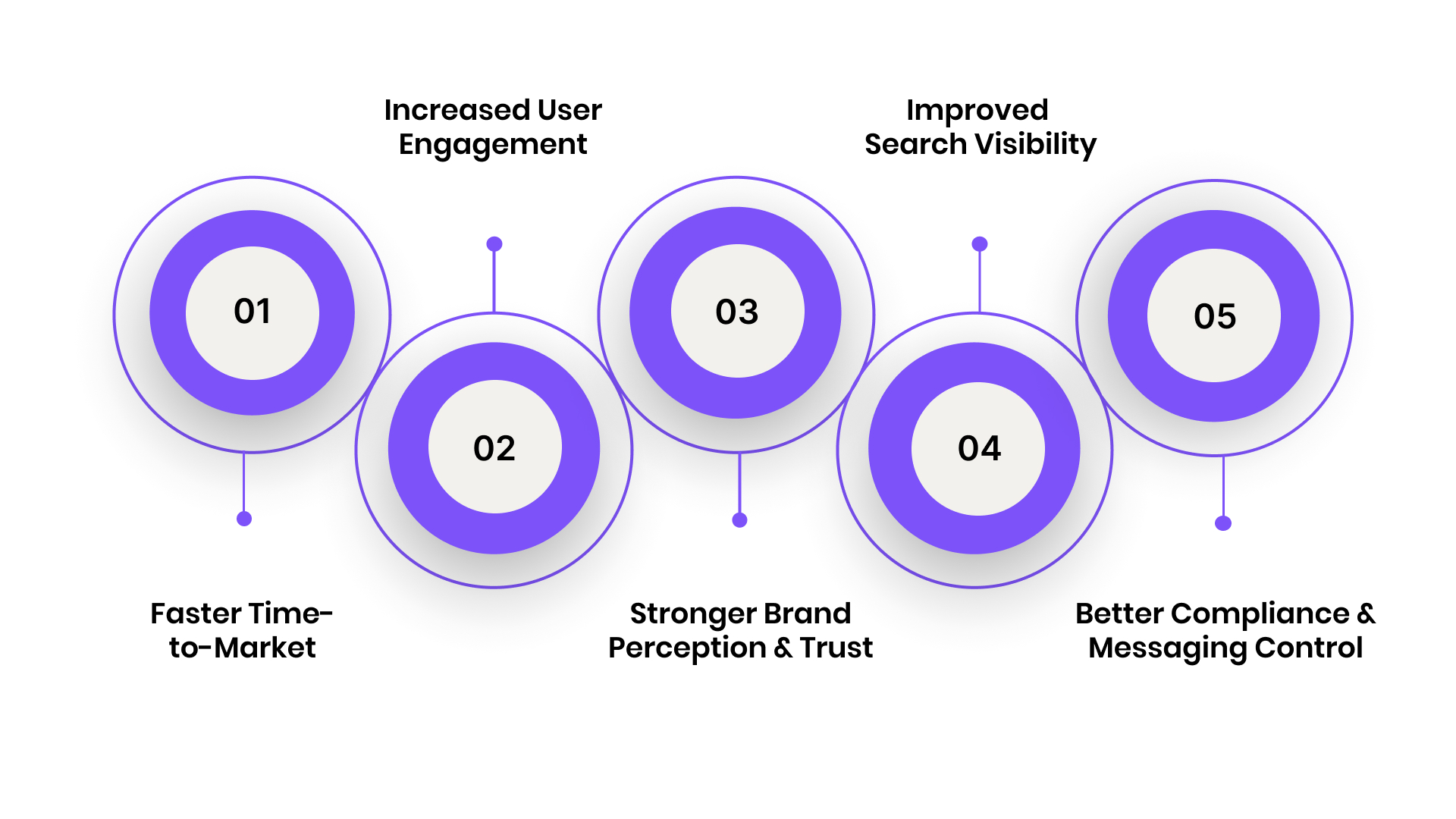
Below are the most critical advantages:
1. Faster Time-to-Market with Consistent Updates
Automation dramatically reduces the time and effort required to publish content across languages. New or updated content is pushed across all languages through integrated workflows, ensuring all users see the latest version simultaneously.
This capability is crucial for enterprises that regularly update websites or apps with product launches, regulatory updates, or campaign content.
2. Increased User Engagement Through Native Language Experiences
Users engage more deeply with content presented in their preferred language. Multilingual experiences signal respect for users’ language preferences, enhancing comprehension and driving longer session times. This nurtures trust and relevance, improving overall user experience.
3. Stronger Brand Perception and Trust
When a brand communicates in a user’s native language, it demonstrates cultural sensitivity and customer‑centricity.
This helps businesses overcome communication barriers and strengthen relationships with audiences that may have limited English proficiency. This relevance is vital in sectors such as BFSI, healthcare, and government services.
4. Improved Search Visibility in Regional Queries
Multilingual content enhances search engine visibility by aligning with how users search in different languages. Rankings improve when content is optimised for local keywords and metadata.
Tools that automate translation also help manage hreflang tags and regional SEO elements consistently, giving enterprises a competitive advantage in local search results.
5. Better Compliance and Messaging Control
For regulated sectors such as finance, healthcare, and government, maintaining accurate and consistent messaging in all languages is vital.
Automated multilingual content management ensures updates flow through controlled workflows with versioning, review, and approval steps built in, reducing the risk of errors and miscommunication.
With Anuvadak, your teams will experience increased operational efficiency, allowing you to focus on growing your business. Find out how Anuvadak’s integration with your CMS can help ease your multilingual content management.
Why Businesses Need Automated Multilingual Content Management in 2026
India’s internet user base is projected to exceed 900 million by 2025, growing from 886 million in 2024, and this expansion is being driven mainly by content in Indic languages. Rural users now account for over 55% of active internet users.
Platforms that embrace local language experiences tap into this enormous audience.
- Among urban internet users, about 57% prefer consuming content in regional languages, a clear signal that linguistic relevance directly influences online behaviour.
- All these trends hold true across digital channels, from search to social media and e‑commerce. For instance, regional language content now drives over 50% of subscriptions in India’s paid OTT market.
These behaviours show that automated multilingual content management is not a “nice-to-have “; it enables enterprises to meet users where they already are.
As Indian internet usage continues its upward trajectory, enterprises that adopt automated multilingual content management will have three strategic advantages:
- Faster digital operations: Streamlined localisation workflows that reduce time to market.
- Stronger localisation ROI: Higher engagement and conversions from native‑language experiences.
- Future‑ready infrastructure: Systems capable of handling complex multilingual ecosystems as markets evolve.
In a market where language shapes digital behaviour, automated multilingual content management is central to capturing relevance, driving growth, and maintaining competitive differentiation in 2026.
Recognising the need is a crucial step. Next, let’s break down how you can implement all this to optimise your content management strategy.
How to Implement Automated Multilingual Content Management in Your Business
Implementing automated multilingual content management requires a clear strategy, the right technology, and seamless workflows that bridge content creation, localisation, and delivery.
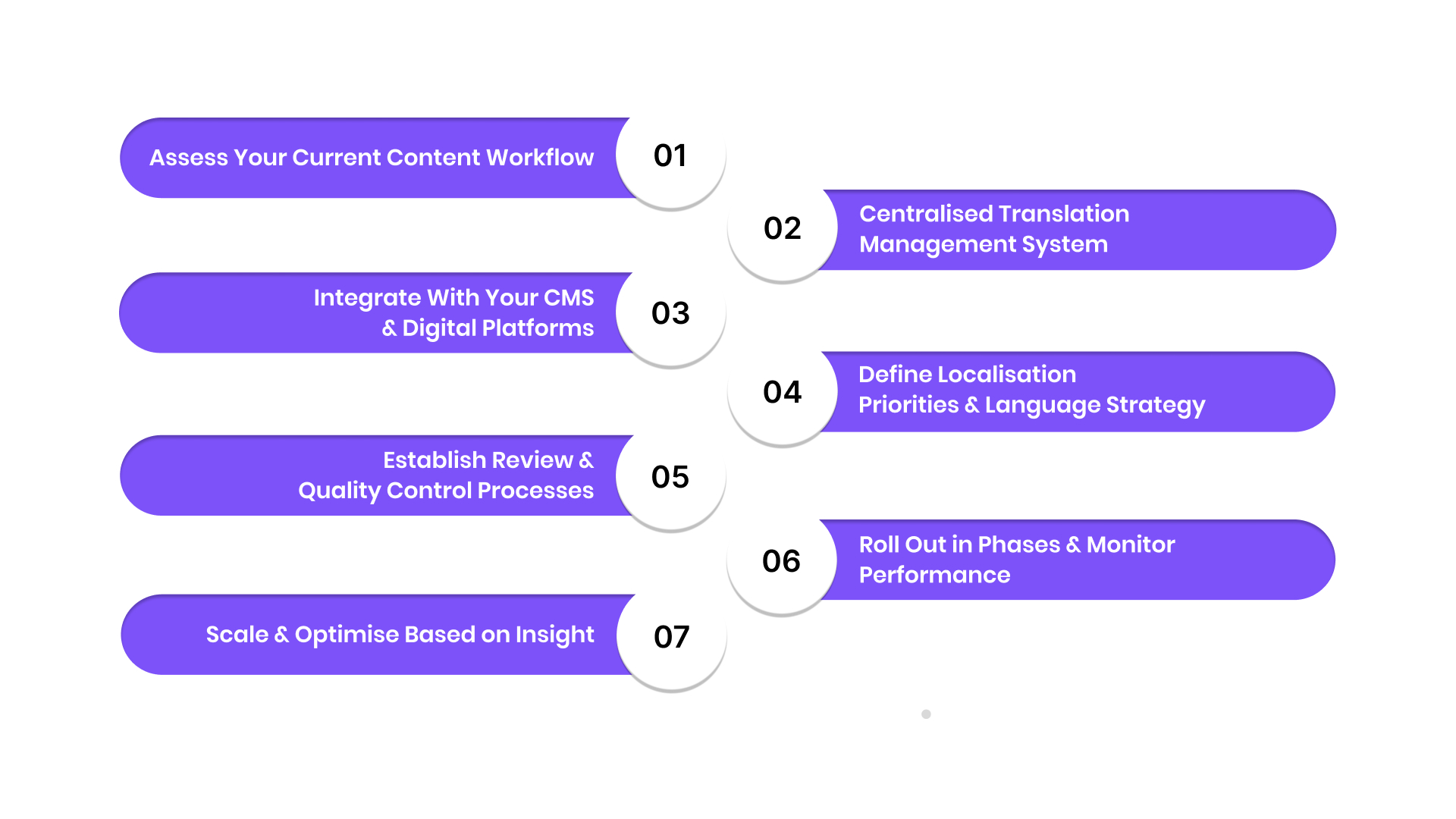
Below is a step-by-step guide for enterprise and large organisations:
1. Assess Your Current Content Workflow
Before choosing tools or platforms, audit your existing content operations:
- Identify where content originates (CMS, app UI, marketing systems).
- Map how updates currently flow to different language versions (if at all).
- Highlight bottlenecks, such as manual translation queues or repeated quality issues.
This baseline helps you prioritise where automation will deliver the most ROI, whether through accelerated updates, reduced errors or improved consistency.
Tip: Look specifically at how current workflows handle CMS content, product updates and legal/regulatory text, areas where manual localisation often causes delays in launch timelines.
2. Choose a Centralised Translation Management System
A Translation Management System (TMS) or a similar enterprise localisation platform, such as Anuvadak, forms the foundation for automated multilingual content management. These systems standardise, automate and track translation workflows across teams and languages.
Key features to prioritise:
- Centralised Dashboard: Single view of all translation and localisation tasks.
- Workflow Automation: Automated assignment, review and publishing processes.
- Translation Memory & Glossaries: Store approved translations to improve consistency and cut costs over time.
- Collaboration Tools: Allow translation reviewers, subject matter experts and editors to work together in context.
The right system eliminates scattered spreadsheets, reduces human error and supports enterprise‑level governance across digital properties.
3. Integrate With Your CMS and Digital Platforms
The next step is technical integration. For automated multilingual content management to work, it must sit close to your content sources.
- Ensure your CMS supports locale‑aware content modelling rather than maintaining separate sites or forks for each language. This reduces duplication and error risk.
- Enable API‑based connections between your CMS, translation platform and delivery systems so content changes flow automatically into localisation pipelines without manual export/import cycles.
Integration creates a single source of truth for content, making updates, revisions and audits far more efficient.
4. Define Localisation Priorities & Language Strategy
Automating workflows is only as effective as the language strategy behind it. Work with cross‑functional teams to decide:
- Which languages to support first (based on user data, market demand and business goals).
- Content types requiring localisation (e.g., legal disclaimers, product descriptions, marketing campaigns).
- Priority markets and regulatory requirements for each language scenario.
This roadmap ensures automation supports business outcomes, whether that’s driving regional engagement, gaining search visibility or expanding into new markets.
5. Establish Review and Quality Control Processes
Even with automation, quality assurance remains crucial:
- Create structured review workflows with clear roles for translators, reviewers and technical editors.
- Establish style guides and glossaries to ensure consistent terminology and brand voice across all languages.
- Build automated quality checks into pipelines for things like untranslated keys, missing context or formatting mismatches.
Automated systems should support human oversight rather than replace it—especially for high‑impact content.
6. Roll Out in Phases and Monitor Performance
Phased implementation protects quality while enabling gradual adoption:
- Start with a smaller subset of languages or high‑priority content segments.
- Measure key indicators such as time‑to‑publish, revision rates and user engagement improvements.
- Use analytics to refine workflows, reprioritise languages or expand automation into new digital channels.
Regular monitoring ensures that automation delivers measurable value and continuous improvement.
7. Scale and Optimise Based on Insight
Once foundational processes are in place, build on them:
- Use translation memory and performance analytics to improve future content reuse and reduce redundant effort.
- Expand APIs to support additional platforms (mobile apps, voice channels, IVR systems).
- Revisit language priorities based on market performance and strategic shifts.
This approach ensures your automated multilingual content management evolves alongside business growth, not just in volume but in quality and impact.
Implementation is the very first step. Anuvadak provides all the tools you need to integrate, automate, and optimise your content workflows for efficiency and accuracy. Start your journey towards seamless multilingual content management with Anuvadak.
5 Best Practices to Manage Multilingual Content at Scale
Successful automated multilingual content management isn’t just about technology but about strategy, quality and continuous improvement.
Below are five high‑impact best practices for enterprises scaling multilingual digital experiences, especially in diverse markets like India.
1. Conduct Deep Audience & Linguistic Research
Effective multilingual content begins with a clear understanding of user behaviour in each language segment. Regional preferences within India vary significantly; for example, Tamil, Telugu and Hindi users may have distinct content expectations and search terms, even for the same service or product.
Rather than translating everything, prioritise based on audience demand, search trends and cultural relevance.
- Actionable step: Use analytics and market research to determine which languages drive the most engagement or conversions in specific regions.
2. Build and Maintain Comprehensive Style Guides
Consistency across languages isn’t just cosmetic. It reinforces brand identity, reduces ambiguity, and improves machine translation outcomes. A style guide outlines tone, terminology, preferred language variants and brand preferences. Glossaries store approved translations of key terms.
- Implementation tip: Integrate glossaries into your translation management workflows so automation tools reuse approved terms correctly.
3. Utilise Continuous Feedback Loops and Local Input
Automated translation is powerful, but cultural and linguistic nuance still benefits from human insight and honest feedback. Establish mechanisms to capture user feedback on regional-language content and use that data to refine translations.
For example:
- Monitor engagement metrics (e.g. bounce rates, session duration) for each language version.
- Collect qualitative feedback via surveys or in‑product prompts in different languages.
Feedback identifies cultural misunderstandings, mistranslations, or UX pain points specific to a language group, enabling continuous improvement.
4. Integrate Automated Quality Assurance (QA)
High‑quality multilingual content is a balance between automated QA and expert review. Automated checks catch technical issues; human review ensures cultural and context accuracy.
Tools can flag untranslated keys, missing segments or formatting inconsistencies across language versions before they go live.
- Native speakers or subject-matter experts review content for tone, cultural relevance, and clarity, especially for complex or regulated content (e.g., legal disclaimers or product safety information).
- This hybrid approach reduces the risk of errors slipping into live content while keeping workflows efficient.
5. Use Data to Continuously Optimise Localised Content
Performance data reveals which language content resonates, and which doesn’t, guiding ongoing refinement. Treat localisation as an ongoing optimisation process, not a one‑time project.
Here are some key metrics to track:
- Language‑specific engagement (page views, time on page)
- Conversion metrics per language version
- Regional bounce or drop‑off rates
Adjust content priorities based on performance, allocate resources where ROI is highest, and automate high‑impact areas first.
Also Read: Why Your Business Needs a Multi-Language Website
Even with best practices, challenges are inevitable. Let’s address the common obstacles you may encounter and explore practical solutions to overcome them.
Key Challenges & Solutions for Automated Multilingual Content Management
Automated multilingual content management brings clear advantages, but enterprises face specific, real challenges when scaling localisation efforts. Below are common obstacles and practical solutions to keep in mind:
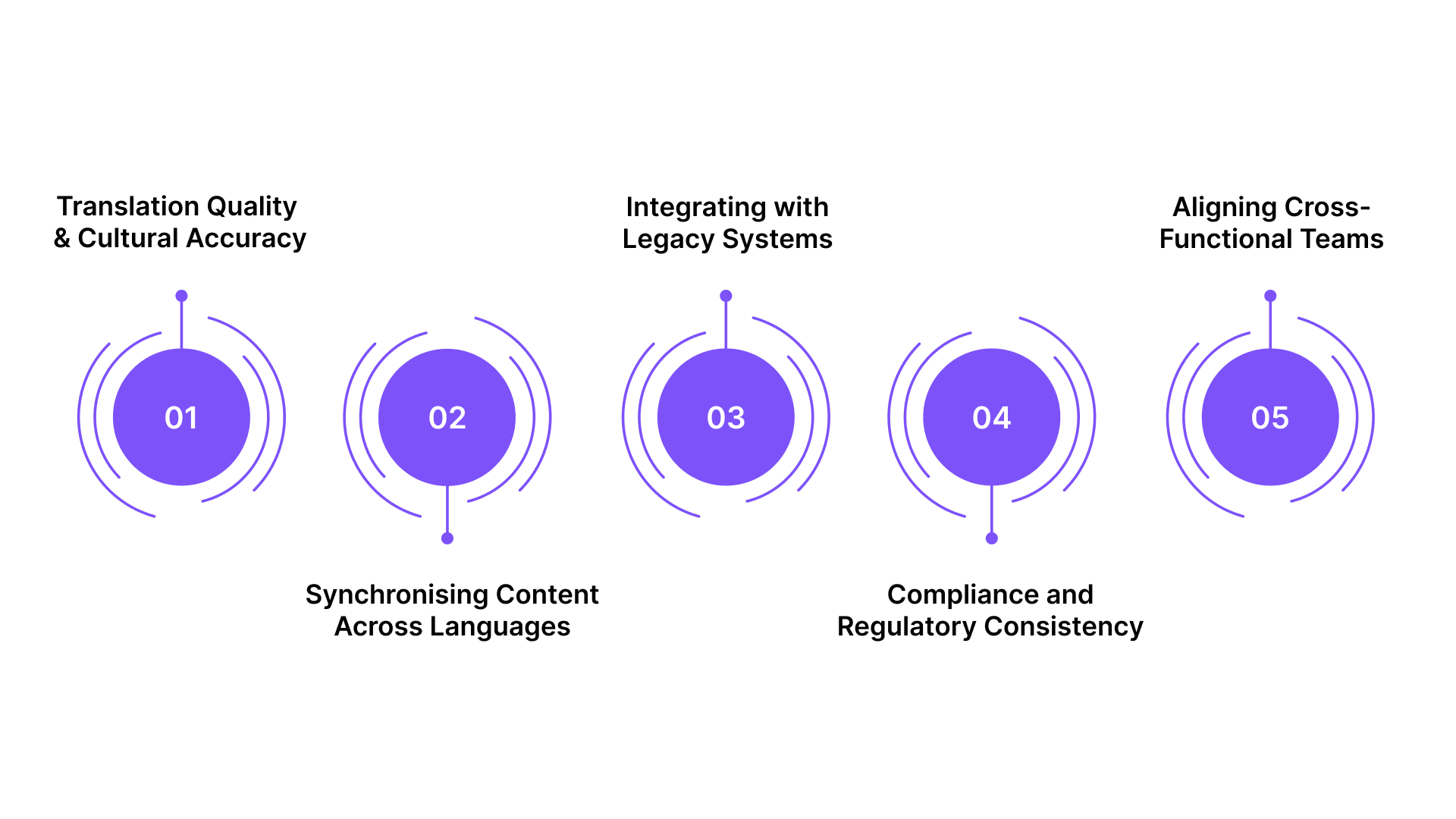
1. Translation Quality and Cultural Accuracy
Automated tools often miss cultural nuances and idiomatic expressions, especially for languages in India, where context plays a critical role. Even advanced models may not perform consistently across languages, leading to errors.
Solution:
- Combine automated translations with expert post-editing from native speakers to ensure cultural and linguistic accuracy.
- Use translation memory and glossaries to maintain consistency across languages.
2. Synchronising Content Across Languages
Frequent content updates, such as product descriptions or help articles, can cause translation lag. Keeping all versions aligned manually is error-prone and time-consuming.
Solution:
- Implement a translation management system (TMS) that links source and translated content, triggering automated updates across languages.
- Use content hierarchy mapping so changes in the main content automatically propagate to localised versions.
3. Integrating with Legacy Systems
Many enterprises operate a mix of legacy systems and modern platforms, making integration complex and slowing automation.
Solution:
- Choose systems with API‑first architecture for seamless integration with both legacy and new tools.
- Use modular systems that can integrate localisation tools without overhauling existing infrastructure.
4. Compliance and Regulatory Consistency
In regulated industries such as BFSI and healthcare, ensuring compliance across all language versions is critical. A missed translation could result in legal risks.
Solution:
- Embed compliance checks and approval workflows into the localisation process, ensuring all translations meet legal standards before going live.
- Keep auditable records and version histories to satisfy regulatory requirements.
5. Aligning Cross-Functional Teams
Localisation often involves teams across marketing, product, and legal, and coordinating them can cause delays and inconsistencies.
Solution:
- Define clear roles for each team in the localisation workflow.
- Use collaboration tools within your localisation platform to streamline communication and feedback.
By implementing these solutions, businesses can overcome the challenges of multilingual content management and scale their operations efficiently.
Must Read: The Impact of Multilingual Speech Recognition in Customer Support Centres
Now, let’s take a look at the future of multilingual content management and how emerging trends will shape your strategy.
The Future of Automated Multilingual Content Management: What’s Next
AI is shifting from basic translation to deeper contextual understanding and cultural nuance. In 2026, neural machine translation technologies are expected to deliver much higher accuracy and handle complex multilingual workflows.
In India specifically, innovation in small language models (SLMs) for local use cases is gaining momentum. These lighter AI models can run efficiently on enterprise infrastructure and are better suited to handle Indian languages with domain‑specific accuracy.
This trend supports scalable, secure multilingual applications, especially in regulated sectors like finance and healthcare.
In addition, government‑driven language technology initiatives are reshaping the broader digital ecosystem.
- For example, AI platforms that support all 22 scheduled Indian languages are being integrated into digital services to ensure inclusion and accessibility.
- These platforms enable real‑time translation, voice‑enabled interfaces, and localised content delivery across public services, education and governance systems.
By 2026, automated multilingual content management will be a frontline growth enabler. Organisations that embrace automated strategies will be better positioned to deliver relevant, accessible and culturally resonant digital experiences in 2026 and beyond.
As we look to the future, it’s essential to explore how Anuvadak can be the perfect partner to help you scale and manage your multilingual content effectively.
How Anuvadak Supports Scalable Automated Multilingual Content Management
Anuvadak simplifies multilingual content management for enterprises, making it easier to scale and maintain accuracy across all digital touchpoints. The system integrates smoothly with existing workflows, automates translation updates, and ensures content stays linguistically accurate.
Here’s how Anuvadak supports your multilingual operations:
- Automated Multilingual Content WorkflowsAnuvadak scans your content, identifies translatable elements, and automates translation. This eliminates manual intervention, ensuring updates are synchronised across all languages instantly without copying and pasting.
- Centralised Dashboard for Seamless ManagementAll language versions are managed from a single dashboard, allowing your teams to efficiently oversee translation progress, manage updates, and ensure consistency. This collaboration tool ensures everyone stays on the same page.
- Context-Aware Translation Memory and GlossaryAnuvadak stores previously approved translations and terminology, ensuring consistent language use across your site or app. This reduces redundancy, saves time, and improves accuracy.
- Real-Time CMS IntegrationWith direct integration to your CMS or custom backend, Anuvadak automatically translates and deploys new content without needing manual intervention from engineering teams. Updates are consistently reflected across multiple languages.
- AI-Assisted Translation with Human Review SupportAnuvadak uses AI-driven translation to speed up the process, with workflows that allow internal or external reviewers to refine content. This hybrid approach ensures both speed and accuracy in your multilingual content management.
- Script-Friendly Layout and Rendering SupportAnuvadak ensures that text is processed to preserve readability across various Indian scripts. This reduces the need for major redesigns for each language, providing a seamless user experience across languages.
- Enterprise-Grade Security and ComplianceWith encrypted data flows and secure infrastructure, Anuvadak ensures your multilingual content remains compliant with regulations, making it ideal for sensitive industries like BFSI, healthcare, and government services.
- Scalable System for Language ExpansionAs your business grows, Anuvadak makes it easy to add new languages without overhauling your systems. Its scalable architecture ensures that as you expand into new regions, your localisation workflows remain efficient and consistent.
Anuvadak’s features and easy integrations allow businesses to manage their multilingual content efficiently, reducing operational complexity and ensuring high-quality, accurate content in every language.
Conclusion
In 2026, delivering multilingual digital experiences will be essential for businesses aiming to engage India’s diverse and growing online audience. Automated multilingual content management is a key strategy for building trust, improving customer engagement, and expanding market reach.
Anuvadak empowers enterprises to scale multilingual content without sacrificing accuracy or efficiency. With its solid automation, integration capabilities, and AI-driven workflows, Anuvadak ensures your content stays relevant, consistent, and culturally aligned across all languages.
Don’t let language barriers limit your digital potential. Connect with the Anuvadak team today for a specialised walkthrough!
FAQs
1. What’s the difference between a multilingual CMS and automated multilingual content management?
A multilingual CMS handles language variants of content inside a platform. In contrast, automated multilingual content management includes workflows that auto‑translate, sync updates, and manage versions across languages without manual hand‑offs.
2. Can automated multilingual content management adapt content for cultural nuance, not just language?
Yes. Advanced systems combine AI with translation memory and glossaries so that terminology and phrasing reflect cultural and contextual relevance rather than literal translations.
3. How does automation affect SEO in different languages?
Automated solutions can manage hreflang tags, localised meta content and regional keyword variations consistently across languages, improving visibility in regional search behaviours.
4. What role does human review play in automated workflows?
Even with automation, human review ensures quality, especially for domain‑specific, technical, or regulated content, ensuring translations are accurate, compliant, and culturally appropriate.
5. How do automated systems handle updates when the source language changes?
Good systems automatically detect changes in source content and trigger translation workflows, ensuring all language versions stay synchronised without manual export/import cycles.