The cost of website translation services has turned into a strategic technology decision rather than a marketing afterthought, particularly for CTOs, product leaders, and public sector teams, where localisation budgets now intersect with platform architecture, multilingual APIs, and regulatory compliance frameworks.
With India’s multilingual internet user base expanding rapidly across Tier II and Tier III markets, organisations operating in BFSI, healthcare, eCommerce, and government systems must support regional languages at scale. This structural shift directly influences how enterprises forecast and justify the cost of website translation services for 2026-27.
In this guide, you will gain clarity on prevailing pricing models, key cost drivers, and emerging trends, while understanding how organisations can optimise translation spend without compromising accuracy, data security, or cultural relevance.
Key Takeaways
- Factors like content complexity, language pair, and industry-specific requirements influence website translation pricing.
- Machine Translation with Post-Editing (MTPE) offers cost savings while maintaining accuracy in localisation.
- Professional human translators are best for technical and legal content, ensuring accuracy and compliance.
- Bundling smaller projects or using subscription models can lead to cost savings over time.
- Transparency in pricing and clear quotes are essential to avoid unexpected translation costs, ensuring a well-managed localisation budget.
Why a Multilingual Website Can Be a Smart Investment
Expanding your website’s reach to global markets opens up numerous opportunities, especially as businesses continue to break down language barriers. For enterprises aiming to scale, multilingual websites can provide the following advantages:
- Broader Market Reach: Opening your site to users in different linguistic regions helps attract new customers and business opportunities.
- Enhanced Customer Experience: Customers feel more comfortable and understood when content is presented in their native language.
- Competitive Advantage: A multilingual approach can set you apart from competitors who are only operating in a single language, especially in emerging markets.
- Increased Brand Loyalty: By offering content in various languages, customers are more likely to trust and engage with your brand.
- Boosted SEO Rankings: Localising your website content can improve search engine visibility in regional markets.
Also Read: What is Language Translation and How Does It Work
As you consider expanding your reach, it’s essential to understand the various ways website translation can be priced to align with your goals.
4 Ways Website Translation Services Are Priced
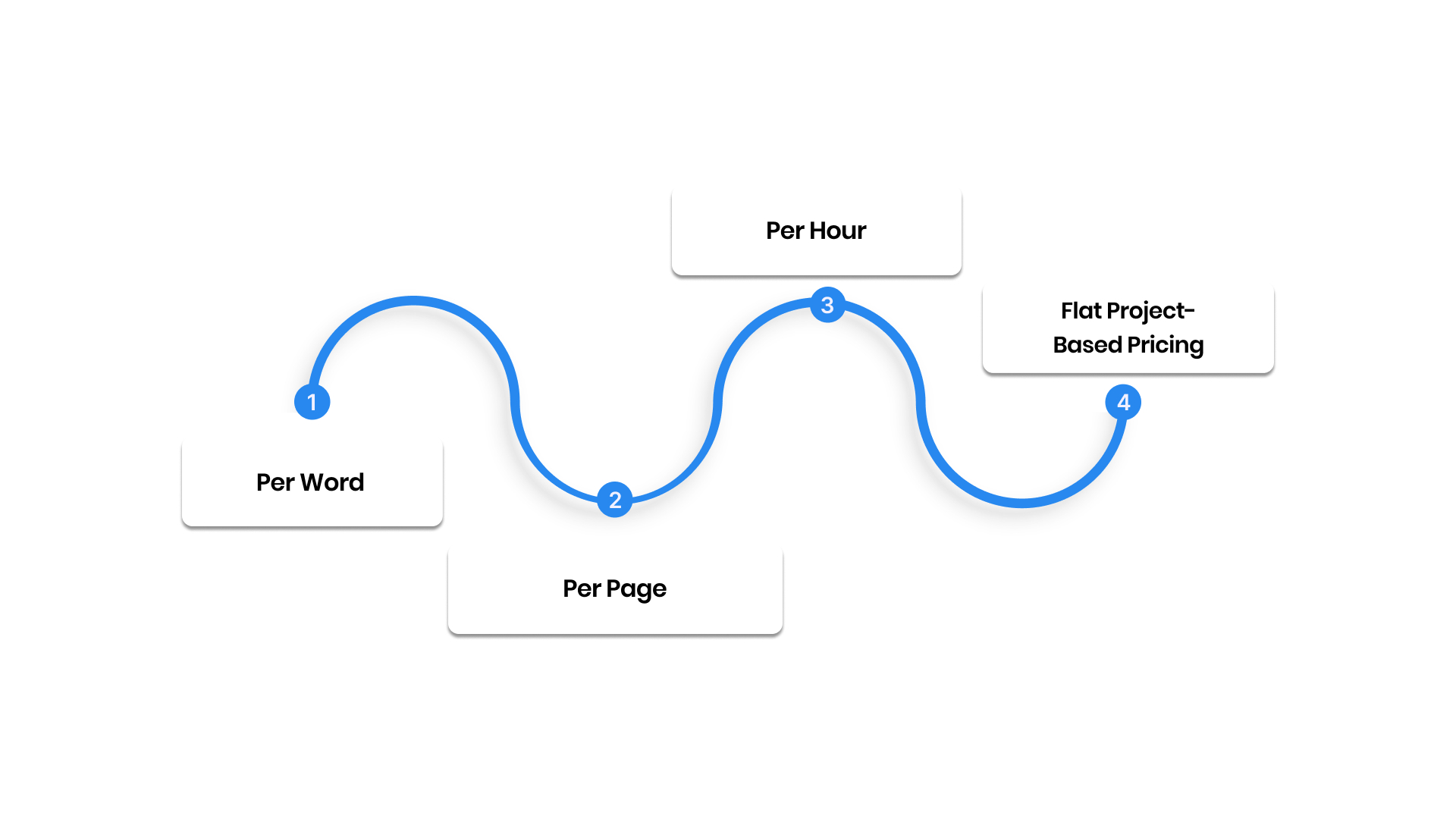
When planning your website translation, understanding the different pricing models is key to managing your budget. Here are the common pricing structures:
1. Per Word
This is one of the most common pricing methods used in translation. The cost is calculated based on the number of words in the source text. Pricing can vary depending on the complexity of the content, language pair, and required turnaround time.
2. Per Page
Some translation services charge per page of text. This model is often used for content-heavy websites or documents. It’s best suited for websites where the content is standardised, like blog posts or product descriptions.
3. Per Hour
Hourly rates are typically used for projects that involve ongoing or complex translation tasks, such as content creation, editing, or when you need continuous updates. It’s ideal for projects where the scope is hard to define in terms of word count or pages.
4. Flat Project-Based Pricing
This model charges a flat fee for the entire project, irrespective of the word count or hours spent. It’s often used for larger translation tasks, such as full website localisations, where the scope is well-defined, and the cost can be predicted upfront.
Also Read: Top 10 Computer-Assisted Translation Tools for Professionals
With these pricing models in mind, you can explore different methods of translating your website to suit your unique needs in 2025.
5 Ways to Translate Your Website in 2025 And the Costs to Expect
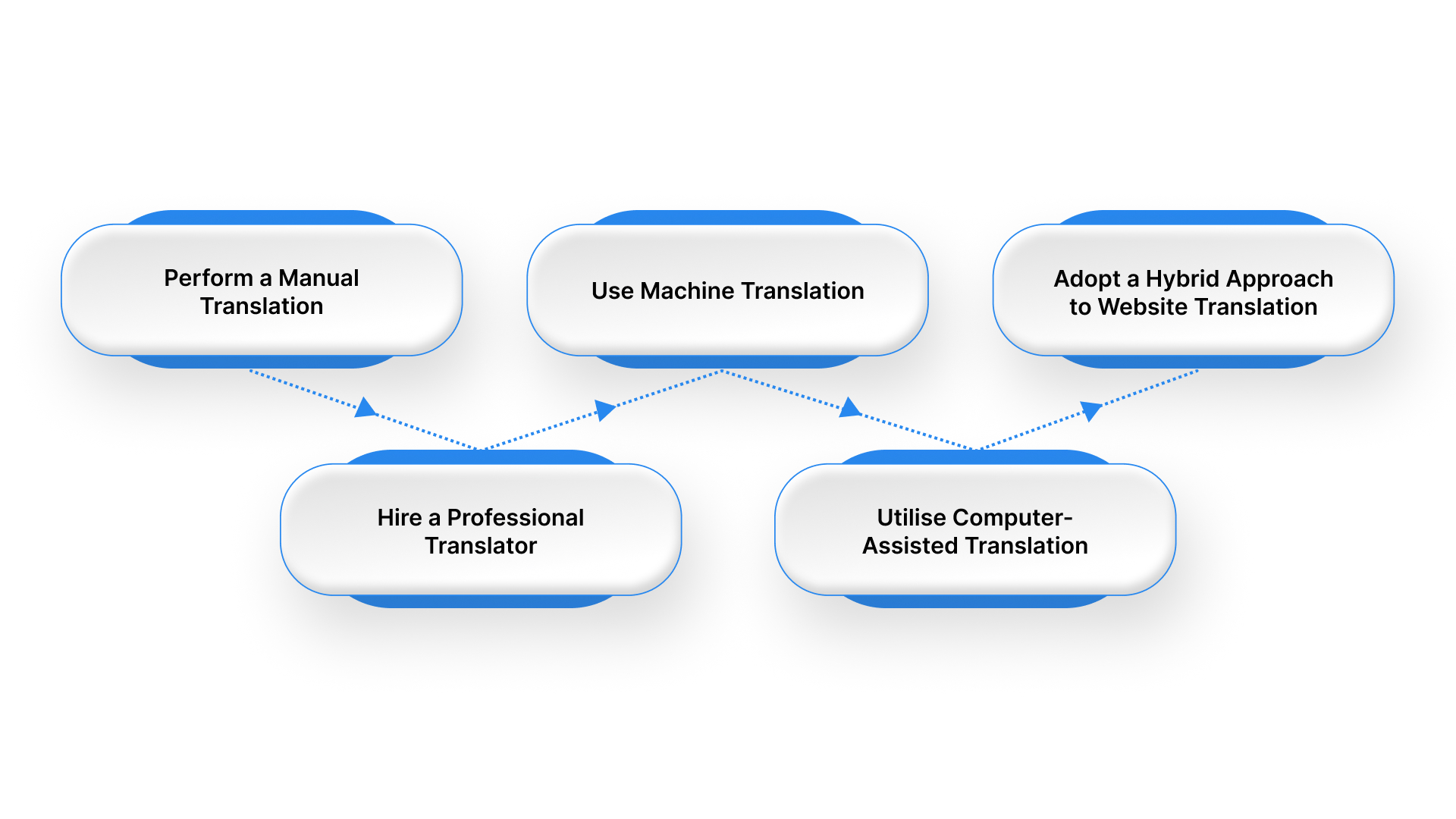
As businesses look to expand their online presence globally, the need for efficient and accurate website translation grows. Here are five different methods to translate your website and their expected costs:
1. Perform a Manual Translation
Manual translation involves a linguist translating content from one language to another. This approach is the most reliable in terms of accuracy but can be time-consuming and expensive, especially if you need to translate large volumes of text.
Cost Expectation: For general content, manual translation may cost anywhere from Rs 0.50 to Rs 1 per word for Indian languages. For less common languages, like Japanese or German, costs could go up to Rs 6 per word.
2. Hire a Professional Translator
Hiring a professional translator can help ensure high-quality translations for more technical content. Professional translators often specialise in specific industries, such as healthcare, legal, or technical fields, ensuring that the translations are accurate and industry-compliant.
Cost Expectation: Professional translation rates can range from Rs 1 to Rs 2.50 per word, depending on the complexity of the content.
3. Use Machine Translation
Machine Translation (MT) is an increasingly popular option, especially for businesses with large volumes of content. MT tools like Google Translate or DeepL can automate the process, making it fast and cost-effective. However, machine translation can sometimes result in errors or awkward phrasing, especially with complex content.
Cost Expectation: The cost of machine translation is generally much lower than human translation, with prices starting at Rs 0.25 per word for basic translations.
4. Utilise Computer-Assisted Translation
Computer-Assisted Translation (CAT) tools enhance the efficiency of human translators by providing them with translation memory, glossaries, and style guides. These tools help maintain consistency across large projects, especially for technical websites.
Cost Expectation: CAT tools usually come with an additional cost, with pricing starting at Rs 0.50 per word. However, the use of such tools can speed up the process and reduce long-term costs.
5. Adopt a Hybrid Approach to Website Translation
A hybrid approach combines machine translation with human post-editing. This method is commonly used to balance speed and accuracy, offering a middle ground between automated and manual translation.
Cost Expectation: This method may cost between Rs 0.50 and Rs 1 per word, depending on the complexity and language pair involved.
Managing multilingual content can be a challenge, especially with constant updates. Anuvadak’s Website & App Localisation platform automates translation, ensuring accuracy and cultural relevance. With our centralised management dashboard, translation memory, and glossary control, CTOs, Product Managers, and IT Heads can scale localisation efforts across global markets.
Also Read: Challenges and Best Practices in Technical Translation
Knowing how to translate your website is only part of the equation; the next step is knowing the key factors that influence translation pricing.
7 Factors Influencing Website Translation Price
When planning your translation project, several factors can impact the final cost. These include:
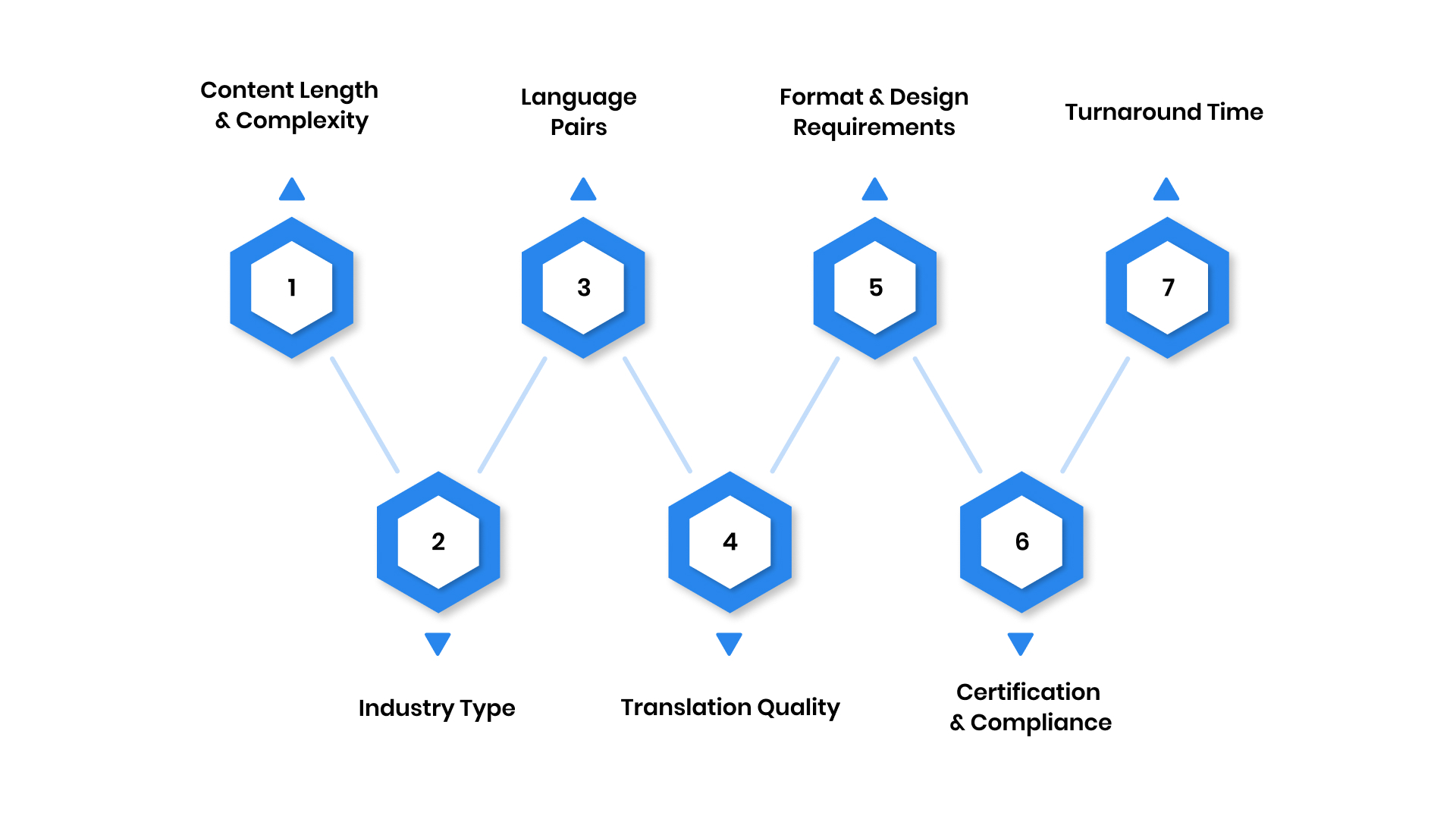
1. Content Length and Complexity
The larger and more complex your website content, the higher the translation cost. Websites with specialised content, like legal, medical, or technical information, will incur higher rates than general content due to the expertise required.
- General Level: Rs 0.50 per word
- Medium Complexity: Rs 0.75 per word
- High Complexity: Rs 1 per word
2. Industry Type
Different industries have varying translation requirements. Below are some industry-specific cost estimations:
- Legal Translation: Generally costs more due to the need for precise and legally sound language.
- Medical & Life Sciences: Requires technical expertise and accuracy, often leading to higher prices.
- Manufacturing & Engineering: Specialised terminology increases translation costs.
- E-commerce: Basic product descriptions may have lower rates but can add up due to volume.
- Media & Gaming: Requires cultural and contextual understanding, resulting in higher costs for localisation.
- Market Research: Needs to be accurate and culturally sensitive, adding to translation costs.
3. Language Pairs
Language combinations significantly affect translation complexity and pricing. Less common or specialised language pairs often command higher rates due to the need for skilled translators and more complex localisation work. Below are the average approximate costs for popular language pairs:
- English to Indian Languages: Starts from Rs 2.50 per word
- Indian Languages to English: Starts from Rs 2.50 per word
- Spanish to English: Starts from Rs 5 per word
- French to English: Starts from Rs 4.50 per word
- Japanese to English: Starts from Rs 6 per word
- German to English: Starts from Rs 4.50 per word
4. Translation Quality
Enterprises must align quality levels with user impact. The quality of translation will significantly affect the cost:
- Professional Human Translation: The most expensive but also the most accurate.
- Machine Translation: Cheaper but can result in errors or awkward phrasing.
- Hybrid Translation: A balance between machine and human translation, often offering the best value for businesses.
5. Format & Design Requirements
If your website has complex formatting (e.g., images, interactive elements), expect additional charges for formatting and design adjustments. Translating text-heavy content is much cheaper than localising rich media elements like graphics, videos, and interactive tools.
6. Certification and Compliance
Certain industries, like legal or healthcare, may require certified translations. Certified translations are typically more expensive, especially when dealing with sensitive information.
7. Turnaround Time
Rush orders or tight deadlines can increase the cost of website translation services. If you require translation within a short timeframe, expect to pay a premium.
Also Read: Top 4 Best GTranslate Alternatives
As you examine these cost drivers, it’s important to stay aware of the emerging trends that will shape website translation costs in the coming years.
3 Trends Impacting the Cost of Website Translation Services in 2026-2027
As we move towards 2026-2027, several trends are reshaping the website translation industry. These trends are expected to influence both pricing models and how companies approach translation:
1. Rising Use of MTPE (Machine Translation Post-Editing)
As machine translation technology improves, more businesses are opting for MTPE, where human editors refine machine-generated translations. This trend is expected to lower costs while improving the accuracy and fluency of translations.
2. Subscription & Retainer Models
More agencies are offering subscription-based services or retainer models for ongoing translation work. This can provide a more predictable cost structure for companies with frequent translation needs, especially in the e-commerce and BFSI sectors.
3. Content Localisation Bundles
As businesses look to streamline their localisation efforts, translation service providers are increasingly offering content localisation bundles. These packages may include not just translation but also website localisation, SEO localisation, and multimedia adaptation, which can reduce overall costs when packaged together.
Also Read: Challenges in App Translation and How to Overcome Them
With these trends in mind, here are some smart budgeting tips that will help optimise your translation strategy without exceeding your budget.
6 Smart Budgeting Tips for Translation Costs in 2026-2027
To make the most out of your translation investment, here are some smart budgeting tips:
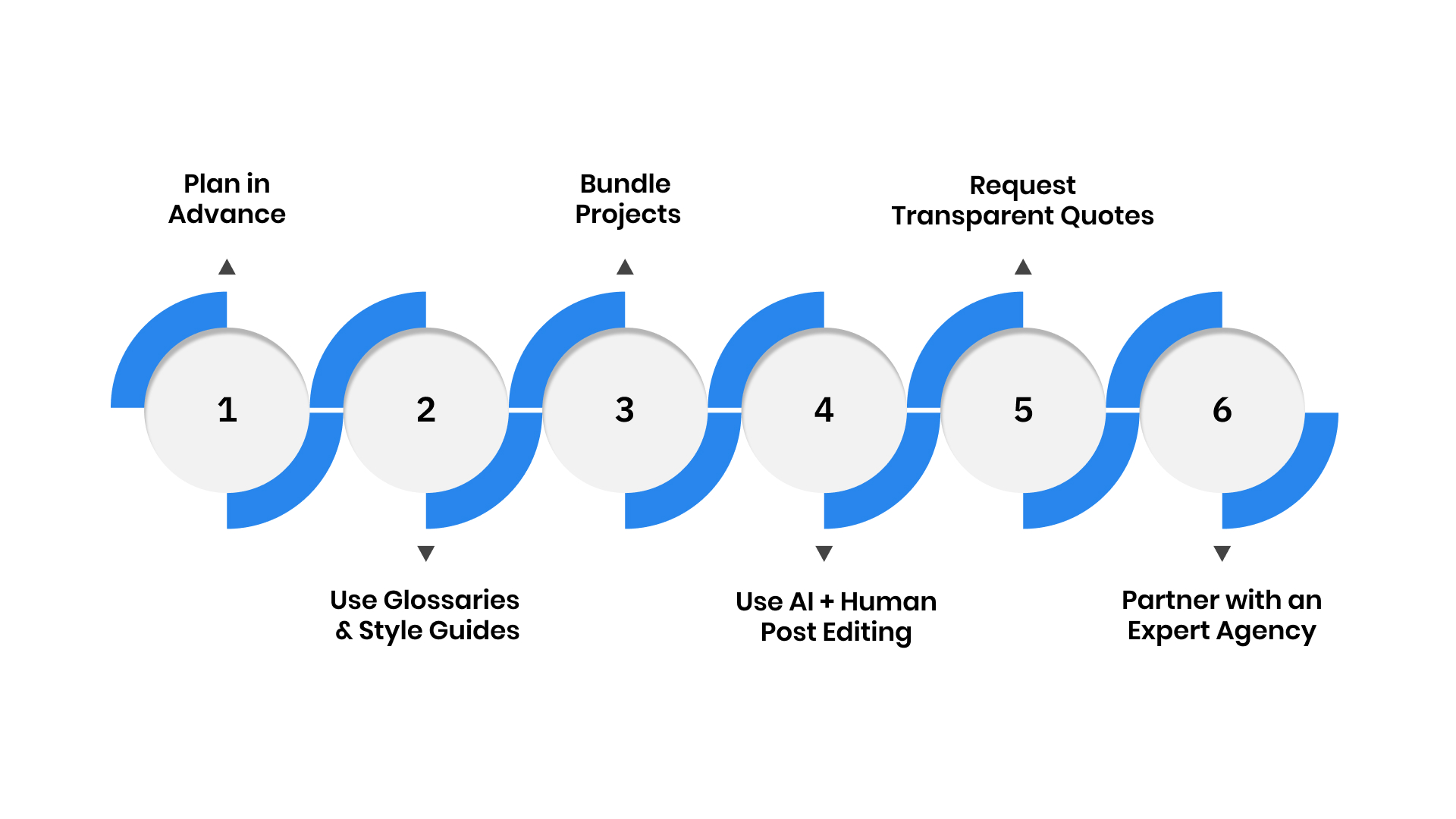
- Plan in Advance: Planning your translation needs ahead of time can help you spread out costs and avoid rushed fees. Early preparation allows you to manage resources more effectively.
- Use Glossaries & Style Guides: Creating and using glossaries and style guides ensures consistency and reduces errors in translation, potentially saving on revision costs.
- Bundle Projects: When possible, bundle smaller translation projects together to take advantage of volume discounts.
- Use AI + Human Post Editing: Using machine translation combined with human editing can save costs while ensuring the translation quality meets your needs.
- Request Transparent Quotes: Always request clear, itemised quotes to avoid hidden fees or unexpected charges.
- Partner with an Expert Agency: An experienced translation agency can help you streamline the process and provide expert advice on the best approach for your specific needs.
To make your budget go further, you need a reliable solution that ensures efficiency, accuracy, and scalability, like Anuvadak.
Why Choose Anuvadak for Your Translation Needs?
Localising your website or translating sensitive legal documents is no easy feat. B2B professionals, localisation managers, and content heads face obstacles like inaccurate translations, scalability issues, and data security concerns. Anuvadak simplifies these challenges with a comprehensive suite of features designed to support your multilingual localisation efforts.
Here’s how Anuvadak addresses these pain points and helps you scale in 2026-27:
- Efficient Content Management: Anuvadak’s Website & App Localisation platform automates the translation and management of multilingual websites and apps. With seamless integration with CMS systems and a centralised management dashboard for content updates, you can effortlessly manage real-time content changes across languages.
- Accurate & Consistent Translations: Our context-aware translation memory and glossary control ensure that translations are culturally accurate and consistent. This is essential for industries like legal, healthcare, and BFSI, where precision in language is critical for compliance and customer trust.
- Scalable Localisation for Enterprises: Built for large-scale operations, Anuvadak’s cloud-based platform supports multilingual APIs and scales to meet the needs of businesses in eCommerce, education, and government. If you’re localising product listings, customer service systems, or public service portals, Anuvadak ensures that your multilingual content can grow with your business without compromising quality.
- Data Security & Compliance: Anuvadak offers enterprise-grade security with end-to-end encryption, aligning with global data protection frameworks such as GDPR. This makes it an ideal solution for banking, healthcare, and government sectors, where data security and compliance are non-negotiable.
- Cultural Sensitivity: Anuvadak’s AI-driven translation memory and glossary control ensure that your content resonates with local audiences.
- Multilingual APIs: Anuvadak’s suite of Multilingual APIs enables seamless real-time communication across systems and applications. With Translation API for instant content localization, Transliteration API for script conversions, and Speech-to-Text and Text-to-Speech APIs for accessible voice and text interactions, businesses can enhance user experience across multiple languages effortlessly.
With these Anuvadak features, businesses can create an inclusive, accessible, and localised digital presence across languages and regions.
Conclusion
The cost of website translation services increasingly reflects an organisation’s technology maturity, localisation scalability, and governance standards. Businesses that invest in structured localisation frameworks benefit from lower long-term expenditure while strengthening accessibility, regulatory compliance, and user trust across India’s linguistically diverse markets.
By aligning translation budgets with AI-driven language technologies, human linguistic expertise, and robust enterprise platforms, organisations can future-proof their multilingual digital strategy with confidence.
Anuvadak’s Translation API automates real-time content localisation, ensuring accuracy and security across languages. With cloud-based scalability and enterprise-grade security, our platform supports multilingual customer service and localised product listings.
Contact us to learn how Anuvadak can streamline your website translation strategy.
FAQs
1. What are the primary factors that impact the cost of translating a multilingual website?
Translation costs depend on document complexity, language pair, translation method, turnaround time, and industry-specific requirements, such as legal or medical translation.
2. How can I estimate translation costs for a large-scale website localisation project?
For large-scale projects, consider bundling translation services, using hybrid translation methods, and requesting transparent quotes to better estimate costs based on word count and complexity.
3. What are the benefits of using machine translation with post-editing for website localisation?
MTPE combines cost-effectiveness with quality, reducing translation time while maintaining accuracy by using machine translation, followed by human editors to refine content.
4. Are there specific cost considerations for translating content for e-commerce platforms?
E-commerce platforms require continuous updates, bulk translations for product descriptions, and adaptation for local currencies, which can increase costs compared to static content translation.
5. How do subscription models for website translation services work?
Subscription models offer predictable costs for ongoing localisation needs, providing a set number of words or hours per month for continuous website updates and translations.