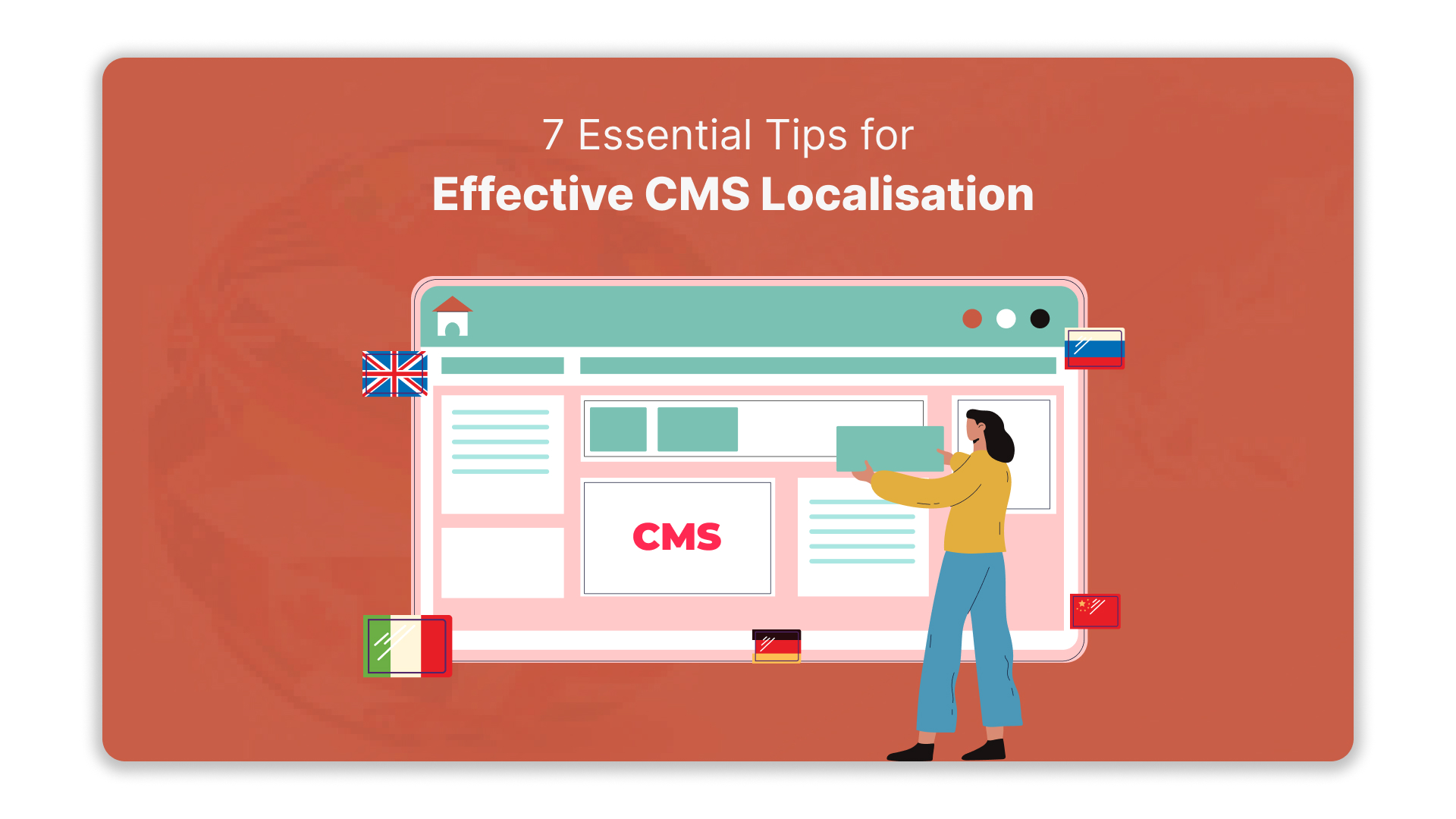
Your business manages content for audiences across different regions and languages. You need a system that supports this global content strategy efficiently. A standard CMS configured for one language will create operational bottlenecks. Effective CMS localisation is the solution to this challenge.
CMS localisation adapts your content management system for multilingual use. It enables your team to manage and publish content in various languages. This process is foundational for a scalable international presence. Without it, managing multiple language versions becomes a manual burden.
This guide provides actionable tips for successful CMS localisation. Implement these strategies to enhance your global content workflow. You will also learn how to choose the best provider for your localization needs and the common mistakes to avoid.
Key Takeaways
- Foundation First: A centralised glossary and structured workflow are non-negotiable for consistency and efficiency.
- Context is King: In-context editing for translators and automated format handling are crucial for quality.
- Automate for Scale: Leverage translation memory and a continuous localisation model to reduce costs and accelerate updates.
- Avoid Common Pitfalls: Neglecting terminology, underestimating tech integration, and treating it as a one-off project are critical errors.
- Strategic Partner: Choose a provider based on deep CMS integration, linguistic expertise, and scalable workflows.
Why Every Business Needs CMS Localization

CMS localisation is a strategic investment in your operational infrastructure for global markets. It directly impacts your team’s efficiency, content velocity, and brand consistency worldwide.
A localised CMS transforms how you create, manage, and publish multilingual content. It turns a complex challenge into a manageable, scalable business process. It delivers these critical operational advantages for your business:
1. Accelerate Time-to-Market for New Regions
Your marketing team can launch campaigns across all markets simultaneously. A centralised system eliminates manual processes and content duplication. This agility allows you to capitalise on regional opportunities much faster. You gain a significant competitive edge in new markets.
2. Ensure Brand Consistency Across All Markets
Your brand voice and terminology remain uniform in every language. The system enforces style guides and glossaries across all translators and projects. This prevents messaging confusion and brand dilution in different regions. Customers receive a coherent brand experience everywhere.
3. Streamline Team Workflows and Collaboration
All team members work from a single, unified content management interface. The system provides clear workflows for translation, review, and approval. This reduces administrative overhead and prevents costly miscommunication. Your team can focus on strategy rather than process management.
4. Reduce Long-Term Operational Costs
Automated workflows decrease reliance on manual processes and external agencies. Translation memory tools cut costs by reusing previously translated content. Efficient processes allow your existing team to manage more markets. This makes scaling your international presence highly cost-effective.
With the business case clear, let’s explore the practical steps for implementation.
7 Essential Tips for Effective CMS Localisation

Successful CMS localisation requires meticulous planning around technology, people, and processes. These practical tips help you avoid common pitfalls and build a robust multilingual framework.
Implementing them correctly will save significant time and resources during your project. They transform theoretical concepts into operational excellence for your global teams. Apply these essential tips to optimise your CMS localisation strategy:
1. Centralise Your Translation Glossary
Maintain a single source of truth for all approved terminology and brand phrases. This glossary ensures consistent translation of product names and key messaging. It prevents different translators from using varying terms for the same concept. This is especially critical for technical industries and regulated sectors.
Successful implementation looks like this:
- All translators and reviewers access the same live terminology database.
- New content automatically checks against the glossary for compliance.
- Marketing and legal teams jointly own and update the centralised resource.
2. Implement a Structured Workflow
Define clear stages for translation, review, approval, and publishing. Assign specific team roles and responsibilities for each step in the process. This prevents content from being published without proper linguistic and brand checks. A structured workflow brings order and accountability to complex projects.
Successful implementation looks like this:
- Content moves automatically to the next stage upon task completion.
- Team members receive notifications for their required actions.
- Managers have a dashboard showing the status of all localisation projects.
3. Choose Technology with Strong CMS Integration
Your localisation platform must connect seamlessly with your content management system. Deep integration allows for automatic content detection and synchronisation. It enables editors to work within their familiar CMS interface. This reduces training time and prevents disruptive changes to existing workflows.
Successful implementation looks like this:
- Content is extracted and sent for translation without manual exports.
- Translated content appears directly in the CMS, ready for review.
- Editors can preview localised pages before they go live.
Want to implement these tips with a proven framework? Anuvadak is designed to operationalise these best practises from day one. Contact us for a tailored implementation plan.
4. Optimise for In-Context Editing
Provide translators with visual context beyond isolated text strings. They should see how their translations appear on the actual web page layout. This prevents awkward phrasing and ensures translations fit the design. Contextual translation improves quality and reduces revision cycles significantly.
Successful implementation looks like this:
- Translators work within a visual editor showing the live page design.
- They can see character limits for buttons and headlines.
- The interface displays how the translation renders on mobile and desktop.
5. Leverage Translation Memory
Use technology that remembers and reuses your previous translations automatically. This ensures identical phrases are translated consistently across your entire website. It also accelerates the translation process and reduces costs over time. The system becomes more valuable and accurate with each project.
Successful implementation looks like this:
- The system suggests previous translations for similar content.
- Repetitive phrases like disclaimers are translated only once.
- You receive detailed reports on cost savings from reused translations.
6. Plan for Regional Format Handling
Configure your CMS to manage local date, time, number, and currency formats. These elements should adapt automatically based on the user’s language selection. Manual formatting for each region creates unnecessary work and potential errors. Automated handling ensures a genuinely localised user experience.
Successful implementation looks like this:
- Prices automatically display in the correct currency and formatting.
- Dates change to the local structure (DD/MM/YYYY vs MM/DD/YYYY).
- Measurement units convert to the local standard (kilogrammes vs pounds).
7. Establish a Continuous Localisation Model
Treat localisation as an ongoing process, not a one-time project. Set up systems to automatically detect and translate new or updated content. This ensures all language versions remain current with your primary site. Continuous localisation supports agile marketing and rapid market response.
Successful implementation looks like this:
- New blog posts are automatically queued for translation upon publication.
- Product page updates sync across all language versions simultaneously.
- Your global sites never lag behind your primary market site.
Knowing what to do is half the battle; knowing what to avoid is the other.
Common CMS Localization Mistakes to Avoid

Recognising frequent errors in CMS localisation prevents costly rework and operational inefficiencies. These mistakes often stem from underestimating the project’s complexity or focusing solely on translation.
Addressing them proactively safeguards your investment and ensures a smoother implementation. Learning from others’ experiences helps you build a more powerful multilingual framework.
Be mindful of these common pitfalls during your CMS localisation project:
1. Neglecting a Centralised Glossary
Many teams begin translation without standardising key terminology across languages. Different translators may use varying terms for the same product or feature.
This inconsistency confuses users and weakens your brand’s professional image. The result is a fragmented customer experience that appears uncoordinated.
What to do instead: Develop a master glossary before starting any translation work. Maintain it as a single source of truth for all translators and reviewers.
2. Overlooking Workflow Design
Attempting to manage translations through email and spreadsheets becomes unmanageable at scale. This approach lacks clear approval paths and version control mechanisms.
Content quickly becomes disorganised, leading to delays and publishing errors. The process becomes a bottleneck for your global content strategy.
What to do instead: Implement a structured workflow within your localisation platform. Define clear stages for translation, review, and publishing with assigned roles.
3. Treating Localisation as a One-Time Project
Many businesses view CMS localisation as a project with a defined end date. They fail to plan for ongoing content updates and market expansions. This leads to language versions becoming outdated shortly after launch. The initial investment delivers diminishing returns without continuous management.
What to do instead: Establish a continuous localisation model from the beginning. Budget and plan for ongoing translation as part of your content operations.
Looking to avoid these costly errors in your project? Anuvadak’s structured approach proactively addresses these common pitfalls. Contact us to de-risk your localisation strategy.
4. Isolating Translation from Visual Context
Translating content in spreadsheets without page layout context causes functional issues. Translators cannot see how their text fits within buttons, menus, or design elements.
This often results in truncated text or layout breaks in the final published version. The translated content may be accurate, but practically unusable.
What to do instead: Use tools that provide in-context editing capabilities. Allow translators to see how their work renders on the actual page.
5. Underestimating Technical Integration Complexity
Some organisations assume their CMS has strong multilingual features by default. They discover limitations only after the project has already commenced. This often requires costly custom development or compromises on functionality. The project timeline and budget can be significantly impacted.
What to do instead: Conduct a thorough technical assessment of your CMS before planning. Verify its capabilities and integration options with localisation platforms.
These pitfalls highlight the importance of choosing the right technology partner.
How to Select the Best Provider for Your Localization Needs?

Choosing the right localisation partner directly impacts your project’s success and long-term value. The ideal provider should offer both technological innovation and deep linguistic expertise.
Your selection criteria should balance immediate project needs with future scalability requirements. A strategic partnership supports your global growth for years to come.
Evaluate potential providers using these essential criteria:
1. Assess Technical Integration Capabilities
The provider’s platform must integrate seamlessly with your existing CMS and tech stack. Verify their API capabilities and pre-built connectors for your specific systems.
The integration should support automated content synchronisation and workflow management. This technical foundation prevents manual work and ensures operational efficiency.
2. Evaluate Their Linguistic Resources
Examine the provider’s translator network and quality assurance processes. Ensure they have native-speaking linguists with expertise in your industry vertical.
Their approach should include terminology management and cultural adaptation. Linguistic quality directly affects your brand perception in local markets.
3. Review Their Workflow Management Features:
The platform should offer powerful workflow customisation and user permission settings. Look for features like automated task assignment and progress tracking.
The system must support your specific review and approval processes. Efficient workflows are crucial for maintaining project velocity and quality.
4. Consider Their Scalability and Support
The provider must demonstrate the capacity to support your future expansion plans. Evaluate their ability to handle increased content volume and additional languages.
Their customer support should offer timely assistance and strategic guidance. A reliable partner grows with your business needs over time.
5. Analyse Their Pricing Structure
Understand how the provider structures their pricing and what it includes. Look for transparent models that align with your content update frequency.
Consider both implementation costs and long-term operational expenses. Predictable pricing helps with budget planning and demonstrates partnership value.
This brings us to a platform built specifically to meet these criteria.
Localize Your CMS Easily With Anuvadak
Manual workflows and disconnected systems make CMS localisation complex and difficult to scale. You face challenges with inconsistent terminology and inefficient review processes. These operational hurdles can delay your global market entry and increase costs.
They often make managing multilingual content seem more trouble than it is worth. Anuvadak provides a unified platform that simplifies and automates CMS localisation. It directly addresses these core challenges through intelligent technology and structured processes.
Our solution integrates seamlessly with your existing content management systems. This approach ensures efficiency and brand consistency across all your languages.
Key features of the Anuvadak platform:
- Automated website localisation: Streamline the complete process from content extraction to translation and publishing.
- Comprehensive app localisation: Extend your multilingual strategy to mobile applications.
- Centralised terminology management: Maintain brand voice consistency with unified glossaries.
- Workflow orchestration: Configure custom review and approval processes for your team.
- Real-time synchronisation: Keep all language versions updated automatically with new content.
Anuvadak transforms CMS localisation from a technical challenge into a strategic business advantage.
Final Thoughts
Effective CMS localisation requires careful planning around workflows and technology. Implementing structured processes prevents common errors and ensures brand consistency. These strategies help your team manage multilingual content efficiently and at scale.
A well-executed approach delivers significant operational advantages for global businesses. Anuvadak is designed to address these complex operational challenges directly. It provides the tools needed for streamlined terminology and workflow management.
The system maintains quality while accelerating your content localisation cycle. This allows your organisation to focus on strategic global growth. Contact us today to discuss your specific CMS localisation requirements.
FAQs
1. Which CMS is best for localisation?
The “best” CMS depends on your specific technical stack and business needs. Prioritise platforms with strong native multilingual features or strong API ecosystems. The most critical factor is its ability to integrate seamlessly with a dedicated localisation platform. This integration is more important than the basic built-in features.
2. What are the first steps in CMS localisation?
The first step is a full audit of your current CMS and content structure. Next, develop a centralised glossary of key brand and product terminology. Then, design a clear workflow for translation, review, and approval. Finally, select a localisation platform that integrates with your technical stack.
3. How much does CMS localisation cost?
Costs vary based on your CMS, content volume, language count, and provider model. Primary expenses include platform subscription, translation services, and potential integration work. Providers with translation memory and automation typically offer better long-term value and predictable pricing.
4. What is a translation memory, and why is it important?
Translation memory is a database that stores all your previously translated segments. It automatically suggests these past translations for reuse in new content. This ensures perfect consistency and can reduce translation costs. It learns and improves with every project you complete.
5. How long does it take to localise a CMS?
The timeline depends entirely on your CMS’s complexity and your content volume. A simple site with a well-integrated platform may take a few weeks. A large, complex enterprise CMS with custom workflows could require several months of careful configuration and testing.