Language translation online enables businesses to communicate clearly with users across regions by translating and delivering digital content through online systems, making multilingual communication faster and easier to manage.
As organisations expand into diverse markets, relying on a single language can reduce clarity and trust. Inaccurate translations affect how users understand information, complete tasks, and engage with digital platforms.
For enterprises and government services, this can impact usability, compliance, and overall experience. Language translation online is not just about converting text. It also involves maintaining accuracy, consistency, and reliability as content changes.
This article explains how online translation works, the challenges businesses face, and how to achieve accuracy at scale.
Overview
- Language translation online helps organisations deliver multilingual digital content quickly and efficiently.
- Accuracy depends on context, consistent terminology, and how updates are managed over time.
- Common challenges include a lack of context, inconsistent translations, frequent content changes, and limited support for Indian languages.
- Effective online translation requires structured processes, not just standalone tools.
- Enterprise-ready platforms like Anuvadak enable accurate, secure, and scalable online language translation.
What Is Language Translation Online?
Language translation online refers to the process of translating digital content using online systems rather than manual or offline methods. It allows text, documents, websites, and application content to be translated quickly and managed centrally.
In a business context, online language translation is commonly used for:
- Websites and digital platforms
- Mobile and web applications
- Customer communication and support content
- Forms, notifications, and informational material
Unlike traditional translation methods, online translation supports faster updates and easier management of multilingual content. When content changes, translations can be updated without recreating entire documents or systems.
However, language translation varies widely in quality. Some solutions focus only on speed, while others prioritise accuracy, consistency, and control.
In countries like India, language translation involves additional complexity. India is home to multiple languages, scripts, and regional variations, which affect how translated content is written, displayed, and understood.
Understanding what translation entails helps businesses choose approaches that align with their accuracy, scale, and compliance requirements.
Why Accuracy Matters in Online Language Translation?
Accuracy is central to effective online language translation, as unclear or incorrect translations can make it difficult for users to understand information and complete tasks.
For businesses and public services, the impact is immediate. Inaccurate translations can cause users to misinterpret instructions, abandon forms, or misunderstand important information. These issues are grave in areas such as financial services, healthcare communication, and government interactions.
Accuracy also affects consistency across digital touchpoints. The same message often appears on websites, applications, and customer communication channels. If translations differ in meaning or tone, users receive mixed signals, which weakens credibility and brand confidence.
In online translation, accuracy goes beyond choosing the right words. It requires preserving meaning, intent, and clarity as content is updated and reused.
Treating accuracy as a quality standard, rather than a one-time task, is essential for reliable multilingual communication.
6 Common Challenges with Online Language Translation
Even with modern tools, language translation faces practical challenges that affect accuracy and user understanding.
These issues become more visible as content volume and language coverage increase.
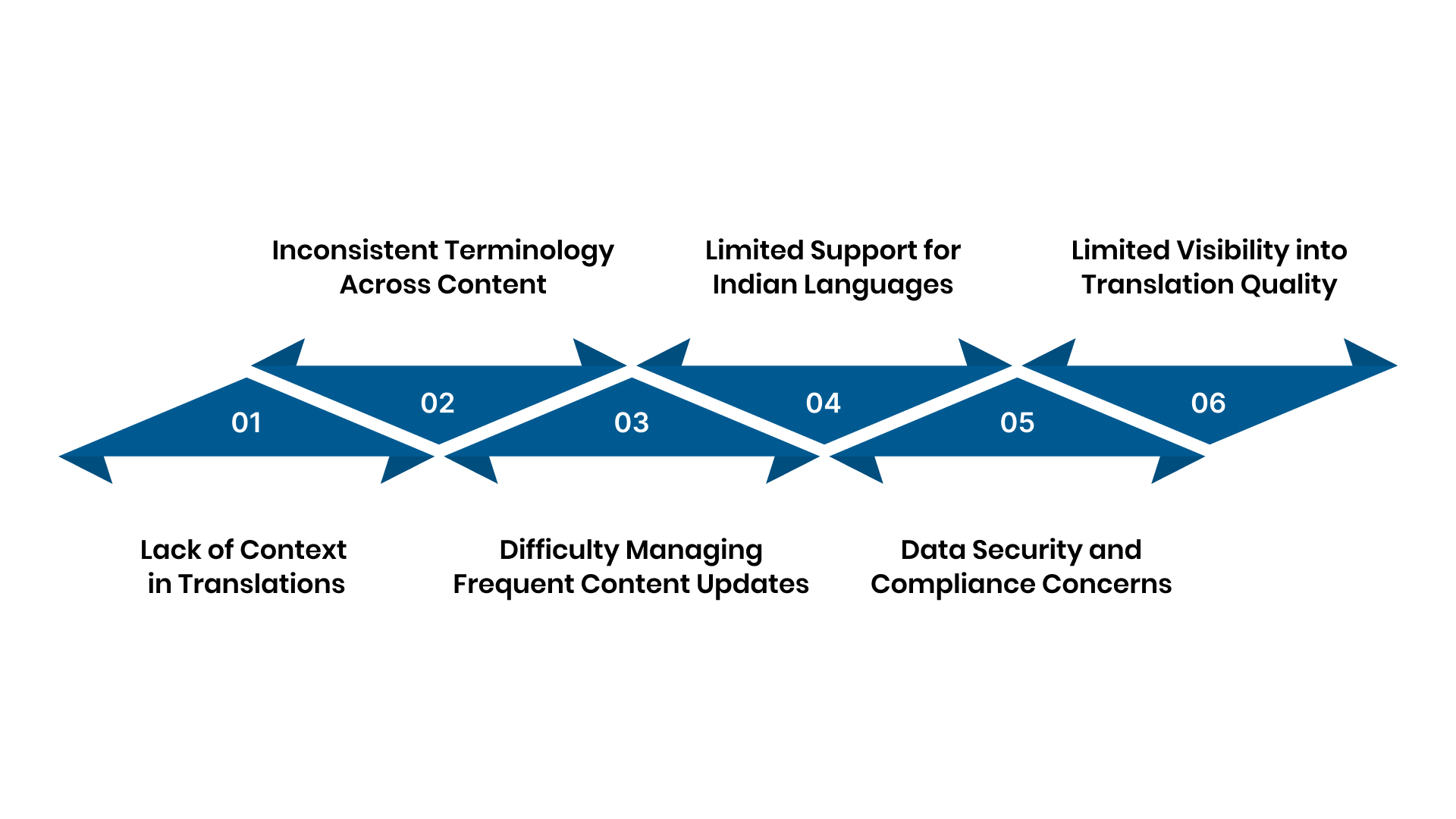
1. Lack of Context in Translations
Online tools sometimes translate words without knowing the whole situation or where they will appear, which can confuse users.
Why it matters
A phrase may be technically correct but unclear when shown inside a form, notification, or error message.
Example
A generic translation of “Submit” may confuse users if the action relates to payment, consent, or verification.
What helps
Providing contextual information ensures translations reflect real user intent.
2. Inconsistent Terminology Across Content
The same terms are translated differently across pages, apps, or documents.
Why it matters
Users receive mixed messages, which reduces clarity and trust.
Example
A financial term translated one way on a website and another way in an app can confuse users.
What helps
Using centralised terminology ensures consistent language across all touchpoints.
3. Difficulty Managing Frequent Content Updates
When content changes often, translations may fall out of sync.
Why it matters
Outdated or partial translations create incomplete user experiences.
Example
A policy update appears in English immediately but remains untranslated in other languages.
What helps
Structured workflows allow translations to be updated quickly and reliably.
4. Limited Support for Indian Languages and Scripts
Many online translation solutions are not optimised for Indian language structures, so they often struggle with complex scripts, text expansion, and regional linguistic variations, affecting readability and accuracy.
Why it matters
Differences in script length and readability can affect layout and understanding.
Example
Text truncation or layout issues occur when translating from English into regional languages.
What helps
Language-specific handling ensures clarity across scripts and regions.
6. Data Security and Compliance Concerns
Online translation often involves handling sensitive business or user data.
Why it matters
Unsecured translation processes can expose confidential information or violate compliance requirements.
Example
Customer or policy data processed through unsecured tools, with no visibility into data handling.
What helps
Secure translation workflows that protect data and meet enterprise and government standards.
6. Limited Visibility into Translation Quality
Many online translation tools provide results without review or quality checks.
Why it matters
Errors may go unnoticed until users report issues or abandon journeys.
Example
Incorrect translations in legal or instructional content discovered after publication.
What helps
Controlled review and approval processes that ensure accuracy before content goes live.
Struggling to manage accurate online translation at scale?
See how Anuvadak helps organisations centralise translations, maintain consistency, and support Indian languages through structured workflows.
How Online Language Translation Works in Practice?
Language translation typically follows a structured process that allows digital content to be translated, updated, and managed efficiently. While implementations vary, most business use cases follow a similar flow.
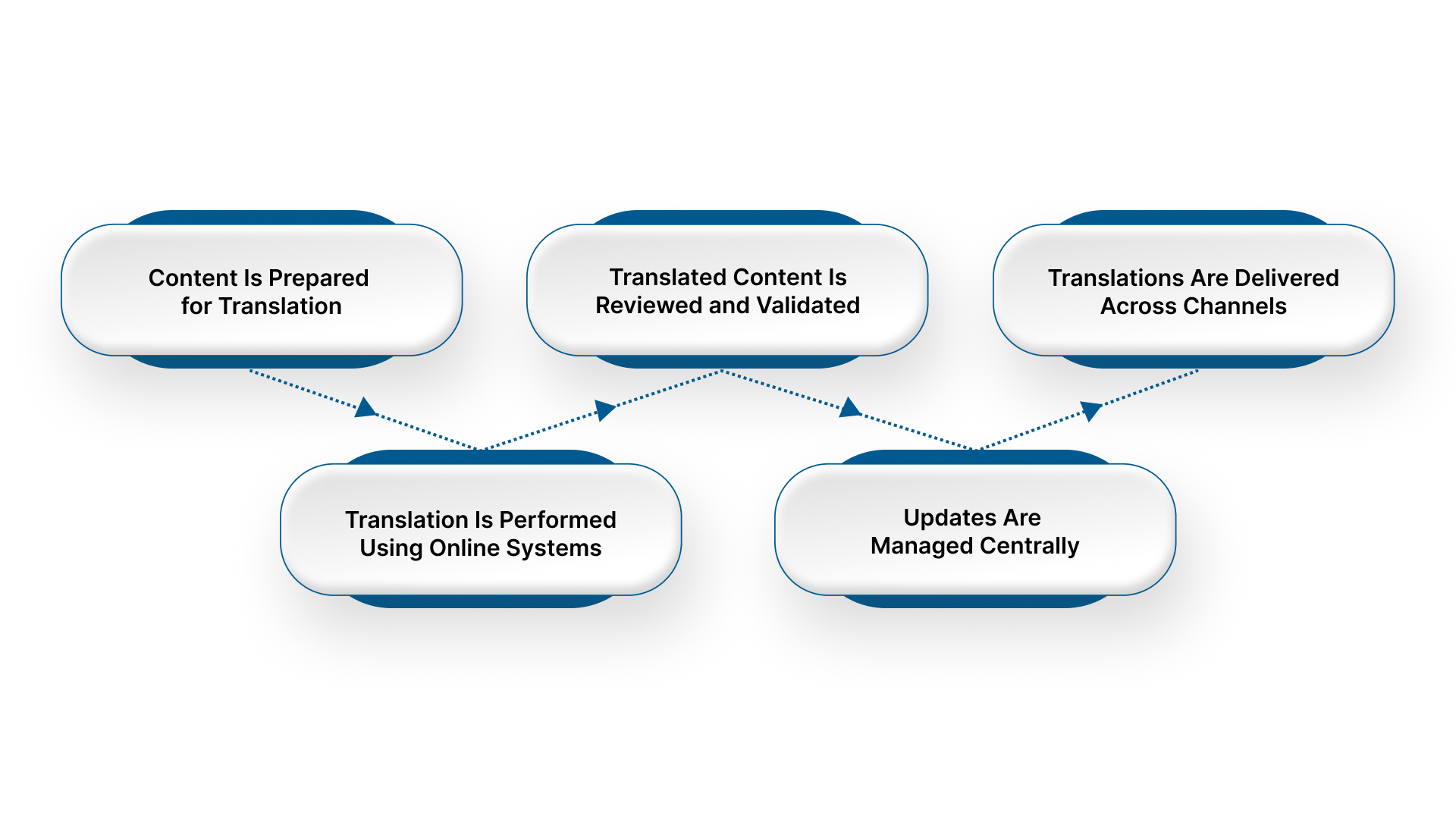
Content Is Prepared for Translation
Before translation begins, content is extracted from websites, applications, or documents. This step ensures that text is separated from design and code, making it easier to translate and update later.
Why this matters
Well-prepared content reduces errors and ensures translations remain aligned as content changes.
Translation Is Performed Using Online Systems
Online translation systems process content digitally, either automatically or with human review. Some systems translate content instantly, while others allow additional checks for accuracy and consistency.
Why this matters
Speed alone is not enough. Businesses often need accuracy controls to ensure meaning and intent are preserved.
Translated Content Is Reviewed and Validated
For business-critical content, translations are reviewed to confirm clarity, tone, and correctness. This step helps identify issues that automated processes may miss.
Why this matters
Review ensures translated content is suitable for real users, not just technically correct.
Updates Are Managed Centrally
When content changes, updates can be translated and applied without rebuilding entire systems. Central management helps keep all languages aligned over time.
Why this matters
Frequent updates are common for digital platforms. Central control prevents outdated or inconsistent translations.
Translations Are Delivered Across Channels
Once finalised, translated content is published across websites, applications, and customer communication channels.
Why this matters
Consistent delivery ensures users receive the same message, regardless of language or platform.
Best Practises for Accurate Language Translation
Accurate language translation depends on transparent processes rather than individual tools. These best practises help businesses maintain clarity, consistency, and reliability as multilingual content grows.
| Best practise | Why It Matters | Practical Outcome |
|---|---|---|
| Translate for meaning, not words | Word-for-word translation often changes intent and confuses users | Messages remain clear and actionable across languages |
| Maintain consistent terminology | Different translations for the same term reduce trust | Users receive a uniform experience across channels |
| Separate language content from code | Content updates should not depend on development cycles | Faster updates without rebuilding systems |
| Plan for language growth early | New languages often require more space and layout changes | Apps and websites remain usable as languages expand |
| Test translations in real conditions | Issues appear only when users interact with content | Problems are fixed before users encounter them |
How These Practises Work Together
Each practise supports the others. Translating for meaning improves clarity, while consistent terminology reinforces trust.
Separating language content from code enables faster updates and prevents redesign work later. Regular testing ensures that translated content performs well for real users.
Together, these practises help organisations use online language translation accurately, scalably, and in a way suitable for enterprise and government use.
Key considerations when translating Indian languages online
Using language translation for Indian languages requires special consideration. India’s linguistic diversity includes multiple scripts, regional variations, and differences in sentence structure that affect clarity and usability.
- One key challenge is script variation. Indian languages use different writing systems, many of which are longer or more complex than English.
- Translated text often expands, which can affect layouts on websites and mobile screens if not planned correctly.
- Another factor is regional usage. The same language may be spoken differently across states, with variations in vocabulary and tone.
- Online translation must account for these differences to ensure messages sound natural and respectful to local users.
- Readability is also important. Font rendering, spacing, and line breaks can affect how easily users read translated content, especially on smaller devices.
- For businesses and government platforms, accurate translation into Indian languages improves accessibility and inclusion.
- When users can understand information in their preferred language, they are more likely to trust, engage with, and successfully use digital services.
By enabling communication in regional languages, language translation also supports greater digital inclusion.
It allows businesses and public services to reach users who may otherwise be excluded by language barriers, promoting equal access to information and services.
What organisations should evaluate before selecting an online translation solution?
When comparing professional translation websites, organisations need clear evaluation criteria. Not all platforms are designed to handle frequent updates, sensitive content, or multilingual consistency at scale.
This section outlines the practical factors organisations should assess before selecting an online translation solution.
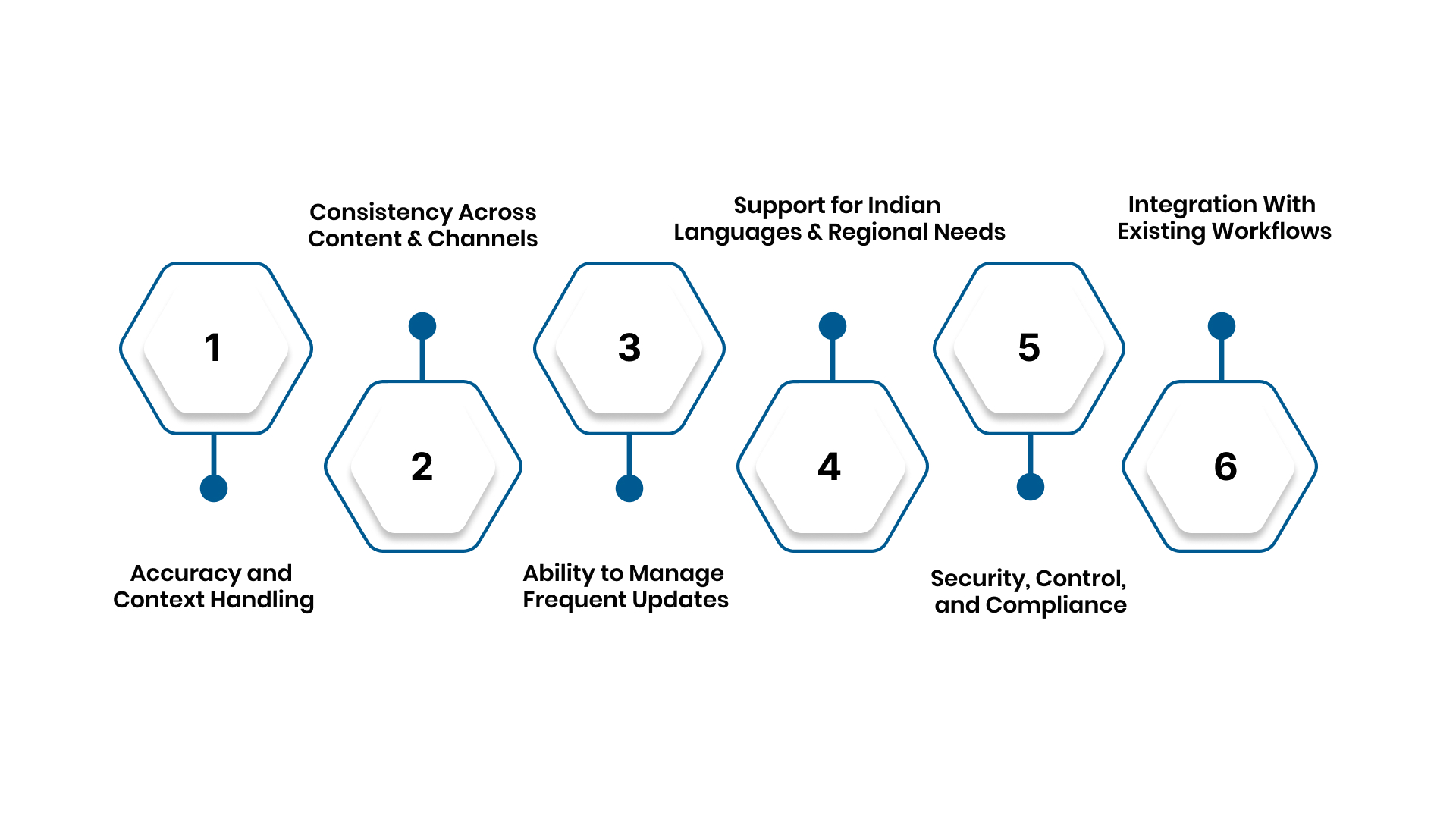
1. Accuracy and Context Handling
Accuracy is the primary requirement for any online translation solution. The system must preserve meaning, intent, and clarity rather than translating words in isolation.
For business content, this includes:
- Instructions, policies, and customer guidance
- Industry-specific terminology
- Content that appears across multiple platforms
Solutions that lack contextual understanding often produce translations that are technically correct but confusing in real use.
2. Consistency Across Content and Channels
Organisations rarely translate content once. The same messages appear across websites, applications, notifications, and customer communication.
A reliable online translation solution should:
- Maintain consistent terminology across all content
- Ensure the exact meaning is preserved across updates
- Avoid duplication or conflicting translations
Consistency directly affects user trust and brand credibility.
3. Ability to Manage Frequent Updates
Digital content changes often. Policies are updated, features evolve, and information is refreshed regularly.
An effective language translation solution should:
- Support fast updates across all languages
- Avoid delays caused by manual processes
- Keep translated content aligned with the source
Without this capability, translations quickly become outdated or incomplete.
4. Support for Indian Languages and Regional Needs
For organisations operating in India, online translation must handle:
- Multiple scripts and writing systems
- Text expansion and layout differences
- Regional variations in language usage
Solutions that are not optimised for Indian languages often struggle with readability and usability, especially on mobile devices.
5. Security, Control, and Compliance
Online translation often involves sensitive or regulated content. This may include customer data, policy information, or public service material.
A suitable solution should offer:
- Secure handling of content
- Precise control over who can translate and approve content
- Alignment with organisational or regulatory requirements
Security and governance are essential for enterprise and government use.
6. Integration With Existing Workflows
Finally, a language translation should fit naturally into how teams work. Translation should not slow down content, product, or technology teams.
Ease of integration allows organisations to:
- Manage translation centrally
- Reduce manual effort
- Maintain speed without sacrificing accuracy
Why This Choice Matters
The correct language translation solution enables organisations to communicate clearly across languages while maintaining control and reliability.
It ensures that translation supports business goals rather than becoming a bottleneck as content and audiences grow.
Evaluating solutions for accurate language translation online?
Learn how Anuvadak supports secure, scalable translation workflows designed for enterprise and government platforms.
As organisations scale, they often face recurring challenges such as inconsistent terminology, delayed updates, and limited visibility into translation quality.
Addressing these issues requires more than standalone tools and manual effort.
How Anuvadak Enables Accurate Language Translation?
As organisations scale multilingual communication, basic tools often fall short. Accurate online language translation requires control, consistency, and the ability to manage frequent updates reliably.
Anuvadak supports accurate online translation by enabling teams to manage multilingual content on a centralised, secure platform. It treats translation as an ongoing process rather than a one-time task.
Key ways Anuvadak supports language translation:
- Centralised content management
All translated content is managed from one place, ensuring consistency across channels. - Accuracy through context and terminology control
Translations preserve meaning and intent, not just words. - Optimised support for Indian languages
Scripts, text length, and readability are handled effectively across devices. - Secure, enterprise-ready workflows
Controlled access and review support compliance and data protection needs.
By addressing accuracy, scale, and control together, Anuvadak enables organisations to rely on online language translation for clear, dependable multilingual communication.
Also Read: Localisation vs Translation: Understanding the Key Differences
Measuring the Success of Online Language Translation
Measuring language translation helps organisations understand whether multilingual content is improving clarity, engagement, and usability. Success should be evaluated through outcomes, not just the volume of translated content.
Key indicators to track include:
- User task completion by language
Higher completion rates indicate that translated content is clear and actionable. - Drop-off patterns across languages
Sudden exits may point to unclear wording or layout issues in specific languages. - User feedback from regional audiences
Feedback from native speakers highlights tone or clarity issues that data alone cannot reveal. - Language-related support queries
Fewer questions caused by confusion suggest improved translation quality. - Consistency across content updates
Simultaneously, accurate updates across languages show that translation processes are working reliably.
Regular measurement ensures that translation remains accurate and effective as content, languages, and user expectations grow.
Conclusion
Online language translation plays a critical role in how organisations communicate with multilingual audiences. As content volumes grow and updates become more frequent, accuracy, consistency, and reliability become essential rather than optional.
Basic translation tools may work for simple use cases, but they often struggle with context, terminology, and scale. For businesses and government platforms, unclear or inconsistent translations can affect usability, trust, and compliance. This makes it essential to approach online translation as a structured process rather than a one-time task.
By choosing solutions that support accuracy, handle Indian languages effectively, and allow content to be managed centrally, organisations can deliver clear and dependable multilingual communication.
Learn how Anuvadak enables accurate language translation online through secure, scalable workflows designed for enterprise and government needs.
FAQs
1.How is language translation online different from free translation tools?
For businesses, focus on accuracy, consistency, and control. Free tools are designed for quick, one-off translations and often lack context handling, terminology consistency, and quality oversight needed for professional use.
2. Can online language translation handle large volumes of content?
Yes, but only if the solution supports centralised management and structured workflows. Handling large volumes of content requires systems that keep translations aligned as updates occur across multiple languages and platforms.
3. Who typically manages online translation in organisations?
A combination of content, product, and technology teams usually manages online translation. Effective solutions allow non-technical teams to manage language updates while maintaining oversight and approval controls.
4. Does online translation work for both websites and mobile apps?
Yes. Language translation online can support websites, web applications, and mobile apps. The key requirement is that content can be updated independently and delivered consistently across all digital touchpoints.
5. What should organisations consider before translating customer-facing content?
Before translating content, organisations should consider accuracy requirements, terminology consistency, audience language preferences, and how often the content changes. These factors determine whether basic translation is sufficient or a more structured approach is needed.
6. How does Anuvadak fit into an online translation strategy?
Anuvadak supports online language translation by helping organisations centrally manage multilingual content, maintain consistency across Indian languages, and update translations securely as content evolves.
7. Why are governance and review important in online translation?
Governance ensures that translated content meets quality, compliance, and brand standards. Review workflows help catch errors early and maintain trust, especially for enterprise and government communication.