Reaching your audience in a language they understand can make all the difference to how they engage with your business.
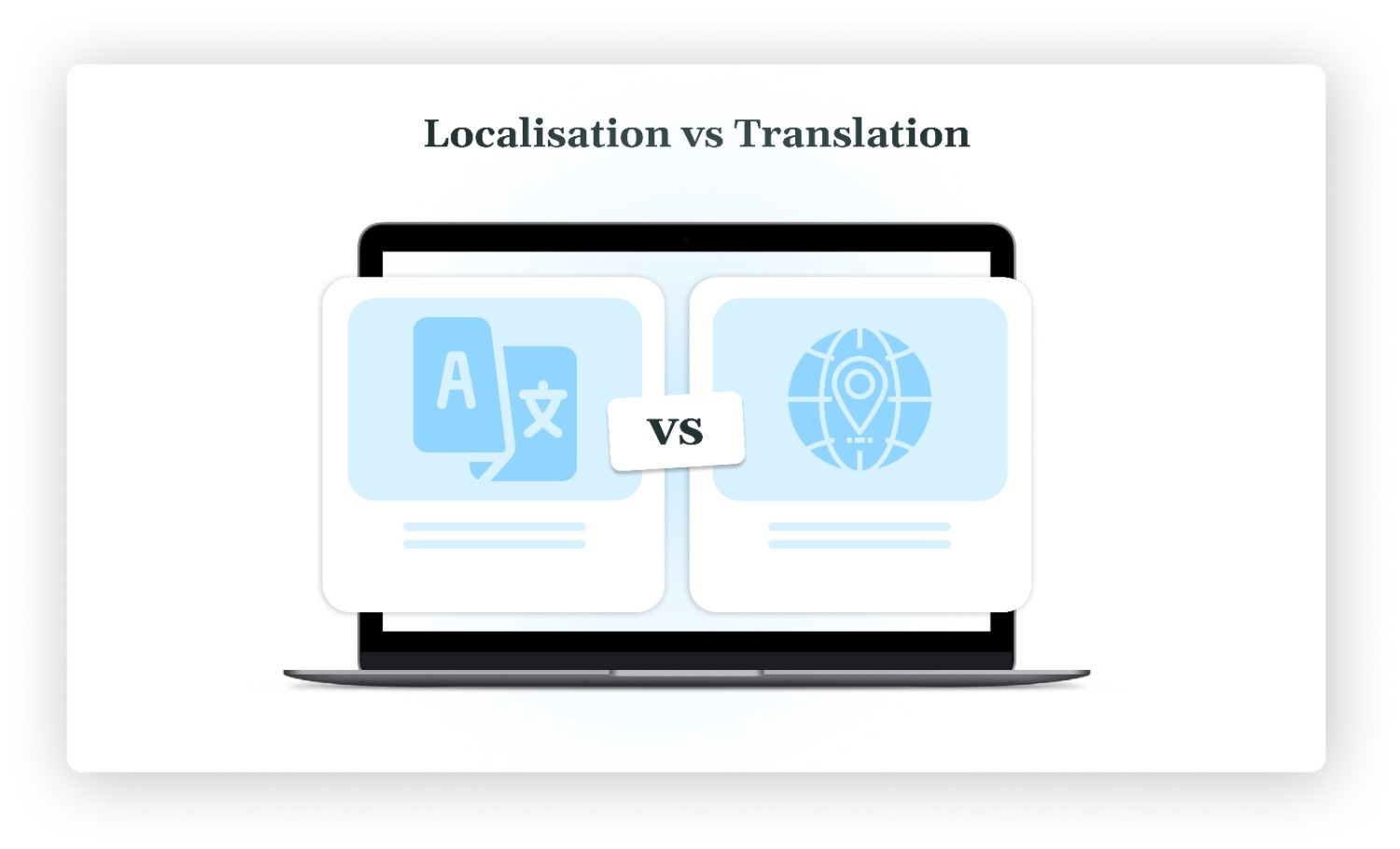
Have you ever wondered why some websites or apps feel familiar and easy to use while others feel distant or confusing? The difference often comes down to localisation vs translation, a choice that directly affects how authentic and relatable your content feels to audiences. Businesses that understand this distinction can connect more meaningfully with multilingual audiences.
Around 65% of consumers prefer content in their own language, even if the quality is imperfect. So how does localisation differ from translation? When should a business rely solely on translation and when is full localisation required? This blog explores the key differences between localisation and translation, when to use each, the processes involved, their benefits, and the role of technology.
Key Takeaways
- Translation makes your message clear across languages, but localisation ensures it feels authentic, culturally relevant, and native to each audience.
- Use translation for internal or factual content, but rely on localisation for marketing, apps, and consumer platforms where nuance drives impact.
- Localisation goes beyond words, adapting tone, visuals, functions, and context to create trust and stronger user engagement.
- Combining translation and localisation builds brand consistency, improves customer experience, and enables seamless communication worldwide.
- Platforms like Anuvadak streamline this process, integrating translation, localisation, and voice features to save time and scale effectively.
What Translation Means and Why It’s Crucial for Your Business
Translation is the process of converting content from one language into another while maintaining its original meaning. It can be literal, focusing solely on words, or context-aware, considering tone, style, and purpose. Understanding this distinction helps you communicate clearly across languages and ensures your content is relevant to different audiences.
For your business, translation is essential for websites, apps, and documents that need to be accessible to multilingual users. Without accurate translation, product descriptions, FAQs, and support content can confuse users, leading to poor engagement or missed opportunities. While translation ensures your message is understandable, the real decision lies in localisation vs translation, depending on how contextually tailored your content must be.
Top Types of Translation Businesses Commonly Use

When you approach translation for your business, you may encounter different types depending on your content needs. Each type serves a specific purpose and requires accuracy to maintain clarity and effectiveness. Below are the main categories:
Document Translation
- This involves legal, financial, or technical documents that demand precise wording and terminology.
- For example, contracts in a banking platform must prioritise precision, showing how localisation vs translation decisions vary greatly for legal or technical material.
- Tools like SDL Trados or MemoQ can help manage terminology consistency across multiple documents.
Website Text Translation
- Focuses on user-facing content such as product pages, landing pages, and menus.
- A retail website translating descriptions into Indian languages illustrates how localisation vs translation determines whether users simply understand or fully connect with content.
- Integration with platforms like Anuvadak can streamline website translation and ensure updates are reflected across all languages.
Marketing Copy Translation
- Includes slogans, campaigns, and promotional material where cultural relevance and tone are important.
- For instance, a festival campaign in India needs translation that preserves excitement and aligns with regional sentiments without altering the brand message.
- Using marketing translation tools like Smartling ensures your copy retains its persuasive impact in every language.
App Content Translation
- Covers in-app notifications, tooltips, and user interface text.
- For example, a mobile banking app must present alerts, error messages, and guidance clearly in all supported languages to prevent user frustration.
- APIs like Translation API or integration with Anuvadak can automate updates and maintain consistency.
Over 145+ businesses and government organizations already trust Anuvadak to manage multilingual websites. Contact us now to join them and go live up to 5x faster!
Understanding translation sets the stage for seeing how localisation adds cultural and contextual depth to your content.
How Localisation Differs from Translation and Why It Matters

Localisation vs translation is more than wording. Localisation adapts content culturally, contextually, and technically, making audiences feel it was created for them. While translation focuses on accurate wording, localisation considers tone, visuals, functional elements, and cultural references.
For example, a product description translated into Hindi may be understandable, but a fully localized version might reference regional festivals like Diwali or include familiar pricing formats in rupees to create a stronger connection with users. Similarly, images or icons may be adapted to resonate with local preferences. Effective localisation can increase engagement, improve trust, and strengthen your brand perception across different regions.
Key Elements Involved in Effective Localisation
When you localize content for your business, several key elements ensure that your message connects with the target audience. The following numbered list highlights these core areas with examples relevant to Indian users:
Language Adaptation
- Adjust idioms, slang, and regional dialects to reflect local usage.
- For instance, using “chalo” instead of “let’s go” in app notifications can make content feel natural for Hindi-speaking users.
Visual Adaptation
- Tailor images, icons, and colours to align with local cultural sensibilities.
- An e-commerce banner featuring bright colours and festival motifs like rangoli during Diwali increases relatability.
Functional Adaptation
- Modify formats for currency, date, time, or measurement units to match local expectations.
- Displaying prices in rupees and dates in DD/MM/YYYY format prevents confusion and improves user experience.
Tone and Style Adjustment
- Ensure messaging aligns with cultural norms and communication styles.
- A healthcare website in India may adopt a polite and reassuring tone in patient instructions rather than a direct or formal tone used elsewhere.
Technical Adaptation (Optional)
- Adjust text layout, SEO elements, and navigation to suit multilingual platforms.
- Expanding button labels for longer translations in regional languages or optimizing headings for local search terms helps maintain clarity and discoverability.
Knowing what localisation involves helps you determine when translation alone is enough and when full adaptation is required.
Localisation vs Translation: When to Use Each
Understanding when translation alone is sufficient and when full localisation is necessary can help you allocate resources efficiently while ensuring your content resonates with the intended audience. Different types of content have different requirements, and recognising these differences allows you to prioritise effectively.
Literal translation works for generic content, but localisation vs translation decisions become critical for customer-facing, culturally specific, or interactive material. Making the right choice ensures that your users understand the content and feel that it is tailored to their needs.
Decision-Making Framework for Businesses
You can follow a structured approach to determine the level of language adaptation needed for each content type. Consider the following table to guide your decision:
| Content Type | Recommended Approach | Example | Tools / Resources |
| Internal Documents | Translation only | HR policies, standard operating procedures | Translation API, Microsoft Word |
| Technical Manuals | Translation with basic adaptation | Machine instructions, product specifications | SDL Trados, MemoQ |
| Customer-Facing Websites | Full localisation | Home pages, landing pages, product pages | Anuvadak, Translation API |
| Marketing Campaigns | Full localisation | Email campaigns, festival promotions | Smartling, Anuvadak |
| Mobile App Notifications | Full localisation | In-app alerts, tooltips, guidance messages | Anuvadak, Translation API |
Prompting Questions for Your Business
To decide if translation is sufficient or localisation is required, ask yourself the following:
Is this content globally generic or locally contextual?
- Generic content, such as internal reports, can usually be translated without adaptation.
- Contextual content, such as promotional banners for Diwali or Holi, requires localisation to engage the audience.
Will users feel connected if we only translate?
- Consider the user experience for apps, websites, and customer-facing platforms.
- Full localisation may be necessary if the content uses idioms, cultural references, or visual elements that differ by region.
Once you know when to translate or localise, you can appreciate the advantages of combining both approaches for your business.
Top Benefits of Combining Translation and Localisation for Businesses

Combining localisation vs translation ensures content is both accurate and culturally relevant, creating consistency across languages while strengthening trust and user engagement. This approach allows you to communicate effectively with multilingual audiences, improving engagement and building trust with users. For businesses operating in India, where regional languages and cultural nuances vary widely, combining both strategies is particularly important.
When you integrate translation and localisation, your business can gain several advantages that impact user experience, brand perception, and operational efficiency. Below are the key benefits:
Better User Engagement
- Content that is both correctly translated and locally adapted encourages users to interact with your website, app, or platform.
- For example, an e-commerce site promoting Diwali discounts with regionally relevant language and imagery sees higher click-through rates and conversions.
- Anuvadak can help manage website text translation and localisation simultaneously for consistent engagement.
Improved Customer Trust
- Users are more likely to trust a brand that communicates clearly in their preferred language and respects local cultural norms.
- In the healthcare sector, instructions and notifications in regional languages reduce misunderstandings and reassure patients, improving overall trust.
Consistency Across Multiple Languages and Platforms
- Maintaining consistent messaging across websites, apps, and marketing campaigns ensures your brand is recognised and understood across regions.
- BFSI platforms providing multilingual support for banking apps and customer portals benefit from consistent terminology and tone, reducing errors and confusion.
Enhanced Operational Efficiency
- By combining translation and localisation workflows, you reduce the need for repeated edits and corrections across multiple languages.
- Anuvadak allows you to manage multilingual websites centrally, keeping updates synchronized across all regions.
The Government of India used Anuvadak to publish the MyGov Covid-19 page in 10 languages, reaching millions with vital information. Book a demo today and achieve the same scale and impact for your business.
While the benefits are clear, recognising common challenges ensures you address obstacles before they impact your multilingual content.
Key Challenges Businesses Face in Translation and Localisation

Even with skilled translators, businesses often face hurdles when delivering multilingual content. Ensuring that tone, cultural relevance, and functionality are consistent across platforms requires careful planning and specialised tools. Overlooking these aspects can reduce user engagement, weaken trust, and create operational inefficiencies.
Identifying common challenges helps you address them proactively. Below are the main issues businesses encounter when managing translation and localisation efforts:
Maintaining Consistent Tone Across Multiple Languages
- Different translators may interpret tone differently, leading to inconsistent messaging.
- For example, a BFSI website may have formal and reassuring messaging in English but unintentionally adopt casual phrasing in Hindi, confusing users.
- Platforms like Anuvadak allow centralised terminology and style guides, ensuring uniformity across all languages.
Adapting Cultural References Correctly
- Literal translations often fail to account for cultural differences, which can reduce engagement.
- An e-commerce campaign using Halloween imagery in India might feel irrelevant unless adjusted for local festivals like Diwali or Raksha Bandhan.
- Localisation tools in Anuvadak help you tailor content culturally and contextually for each target audience.
Managing Multilingual Websites or Apps Efficiently
- Updating and synchronising content across multiple languages is resource-intensive.
- A healthcare platform that updates treatment guidelines must ensure all language versions are current, or patients could receive outdated information.
- Using Anuvadak or similar platforms allows you to manage multilingual websites and apps from a single interface, reducing errors and delays.
Ensuring Data Security While Handling Multiple Languages
- Translating sensitive content across regions increases the risk of data breaches.
- Financial institutions sharing user statements in regional languages must safeguard this information throughout the translation process.
Secure translation platforms like Anuvadak provide encrypted workflows to protect data while supporting multilingual content.
Awareness of these challenges naturally leads to exploring how Anuvadak streamlines translation and localisation for enterprises.
How Anuvadak Simplifies Translation and Localisation for Enterprises
If you manage a website or app for a business that needs to engage audiences across India, you know that translating content is only part of the challenge. Anuvadak is a B2B platform designed to handle website and app localisation at scale, ensuring your content is accurate, culturally relevant, and managed efficiently across multiple languages.
With Anuvadak, you do more than translate. The platform centralises translation, localisation, and multilingual content management, letting you focus on delivering a seamless experience while maintaining consistent messaging.
Key features and benefits include:
Website Text Translation and Multilingual Management
- Neural Machine Translation ensures content is accurate and context-aware for product pages, FAQs, and customer support content.
- Centralised CMS allows updates across multiple languages without downtime, while automatically generating local-language sub-domains for new markets.
- Real-time progress tracking and localized page previews reduce manual effort and maintain consistency across languages.
Integration with Speech-to-Text and Text-to-Speech APIs
- Add voice-driven features to apps or websites, supporting real-time transcription and natural-sounding multilingual speech synthesis.
- Enhances accessibility and engagement, particularly in sectors like BFSI, Healthcare, and Education.
Business Impact
- Faster Go-to-Market: Publish content up to 5x faster than traditional methods.
- Consistent Messaging and Expanded Reach: Centralised controls ensure uniform tone, style, and terminology across languages while reaching regional audiences effectively.
- Operational Efficiency and Security: Automated string synchronization, analytics, and enterprise-grade encryption reduce manual effort and keep sensitive data safe.
Practical applications for enterprises include:
- E-commerce platforms translating product pages into Hindi, Tamil, and Marathi for accurate, context-aware messaging.
- BFSI customer portals synchronised across languages to maintain consistency and reduce errors.
- Healthcare apps providing regional-language audio guides, enhancing accessibility and user trust.
- Marketing campaigns tracked via analytics to measure engagement and localisation efficiency.
Over 145 businesses and government organisations already trust Anuvadak to manage multilingual websites efficiently. By combining translation, localisation, and voice integrations, the platform helps you reduce manual effort, improve engagement, and scale your digital presence across India.
Getting started is simple: publish your localised website on a sub-domain or sub-directory, use Indian language meta tags for better discoverability, and go live faster with minimal disruption.
Conclusion
Translation gives you accuracy, while localisation brings context and culture. When you understand the difference, you can decide how best to communicate with your audience.
Both approaches work best when used together. Translation ensures clarity, and localisation makes sure your message feels relevant and engaging. Which approach does your content need right now: accuracy, cultural connection, or both?
Looking ahead, businesses that combine translation and localisation gain stronger global presence, sustainable growth, and deeper trust with their audiences.
Book a free demo now or call us at 8047106606 to see how Anuvadak can help you achieve both accuracy and cultural impact.
FAQs
Q: How do I decide if a project needs only translation or full localisation?
A: Start by analyzing the content type and audience expectations. Technical documents usually need translation, while customer-facing platforms benefit more from localisation.
Q: Can localisation help improve search rankings in new markets?
A: Yes, localized keywords match how users actually search in their region. This improves visibility, click-through rates, and organic traffic.
Q: What risks do companies face if they skip localisation?
A: You risk miscommunication, reduced trust, and even regulatory issues. Skipping localisation often makes products feel foreign and unrelatable.
Q: How does automation support large-scale website localisation?
A: Automation handles repetitive updates, string synchronization, and progress tracking. This saves time, lowers costs, and keeps content consistent globally.
Q: In what way can localized interfaces reduce support costs?
A: Clear, intuitive localized interfaces reduce user errors and confusion. Fewer mistakes mean fewer support tickets, saving time and resources.
Q: How should I measure the success of localisation efforts?
A: Track metrics like engagement, retention, conversion rates, and regional sales growth. These indicators reveal how well localized content performs.