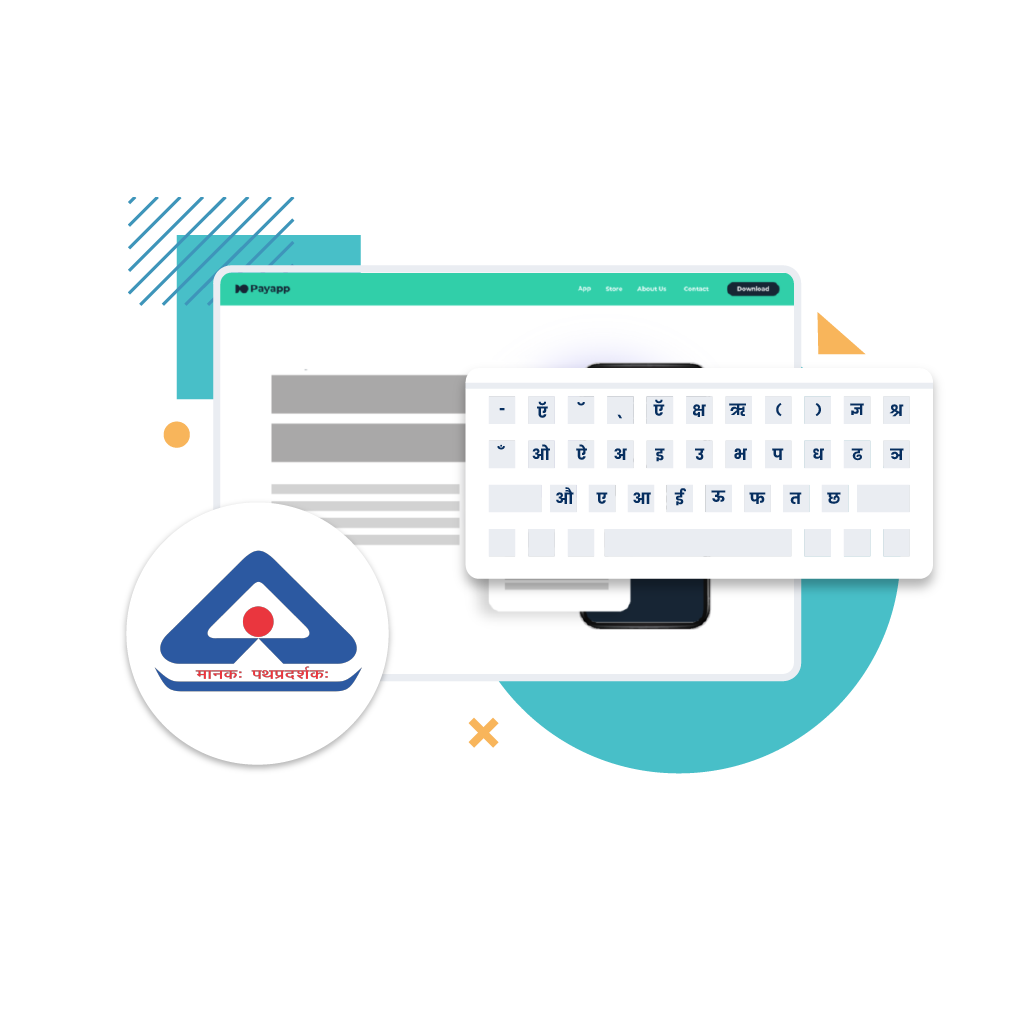
How can your software truly connect with users who speak different languages and expect it to feel natural from the first interaction? Software localisation is more than translation. It adapts your interface, content, cultural references and technical elements so the experience feels native, not foreign.
Around 70% of consumers prefer content in their own language, showing that localisation is often expected rather than optional. Do you struggle to engage users who leave because the software does not reflect their language or context? In this blog we will explain what software localisation is, why it matters, the process steps, common challenges, the tools available and how Anuvadak simplifies the entire journey.
In Summary:
- Translation without localisation creates friction. When your software feels linguistically correct but culturally misplaced, adoption stalls and retention drops.
- Localisation planning should align with KPIs. If your goal is retention or conversions, prioritise critical touchpoints like onboarding flows and payment gateways first.
- Ignoring functional adjustments is costly. Scripts like Devanagari or RTL layouts demand early design consideration, otherwise fixes later disrupt release timelines.
- Automation is not just efficiency, it is risk management. Centralised localisation platforms cut errors, maintain compliance, and protect against fragmented brand messaging.
- Localisation is not a support task but a growth strategy. Enterprises that integrate it into product roadmaps gain both market expansion and stronger user trust.
What Is Software Localisation and How Does It Differ from Translation?
When you plan to expand your software to new regions, it is not enough to only translate the words on the screen. Software localisation adapts your product for different languages, cultural expectations and functional requirements so users feel the product was designed for them. Translation is one part of this process, but localisation ensures the entire experience matches the user’s environment.
Translation focuses on converting words from one language to another. Localisation ensures that the translated words fit naturally in the interface, that cultural references are appropriate and that technical adjustments such as date formats or input methods work correctly. If you only translate, your software may still feel foreign. Localisation makes it truly usable.
Here is a simple comparison that illustrates the difference:
| Aspect | Translation | Localisation |
| Primary focus | Language conversion | Full adaptation (language, culture, technical) |
| Example in software | Menu text translated into Hindi | Menu text translated, date format changed, currency shown in rupees |
| User experience | Understandable but may feel foreign | Feels native and natural to local users |
| Scope | Words and phrases | Words, UI design, formats, input methods, cultural references |
Consider the example of a government portal in India. If it only provides translated form fields in Hindi or Bengali, users may still struggle if the calendar is in an unfamiliar format or if the font does not render correctly. True localisation ensures the forms display in the correct script, support local date input and even adjust official terminology to match government usage in that language.
By focusing on localisation instead of only translation, you reduce the risk of alienating users and instead create a product that feels trustworthy, relevant and usable.
Why Software Localisation Is Essential for Business Growth

If you rely on a single language version of your software, you immediately restrict your audience. English-only platforms may work in limited markets, but in multilingual regions such as India, this excludes a majority of users. Software localisation ensures your product speaks to every user in their preferred language and format, which directly impacts adoption, retention and long-term growth.
When you localise, you expand your potential reach and create an experience that feels built for local needs. This is particularly important for IT managers, product heads and CTOs who are tasked with ensuring both scalability and compliance across markets.
Here are the main benefits you gain from software localisation:
Wider customer reach
- Localisation allows you to access users who would otherwise avoid your product. For example, an eCommerce platform offering Tamil, Marathi and Bengali interfaces reaches millions more buyers than an English-only version.
- By enabling users to interact in their own language, you reduce drop-off rates and improve conversions.
User trust and engagement
- Users are more likely to engage with your software if the language, tone and features reflect their expectations.
- Consistency across localised content strengthens credibility, especially in sectors such as BFSI and healthcare where accuracy is critical.
Regulatory compliance with language mandates
- In India, government directives often require services to be available in multiple languages for accessibility.
- Localisation ensures your software meets these requirements and avoids compliance risks, particularly for government-facing applications and public services.
The impact is measurable. Studies show that around 70% of consumers prefer content in their native language, and many are unwilling to make a purchase if it is not available. By investing in localisation, you do not just add a language layer; you create a growth strategy that aligns with user behaviour, regulatory frameworks and market potential.
Understanding the distinction between translation and localisation helps you identify the essential components that make software ready for global audiences.
Key Components of Software Localisation for Global Readiness

To make your product usable across different regions, you need to address localisation at both the content and functional levels. It is not enough to simply translate words; you must also adapt interfaces, formats, and cultural cues so that the product feels native to every user. Below is a breakdown of the essential components you cannot overlook.
1. User Interface and Content Translation
Your users interact with menus, buttons, error messages, and notifications every time they use your product. If these elements are poorly translated, users quickly lose confidence in the platform. Word-for-word translation often produces awkward results, such as “Save” being mistranslated as “Rescue” or “Exit” appearing as “Way Out.” These errors make applications look unprofessional and confusing.
To avoid this, you should:
- Translate UI elements within context rather than as isolated strings.
- Test translations directly in the interface to spot design breaks or truncated text.
- Use localisation testing tools like Phrase or Lokalise to manage translations and context.
2. Date, Time, and Currency Adaptation
Date, time, and currency formats vary widely across regions, and incorrect formatting can lead to costly mistakes. For example, 03/07/2025 could mean 3 July in the UK but 7 March in the US. Similarly, showing prices in dollars when selling in India can cause friction, even if users can technically complete the transaction.
This is especially critical for:
- Banking, fintech, and eCommerce platforms, where financial accuracy is non-negotiable.
- Compliance with regional laws in markets like India, where prices must be displayed in rupees.
- Systems where time formats (12-hour vs 24-hour) impact scheduling and reporting.
Implementing locale-aware libraries such as ICU (International Components for Unicode) ensures your software automatically adjusts to local standards.
3. Cultural Relevance and Tone of Content
Direct translations rarely capture cultural nuance. Idioms, colour choices, or humour that make sense in one country can alienate or confuse users in another. For instance, using red to highlight success works in some markets but conveys danger or loss in others.
When you adapt content tone and visuals to suit the local culture, you:
- Build trust by sounding natural instead of foreign.
- Increase adoption, since users feel your product is “built for them.”
- Reduce rejection rates caused by mismatched idioms or inappropriate visuals.
This applies equally to marketing campaigns and in-app content. Working with native reviewers during testing can uncover issues that automated translation tools miss.
4. Functional Adjustments for Local Languages
Supporting local languages goes beyond text translation. Some languages require structural changes in the software itself. For example, Arabic and Hebrew are written right-to-left, which demands mirrored layouts. Indian languages often use complex scripts that require proper font rendering and keyboard input support.
If your software cannot handle these technical aspects, users cannot interact with it effectively. To prevent this, ensure you:
- Integrate Unicode support for multi-script compatibility.
- Provide virtual keyboards or input tools for languages not widely supported by default.
- Test accessibility features, such as screen reader compatibility, to cover inclusivity requirements.
By addressing these adjustments, you not only widen your user base but also meet accessibility and regulatory expectations in multiple regions.
Join over 145+ businesses and government organisations already using Anuvadak to launch multilingual websites up to 5x faster. Book your demo today and see how easily you can scale globally.
Once you know the key components, you can follow a structured, step-by-step process to implement software localisation effectively.
Step-by-Step Software Localisation Process for Businesses

Localising software requires a structured approach to ensure consistency, accuracy, and scalability. Each stage of the process connects directly to business outcomes such as customer satisfaction, compliance, and retention. Below is a clear process you can follow to embed localisation into your software delivery.
Step 1 – Requirement Analysis and Language Planning
You need to begin by defining your localisation goals. This includes deciding which regions you will target, understanding compliance requirements, and aligning the project with your business priorities. Not all features carry equal weight, so you should identify which areas need localisation first, such as payment gateways, onboarding flows, or high-traffic content.
Linking localisation to measurable KPIs ensures investment is justified. For example:
- Customer retention: Users are more likely to return if they can interact in their native language.
- Conversion rates: Local currencies and culturally aligned content reduce friction in purchases.
- Regulatory compliance: Meeting language mandates prevents costly legal risks.
Step 2 – Content Extraction and Preparation
Before you translate, you must prepare your content. This involves extracting all text from UI strings, databases, and documentation into manageable files. The most reliable formats include XML, JSON, and standardised resource files, which can be easily updated and tracked.
Leaving text hard-coded in your software makes localisation complex, error-prone, and expensive to maintain. A clean content extraction process allows you to:
- Maintain separation between code and content.
- Reuse the same localisation workflows across platforms.
- Reduce errors when scaling to new languages.
Step 3 – Translation and Cultural Adaptation
Direct translation does not account for context or culture. To deliver a professional experience, you should rely on professional translation teams or localisation platforms such as Lokalise or Smartling. These tools provide workflows that maintain quality and consistency across large projects.
Using glossaries and style guides ensures that terminology, tone, and brand voice stay consistent. For example, if “checkout” is translated differently across app screens, users lose trust and clarity. With structured adaptation, you can align not just language but also idioms, colour references, and formality levels with your target market.
Step 4 – Integration of Localised Content into Software
Once translations are complete, you need to integrate them into your front-end and back-end systems. Static layouts are often not enough, as translated text can expand or contract depending on the language. Designing dynamic layouts ensures that longer words in German or character-based scripts in Japanese do not break your interface.
Best practices include:
- Using scalable integration frameworks that allow future updates without rewriting code.
- Automating string management to reduce manual errors.
- Supporting fallbacks when translations are missing to prevent blank fields.
Step 5 – Testing and Quality Assurance
Quality assurance covers both linguistic and functional checks. Linguistic QA verifies that translations are accurate, natural, and consistent with tone. Functional QA ensures that interface alignment, navigation, and input methods work as expected across all supported devices and operating systems.
Common issues caught at this stage include:
- Cut-off text in buttons or menus.
- Untranslated strings that remain in the source language.
- Misaligned layouts caused by longer translated content.
Testing across multiple devices and platforms reduces post-launch errors and prevents reputational damage.
Step 6 – Continuous Updates and Maintenance
Localisation does not end at launch. Every version update, new feature, or seasonal campaign requires updates to localised content. For large enterprises, managing this manually quickly becomes unsustainable.
Automation frameworks and continuous localisation pipelines allow you to:
- Sync new content directly into localisation workflows.
- Maintain up-to-date translations across all platforms.
- Scale localisation efforts efficiently without slowing down release cycles.
Ongoing maintenance ensures your product continues to feel native to users, regardless of how much your software evolves. Even with a clear process, businesses often face practical challenges that need targeted solutions to ensure smooth localisation.
Common Challenges in Software Localisation and How to Solve Them

Even with a structured process, localisation often runs into recurring issues. Addressing them early helps you avoid delays, extra costs, and user dissatisfaction.
1. Terminology Consistency Across Platforms
Inconsistent use of terms can confuse users and damage trust. For example, calling the same feature “Profile” on mobile and “Account” on web creates friction.
Solution:
- Maintain a shared glossary of approved terms.
- Use localisation management tools such as Lokalise or Smartling that enforce glossary rules automatically.
- Train all contributors to follow the same style guides.
2. Scalability of Localisation Efforts
Manual translation workflows cannot keep up with frequent product updates. This often leads to delays in releasing new features to global markets.
Solution:
- Set up continuous localisation pipelines integrated with your development cycle.
- Use API-driven workflows that push and pull content automatically.
- Prioritise modular content so only changed strings require re-translation.
3. Script and Language Compatibility
Supporting right-to-left scripts like Arabic or languages with complex characters such as Hindi often breaks layouts if not planned properly.
Solution:
- Design dynamic UI layouts that adapt to text expansion and direction changes.
- Ensure fonts fully support required scripts to prevent missing glyphs.
- Test across real devices to confirm correct rendering.
4. Cultural Nuance Errors
Using the wrong tone, idioms, or colours can make content feel out of place. For example, certain colours have strong associations in India that differ from Western markets.
Solution:
- Work with native linguists who understand both language and culture.
- Test messaging with small user groups before full release.
- Build flexible design systems where visual elements can adapt per region.
Anuvadak powers multilingual content for millions of users with zero downtime and enterprise-grade security. Reach out now to experience smarter, faster, and safer localisation.
Overcoming localisation challenges is easier when you leverage specialised tools and platforms designed to manage multilingual content efficiently.
Top Tools and Platforms That Support Software Localisation
Relying on manual localisation often slows you down and increases the risk of inconsistent translations. Tools streamline workflows, reduce costs, and ensure accuracy across regions. You should choose platforms based on whether you need translation management, direct API integration, or fully automated localisation pipelines.
1. Translation Management Systems (TMS)
TMS platforms help you centralise and coordinate translations across multiple teams and languages. They are especially useful for businesses managing frequent updates.
Key features to look for include:
- Central glossaries and style guides for consistency.
- Real-time collaboration between developers, translators, and reviewers.
- Built-in quality checks for errors like missing placeholders.
Examples: Lokalise, Smartling.
2. APIs for Translation and Localisation
APIs integrate multilingual features directly into your software, enabling real-time translation without manual intervention. This approach works well if you run platforms with continuous content flow.
Business use cases include:
- Converting dynamic content such as user reviews into local languages.
- Powering multilingual chatbots or helpdesk systems.
- Supporting cross-border eCommerce by translating product details instantly.
Examples: Google Cloud Translation API, Microsoft Translator API.
3. Automated Localisation Platforms
These platforms go beyond translation by combining TMS, APIs, and automation to manage multilingual websites or apps end-to-end. They minimise the need for repeated manual updates.
Benefits you gain include:
- Automatic content extraction and syncing with source systems.
- Scalable localisation for frequent software releases.
- Integration with analytics to monitor user engagement per language.
This category sets the stage for specialised solutions like Anuvadak, which is designed for managing multilingual websites and applications with built-in scalability.
How Anuvadak Simplifies Software Localisation for Enterprises
If you manage a website or app for audiences across India, translating text is only part of the work. Anuvadak, Reverie’s enterprise platform, centralises localisation and multilingual content management so you can scale, stay consistent, and engage users in their own languages.
Key features and benefits include:
- Website and app localisation: Neural Machine Translation ensures accurate, context-aware content across product pages, FAQs, and support. A centralised CMS lets you publish updates across languages instantly, with auto-generated local-language sub-domains or directories.
- Voice integration: Built-in Speech-to-Text and Text-to-Speech APIs enable transcription and natural speech synthesis, supporting accessibility and engagement in sectors like BFSI, healthcare, and education.
- Enterprise-grade scalability and security: Automated string synchronisation, localisation analytics, and encryption reduce manual effort, track performance, and protect sensitive data.
Business impact:
- Launch content up to 5x faster.
- Maintain consistent tone and terminology across languages.
- Expand reach by engaging India’s multilingual audiences.
- Improve efficiency with automation and secure workflows.
Practical applications:
- E-commerce platforms translating catalogues into Hindi, Tamil, and Marathi.
- BFSI portals synchronised across multiple languages.
- Healthcare apps offering regional-language audio guides.
- Marketing teams tracking localisation ROI through analytics.
Over 145 organisations already trust Anuvadak to scale multilingual engagement with speed and accuracy.
Conclusion
Software localisation improves user experience by making products feel native, accelerates market entry by reducing adaptation delays, and delivers stronger ROI through scalable multilingual adoption. Treating localisation as a core strategy rather than a late-stage fix ensures you avoid costly rework and gain lasting benefits across every release.
At Anuvadak, we’ve built an enterprise-ready platform that simplifies the entire localisation process. With automation, zero downtime, CMS compatibility, analytics, and enterprise-grade security, you can translate, display, and manage multilingual content without technical hurdles. More than 145 businesses and government organisations already trust Anuvadak to scale their reach efficiently and securely.
Is your enterprise software truly ready for every market you plan to reach?
If you want to expand globally with automation, security, and efficiency, book a demo with Anuvadak or speak with our team today to see how we can help you localize with confidence.
FAQs
Q: How can you ensure consistent terminology across multiple languages during software localisation?
A: Consistency comes from maintaining centralized glossaries and translation memories within a TMS. This ensures identical terms appear correctly across platforms, documents, and updates.
Q: What role does early design planning play in reducing localisation costs?
A: Planning for flexible layouts, Unicode support, and text expansion from the start prevents expensive redesigns and accelerates future multilingual rollouts.
Q: How do you validate the accuracy of localized error messages in enterprise software?
A: Test localized builds with linguistic QA combined with automated UI checks. This ensures error messages remain accurate, functional, and contextually correct.
Q: What process improvements come from integrating localisation into CI/CD pipelines?
A: Integration automates string extraction, translation, and reintegration. Enterprises release multilingual builds simultaneously, reducing cycle times and avoiding market delays.
Q: How can analytics support decision-making in large-scale localisation projects?
A: Analytics reveal turnaround times, quality scores, and user engagement metrics. These insights guide resource allocation and improve return on localisation investment.
Q: What safeguards protect sensitive enterprise data during localisation projects?
A: Enterprise platforms use encryption, strict access controls, and compliance standards. These safeguards prevent data breaches and maintain trust with global customers.