
In 2026, India’s digital scene is no longer defined by English‑only content. With internet users expected to surpass 900 million, most of whom access content in Indic languages, the business opportunity in localised digital experiences has never been clearer.
For enterprises competing in this multilingual environment, basic translation isn’t enough. Users expect content that feels native, culturally relevant, and easy to interact with in their preferred language. In fact, over half of Indian internet users prefer regional-language content, underlining how language shapes engagement and trust online.
This blog explores how a website localization framework can help enterprises with deeper user engagement, improve customer satisfaction, and drive growth in 2026. We will break down proven strategies to build a framework that supports scalable, automated, and culturally accurate localisation.
Quick Glance
- Localisation is a Must for Indian Markets: With many users preferring regional languages, localisation is crucial for engaging India’s diverse digital audience.
- Beyond Translation, A Strategic Framework: A good framework combines cultural relevance, UX adjustments, and technical integration to ensure easy user experiences.
- AI and Automation Save Time and Improve Accuracy: Use AI-powered translation and automated workflows to create efficient, high-quality multilingual content.
- Localisation Boosts Engagement and Trust: Localising content increases user interaction by up to 3x and builds stronger brand trust.
- Ongoing Updates Keep Content Relevant: Continuous localisation ensures that content stays fresh and aligned with evolving market demands.
What is a Website Localization Framework?
A website localisation framework is not just about translating text from one language to another. It’s a structured approach that enables enterprises to deliver content that feels native to users across different linguistic and cultural contexts.
At its core, it combines language translation, cultural adaptation, and technical integration to ensure every user interacts with your digital property in a way that feels natural and intuitive. In India’s context, localisation takes on heightened importance.
With 98% of internet users accessing content in Indic languages and more than half of urban users preferring regional language content, digital engagement is being shaped by language preferences like never before. This demand is especially evident in languages such as Tamil, Telugu, and Malayalam, which are widely used online.
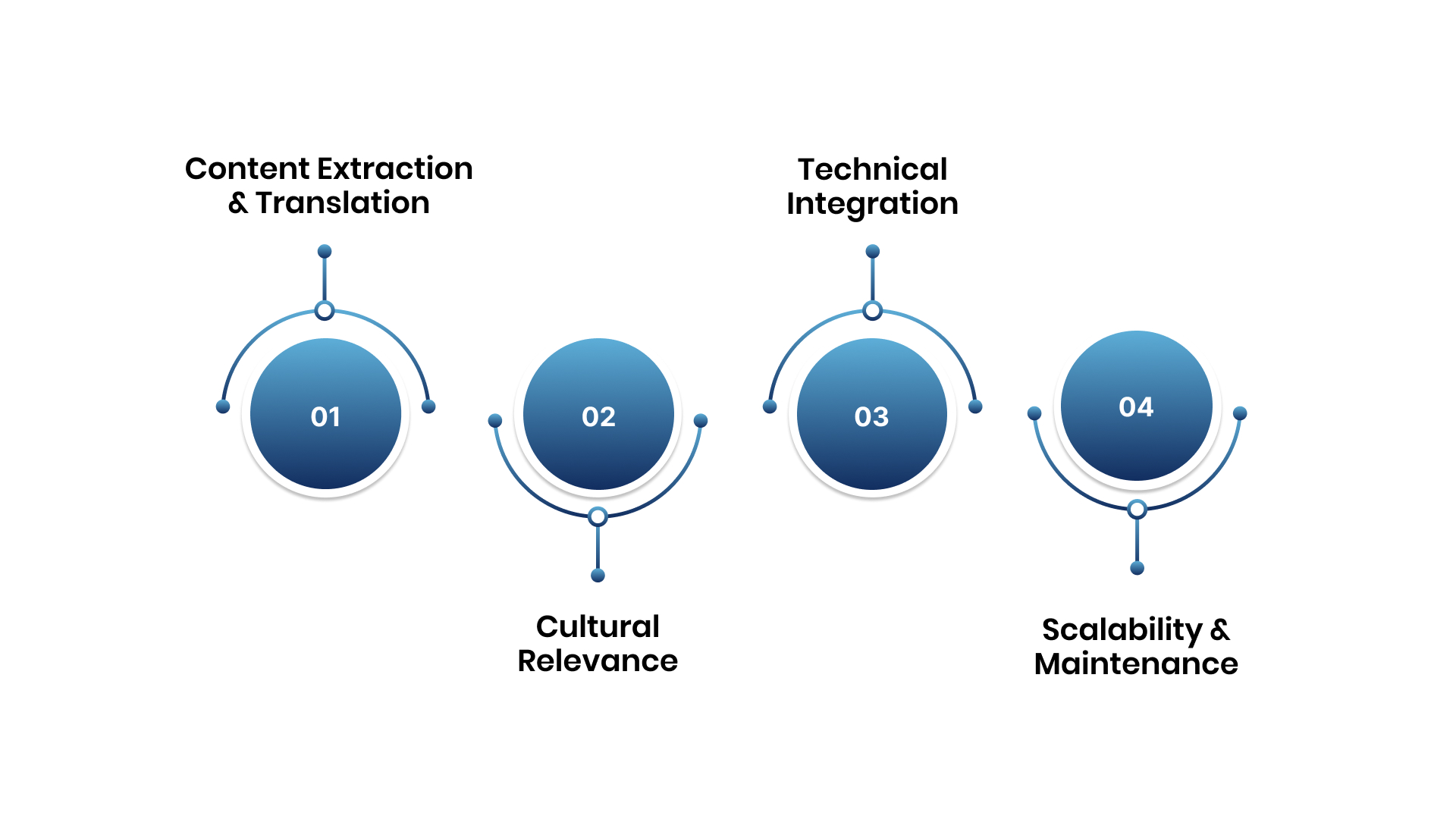
A good localisation framework addresses the entire lifecycle of content and UX adaptation:
- Content Extraction & Translation: Identifying content that needs localisation and translating it accurately while preserving intent and meaning.
- Cultural Relevance: Adapting visuals, formats, and tone to align with cultural norms and expectations.
- Technical Integration: Ensuring localisation workflows integrate seamlessly with content management systems, API,s and development pipelines.
- Scalability & Maintenance: Allowing updates and new content to be localised consistently as the website evolves.
Together, these components make sure that localisation isn’t a one‑off task but a repeatable, scalable process that supports growth across languages and regions.
Why Website Localisation is Crucial for Enterprises in 2026
As enterprises expand their digital presence, especially in linguistically diverse markets like India, website localisation is no longer optional.
India’s internet ecosystem continues to evolve rapidly. According to the Internet in India Report 2024, active users reached 886 million in 2024, with 98 % accessing content in Indic languages and 57 % of urban users preferring regional-language content.
This signals that multilingual websites are becoming a cornerstone of digital engagement for enterprises targeting both urban and rural segments.
These language preferences correlate with real engagement and business results:
- Higher engagement rates: Regional language users spend more time interacting with content tailored to their linguistic and cultural context. Platforms that support vernacular languages report up to 3x higher time spent and 7x higher engagement rates compared to English‑only content.
- Greater trust and relevance: Localised experiences resonate more deeply with users. In India, 84% of consumers find content in regional languages more relatable and trustworthy, which directly influences how they interact with brands.
In essence, localisation is not just about what users read but how they experience your website. With Anuvadak, you can easily localise your website in multiple Indian languages and capture new customer segments without the hassle of manual updates.
With localisation’s importance clear, let’s explore strategies to help your enterprise build an impactful, scalable localisation framework.
7 Proven Website Localisation Strategies for Enterprises
To move beyond surface‑level translation and build a truly impactful website localisation framework, enterprises need a strategic, systemic approach. Below outlines practical strategies that enterprises should prioritise in 2026 to ensure their multilingual websites perform locally and scale globally.
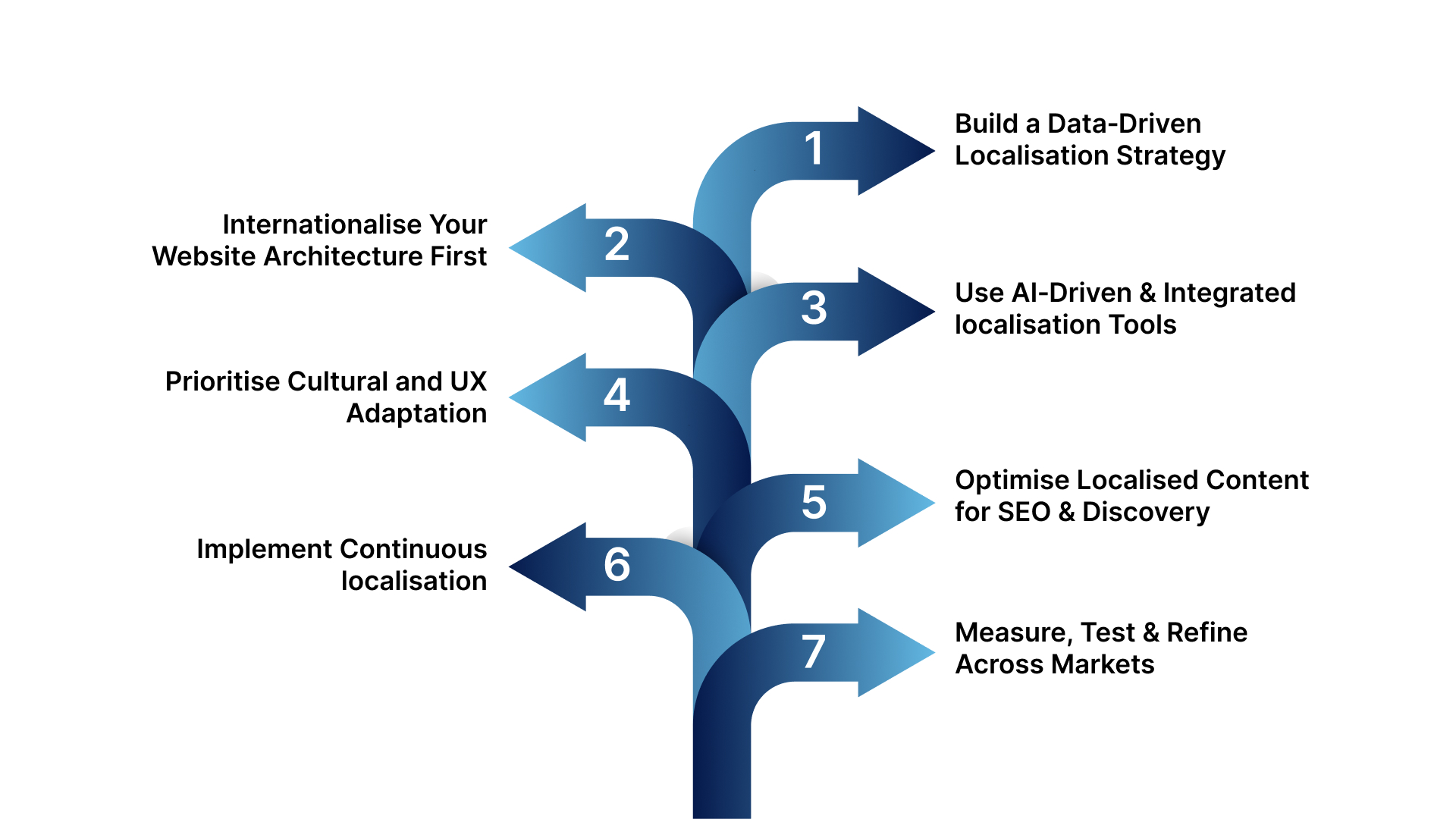
1. Build a Data‑Driven Localisation Strategy
A successful localisation initiative starts with strategy and planning, not translation. Enterprises must identify target languages and markets based on data, such as user behaviour, search demand, and business goals, rather than assumptions.
This includes prioritising languages based on actual usage patterns and revenue potential.
- Define measurable goals and KPIs for localisation (e.g., engagement rate, conversions by language).
- Conduct market research to understand cultural expectations, search preferences, and local UX norms before localisation begins.
This strategic groundwork reduces costly rework and misaligned localisation efforts.
2. Internationalise Your Website Architecture First
Before translating content, enterprises must prepare their website to support multiple languages technically. This process, called internationalisation, ensures localisation workflows are efficient and sustainable.
Key steps include:
- Separating translatable content from code so that text, labels, UI elements, and messages can be updated without developer bottlenecks.
- Using Unicode (UTF‑8) encoding to support scripts like Devanagari, Kannada, and Tamil.
- Designing interfaces to accommodate different text lengths and layouts (for example, Indian languages often require more characters than English).
These foundational steps accelerate localisation and prevent technical issues during roll‑out.
3. Use AI‑Driven & Integrated localisation Tools
Manual translation doesn’t scale for enterprise websites with frequent updates. Modern localisation frameworks rely on technology integration to automate repetitive tasks, improve consistency, and reduce time‑to‑market.
- Translation Memory (TM) stores previously translated segments, so identical content doesn’t need re‑translation.
- AI‑powered translation engines provide speed, while configurability ensures quality is maintained.
- Seamless CMS integration connects localisation directly to your content pipeline, eliminating manual copying and reducing errors.
4. Prioritise Cultural and UX Adaptation
Language is just one piece of the localisation puzzle. To build localisation that resonates, enterprises must adapt visuals, formats, symbols, and user interfaces to reflect cultural norms and behaviour.
- Localise imagery and colour schemes to match cultural context.
- Adjust forms, CTAs, and navigation flows to reflect how users in specific markets engage with digital products.
- Localise date, time, and numeric formats to align with regional expectations and reduce cognitive friction.
These adaptations improve usability and reduce bounce rates by making the experience feel native to locals.
5. Optimise Localised Content for SEO & Discovery
Localisation isn’t complete without tailoring content to the target market’s search behaviour. SEO optimisation ensures that local audiences find the right content in their preferred language.
- Conduct native language keyword research to understand search trends in each market.
- Localise meta titles, descriptions, headings, and alt text for search engines in target regions.
- Create hreflang tags to signal to search engines which language version to show users based on location.
SEO‑aligned localisation drives organic visibility and engagement in each language segment.
6. Implement Continuous localisation & Quality Feedback Loops
A localisation framework isn’t a one‑off project. It’s a continuous process. Enterprises should embed localisation into ongoing content workflows and measure performance regularly.
- Continuous localisation ensures updates, product launches, and campaign content are localised in real time.
- Establish quality feedback loops with linguistic reviewers, localisation engineers, and product owners.
- Use analytics to measure performance trends by language and iterate accordingly.
Continuous improvement promotes localisation that stays relevant, reduces manual backlog, and ensures responsiveness to market shifts.
7. Measure, Test & Refine Across Markets
In multilingual markets, one version does not fit all. Evidence‑based testing and measurement help enterprises refine their localisation strategy.
- Conduct multivariate testing of cultural layouts, visuals, and conversion flows to identify what resonates most with each audience segment.
- Track localised metrics such as conversion rate by language, engagement time, and search rankings to prioritise optimisation.
- Use the results to continuously improve localisation accuracy and relevance in each locale.
With these strategic approaches, localisation becomes a growth engine, not just a cost centre.
Also Read: E-commerce Localisation: A Comprehensive Guide for Seamless Expansion
Having established the strategies, let’s now examine the tangible benefits businesses can expect from a well-executed localisation framework.
Key Benefits of Implementing a Website Localisation Framework
Implementing a website localisation framework, when done well, unlocks measurable business advantages across engagement, customer trust, conversions, and competitiveness in multilingual markets like India.
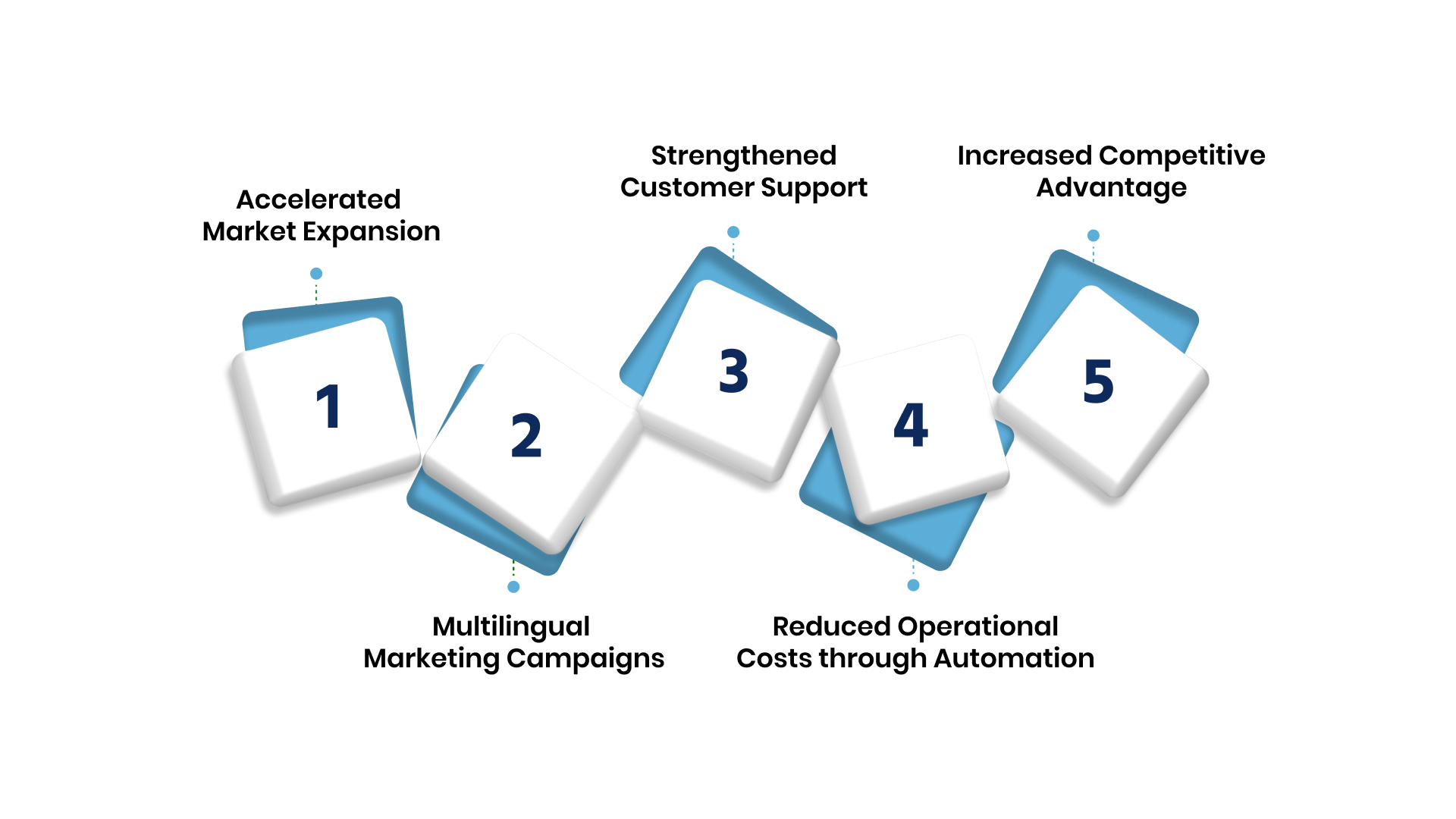
Here are the top benefits of implementing such a framework:
1. Accelerated Market Expansion
A well‑localised website enables businesses to expand faster and capture market share in new areas without language barriers hindering growth. This approach facilitates easy entry into markets where English isn’t the primary language, allowing businesses to engage with millions of new potential customers.
2. Seamless Integration of Multilingual Marketing Campaigns
When businesses create content for different languages, a centralised localisation framework ensures that marketing campaigns remain consistent and culturally relevant across multiple regions. It also makes it easier to implement customised campaigns without worrying about content mismatches or delays.
3. Strengthened Customer Support and Relationship Building
localisation goes beyond just the website. It extends to support touchpoints like FAQs, live chat, and customer service. When users can interact in their preferred language, they feel more confident and understood. This enhances customer satisfaction and builds stronger relationships by making support more accessible.
4. Reduced Operational Costs through Automation
A well‑integrated localisation system reduces costs by automating time‑consuming tasks such as content updates, translation management, and website testing. Automation also ensures consistency across all languages and improves accuracy.
5. Increased Competitive Advantage in the Global Market
With multilingual customers becoming the norm, businesses that fail to localise will struggle to maintain their competitive edge. A localisation framework ensures enterprises stay ahead of competitors still reliant on single‑language strategies, enabling them to tap into global markets with local relevance.
If you also wish to increase your conversion rates and boost customer trust through localised digital experiences, Anuvadak offers the perfect solution. By centralising all localisation tasks in one easy-to-use platform, you ensure that every language version of your website drives engagement and strengthens user loyalty.
Now, to bring these benefits to life, let’s look at some real-world examples of companies that have successfully leveraged localisation to drive growth.
Real Examples of Website Localisation Success
To understand the real impact of a strong website localisation framework, it helps to look at tangible success stories where localisation drove measurable business outcomes and deep user engagement.
Have a look at some enterprise‑level examples that demonstrate how strategic localisation works in practice:
1. Zoho
Zoho, a global SaaS company headquartered in India, serves millions of users across multiple regions. As the company expands into non‑English markets, it faces the challenge of consistent messaging and quality across languages.
How did Zoho implement?
By centralising its website localisation processes and partnering with a dedicated language services provider, Zoho eased translations and maintained a consistent brand voice across markets.
Over the course of a year, Zoho translated more than 12 million words and achieved a 64% reduction in localisation costs, while significantly improving translation quality and regional user experience.
This shows how a frameworked approach, rather than ad‑hoc translation, enables enterprises to scale multilingual operations without proportionally increasing costs or compromising quality.
2. Amazon India

Amazon’s localisation efforts in India are often cited as a benchmark for multilingual digital engagement in a highly diverse market. The platform supports multiple Indian languages and continually adapts content to user behaviour and preferences.
How does Amazon make use of localisation?
Amazon India’s commitment to localisation is evident in its language options, regional promotions, and culturally customised marketing campaigns. These moves helped fuel a 49% revenue growth in India.
This is a testament to how localisation, when combined with contextual marketing and operational adjustments, directly supports business growth.
3. Flipkart
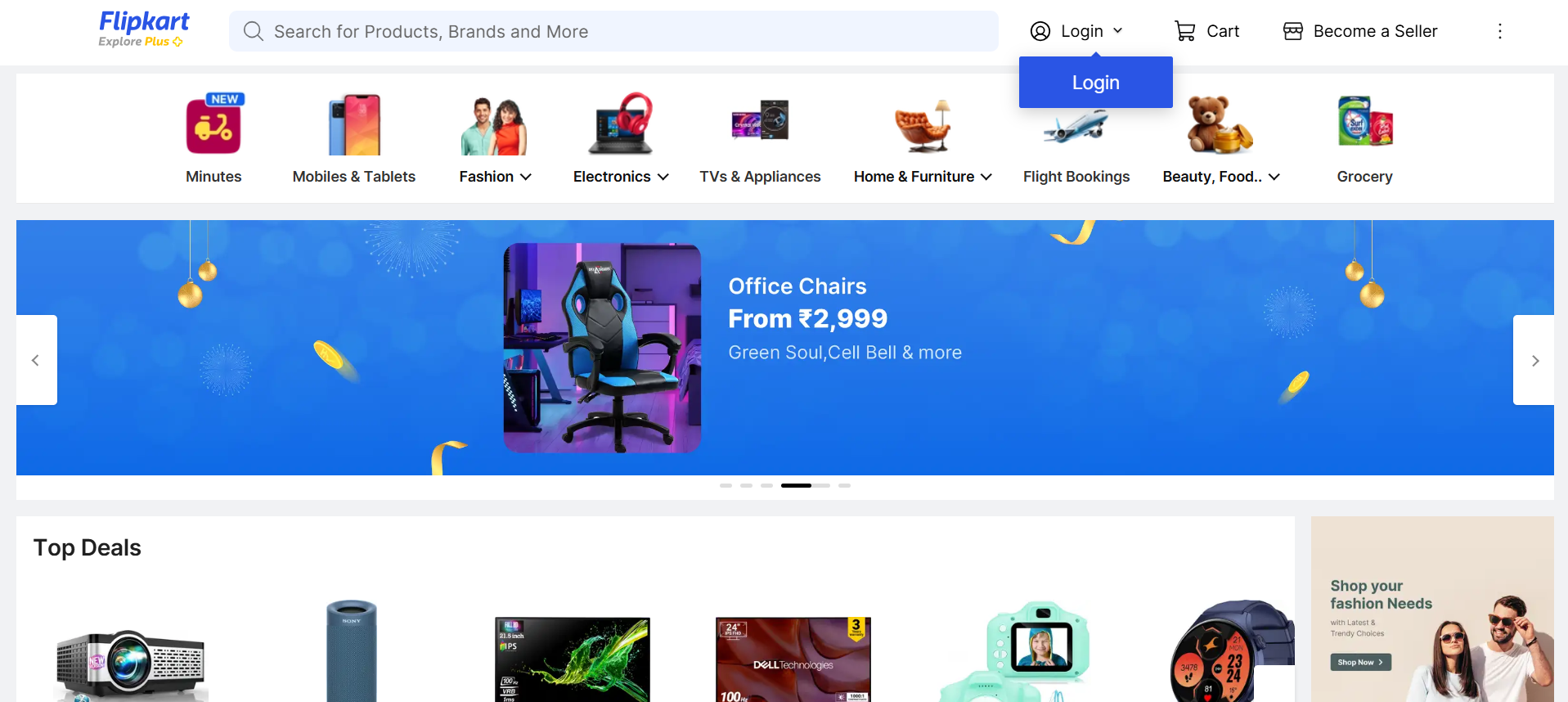
Flipkart, one of India’s largest e‑commerce platforms, recognised early that to win in India, it needed to go beyond simple translation and embed regional relevance in user experience.
What did Flipkart do?
Flipkart supports 10 Indian languages and specialises its interface, product information, and promotional messages to local preferences. This emphasis on regional languages was a key factor in attracting customers from tier‑2 and tier‑3 cities.
This comes into play especially during major sales events, such as The Big Billion Days, where traffic surges and engagement from local-language users is essential.
Also Read: 5 Inspiring Website Localisation Examples That Transformed User Engagement
These success stories highlight the power of localisation. Now, let’s see how Anuvadak can help enterprises scale and optimise their own localisation efforts.
How Anuvadak Supports Enterprises with Website Localisation
A solid website localisation framework needs the right platform to bring it to life. For enterprises operating in linguistically complex markets such as India, Anuvadak empowers organisations to build, manage, and scale multilingual websites efficiently, with enterprise‑grade accuracy, automation, and performance.
Anuvadak combines translation capabilities with quick integration, real‑time updates, and analytics. This gives enterprises the tools to handle localisation as a strategic growth initiative, not just a translation task.
- Automated Website Localisation WorkflowsAnuvadak simplifies the entire localisation process by automating the translation cycle. It scans your website, identifies translatable elements, and automatically synchronises updates. This eliminates the need for manual copy-pasting and ensures all content is updated instantly across your digital ecosystem.
- centralised Dashboard for Content Management
- Managing multilingual content across several regions becomes easier with Anuvadak’s centralised dashboard. From this unified interface, your product, content, and compliance teams can collaborate seamlessly and track translation tasks for every language version of your site.
- Context-Aware Translation Memory & Glossary ControlsAnuvadak’s Translation Memory (TM) stores previously approved translations and terminology, ensuring consistent phrasing across all content. This reduces the need for repeated translation efforts during future releases and helps you maintain a consistent brand voice across languages.
- Real-Time Integration with CMS & Custom StacksAnuvadak’s seamless integration with your CMS or custom backend enables real-time deployment of new content, with automatic translation updates, without engineering intervention. It keeps your multilingual website aligned with your content development processes, making it easier to scale and adapt.
- AI-Powered Translation with Human Review SupportAnuvadak combines the speed of AI-assisted translation with the oversight of human reviewers. While AI provides fast translations, the human review process ensures that content is fine-tuned to meet both linguistic accuracy and cultural relevance.
- Script-Friendly Rendering and Layout SupportAnuvadak ensures that translated content renders beautifully and maintains readability across all Indian scripts. It processes text to preserve the integrity of the user interface (UI), so you don’t need to redesign your website for every language.
- Enterprise-Grade Security and ComplianceWith encrypted data flows and secure infrastructure, Anuvadak ensures your sensitive information is always protected. This feature is crucial for industries like BFSI, healthcare, and government services, where compliance with data protection regulations is critical.
- Scalable Architecture for Adding New LanguagesAnuvadak’s architecture supports quick scalability. As your business expands, you can easily add new languages and manage them through a unified workflow. This allows you to grow your multilingual presence without rebuilding systems each time you expand into a new region.
Whether you’re expanding into new markets or handling complex, multilingual content, Anuvadak is designed to scale with your business while maintaining accuracy and operational efficiency.
Conclusion
In 2026, delivering a multilingual website is no longer a luxury; it’s a strategic necessity for enterprises competing in a diverse and evolving market like India. By embracing localisation, you not only enhance user experience but also build stronger connections with regional audiences and nurture trust across linguistic barriers.
With Anuvadak, enterprises can get the full potential of their multilingual presence. Through automated workflows, centralised management, and AI-driven translation, Anuvadak ensures your website adapts swiftly, accurately, and securely to meet the diverse needs of users across India’s linguistic spectrum.
Explore how Anuvadak can revolutionise your multilingual digital experience. Connect with the team today for a guided walkthrough and personalised support!
FAQs
1. How do localisation and internationalisation differ in website strategy?
Localisation adapts content and UX to specific languages and cultural norms, while internationalisation prepares your site architecture so localisation can be implemented efficiently across markets without redesigning code. They work together to deliver multilingual content at scale.
2. What are the common pitfalls enterprises face even with a localisation framework?
Enterprises often mistake translation for complete localisation, ignoring UX layout changes, cultural design differences, and regional search behaviour. A strong framework must address text, visuals, navigation, and SEO nuances for target audiences.
3. Should navigation and UI elements be localised too?
Yes. Navigation menus, buttons, and UI text must be adapted to local language structure and reading patterns (e.g., right‑to‑left for some languages). Otherwise, users may find the site confusing or inconsistent with their expectations.
4. How does localisation affect search visibility in local markets?
Localised websites improve SEO by using region‑specific keywords, metadata, hreflang tags, and content tailored to local search behaviour, which helps pages rank higher for users in those markets.
5. What non‑text elements should be considered in localisation?
Localisation must adapt images, symbols, colour meanings, and cultural references because visuals and symbols can convey different meanings across regions, which impacts engagement and brand perception.