Your customers are speaking. Is your business listening? Voice technology is rapidly moving from a “nice-to-have” to a core component of modern customer service and operational strategy.
In fact, the voice recognition market in India is projected to grow at a CAGR of 23.1% from 2025 to 2033. So, the potential of growing your business is really high in the last quarter of 2025.
The real question is no longer ‘why,’ but ‘how,’ and we have the answers. This post provides a clear look inside voice recognition systems.
We’ll connect the technical dots to your bottom line, showing you precisely how this technology organises workflows. Stop seeing it as a mystery and start seeing it as your next strategic advantage.
Quick Look
- Market Growth: The voice recognition market in India is projected to grow at a 23% CAGR from 2025 to 2033.
- Call Centre Applications: In Indian call centres, voice recognition technology identifies returning customers by their voiceprint, improving customer satisfaction.
- Revenue Increase: The revenue from this market rose 9% YoY in 2024, reflecting the growing trend of voice-based interactions.
- Healthcare Efficiency: Indian doctors are using voice-to-text software to quickly document patient information, enhancing the efficiency of medical documentation.
- Business Cost Savings: Businesses that implement voice recognition devices are reducing reliance on large call centre teams, leading to significant cost savings.
Why Smart Businesses Are Turning to Voice Recognition
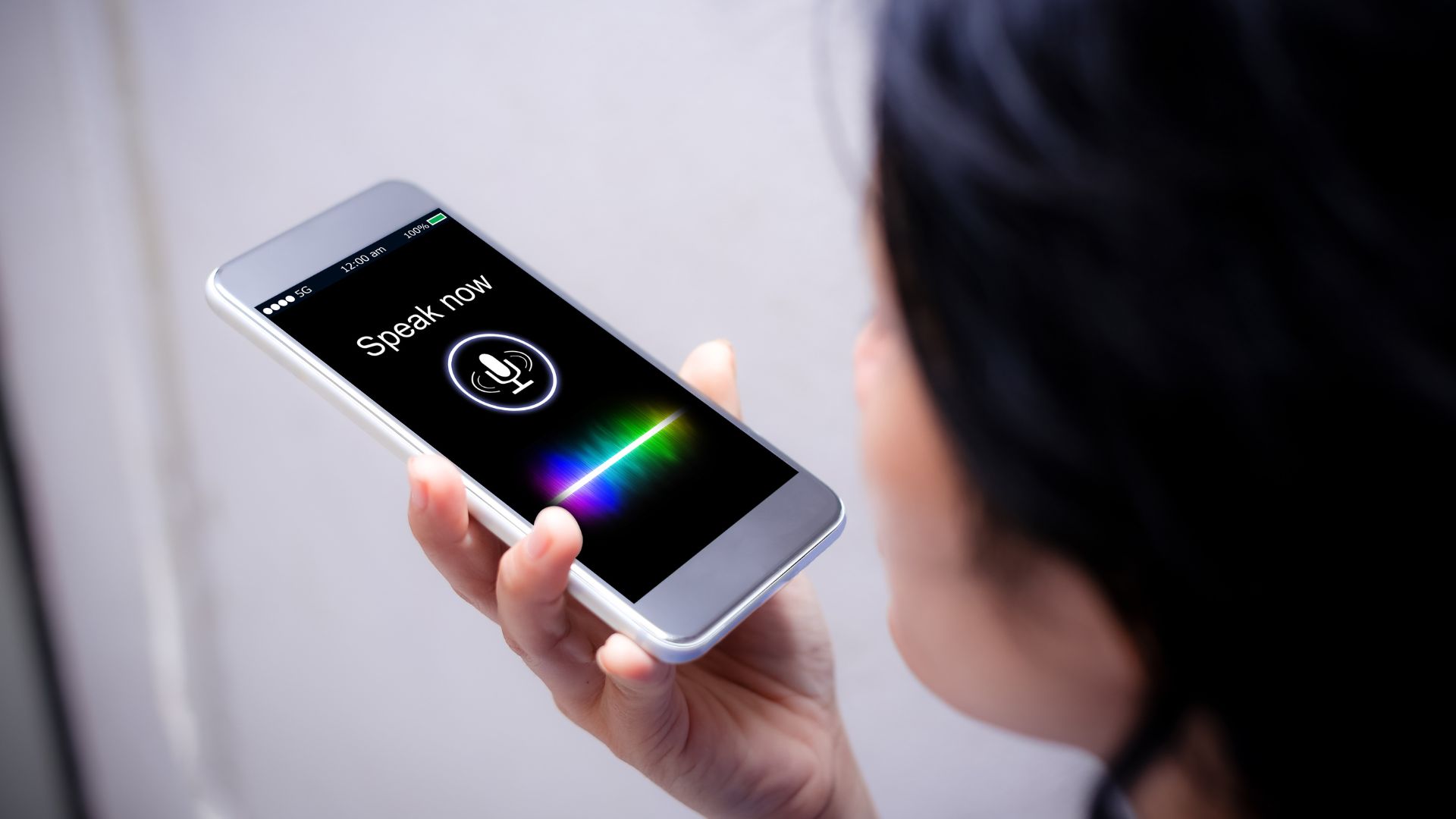
Manual processes don’t scale. As your business grows, the volume of inquiries and internal data requests will only increase.
Voice systems provide a scalable framework for handling this growth without a linear increase in headcount. Without it, you’re building a ceiling on your own expansion.
The benefits your business can expect are:
1. Improved Customer Service
Voice recognition can drastically reduce customer wait times by automating responses and enhancing customer experience.
2. Better Operational Efficiency
Businesses can automate routine tasks, such as transcribing meetings, generating reports, or handling basic queries.
This reduces the need for manual intervention, increasing productivity.
3. Increased Security
Voice recognition can be used as a form of biometric authentication, making it far more secure than traditional password-based systems.
4. Reduced Costs
Implementing voice recognition technology reduces the need for large call centre teams or manual data entry. With its ability to handle multiple tasks simultaneously, businesses can scale efficiently.
5. Enhanced User Engagement
As voice assistants like Google Assistant become increasingly embedded in consumers’ lives, businesses can create more natural experiences. This is reflected in the Indian smartphone market. The market’s revenue rose 9% YoY in 2024 to reach a record high, where voice-based interactions are becoming the norm.
With these clear advantages in mind, it’s no surprise that businesses are increasingly adopting voice recognition. But how does this technology actually work behind the scenes to deliver such powerful benefits?
Also Read: Voice AI in Consumer Electronics: Redefining Customer Experience
The Process Behind Voice Recognition: From Sound to Action

Several Indian brands have initiated the integration of voice search technologies to enhance customer engagement and accessibility. Flipkart has introduced voice shopping features, enabling users to search and shop using voice commands.
So, businesses are making more informed decisions about deploying voice recognition systems to improve operations. Here’s what you can do for your business:
1. Audio Input
The process begins with the microphone capturing your speech. It picks up the sound waves of your voice, which are then sent to the system for further processing.
2. Preprocessing
Once the sound is captured, the system filters out background noise and adjusts the volume to ensure clarity. This step is crucial in environments where distractions or external noise could distort the recognition.
3. Analogue to Digital Conversion
Afterwards, the captured audio is converted into a digital signal by the system. This conversion is necessary as digital data is required for further analysis by the recognition system.
4. Feature Extraction
After conversion, the system extracts key features of the sound, such as tone, to analyse the characteristics of the voice.
5. Pattern Recognition
The system compares the extracted features to a database of known patterns. This helps determine whether the voice matches a stored voiceprint or is from an unrecognised user.
6. Language Processing
Finally, the system interprets the recognised speech and converts it into text. This text is then used to execute a command or request.
With the architecture in place, the focus shifts to technology usage. The journey from sound to result involves several critical stages. It is interesting to note that each contributes to the system’s reliability and speed.
Must-Know Voice Tech Behind Devices That Businesses Can’t Ignore
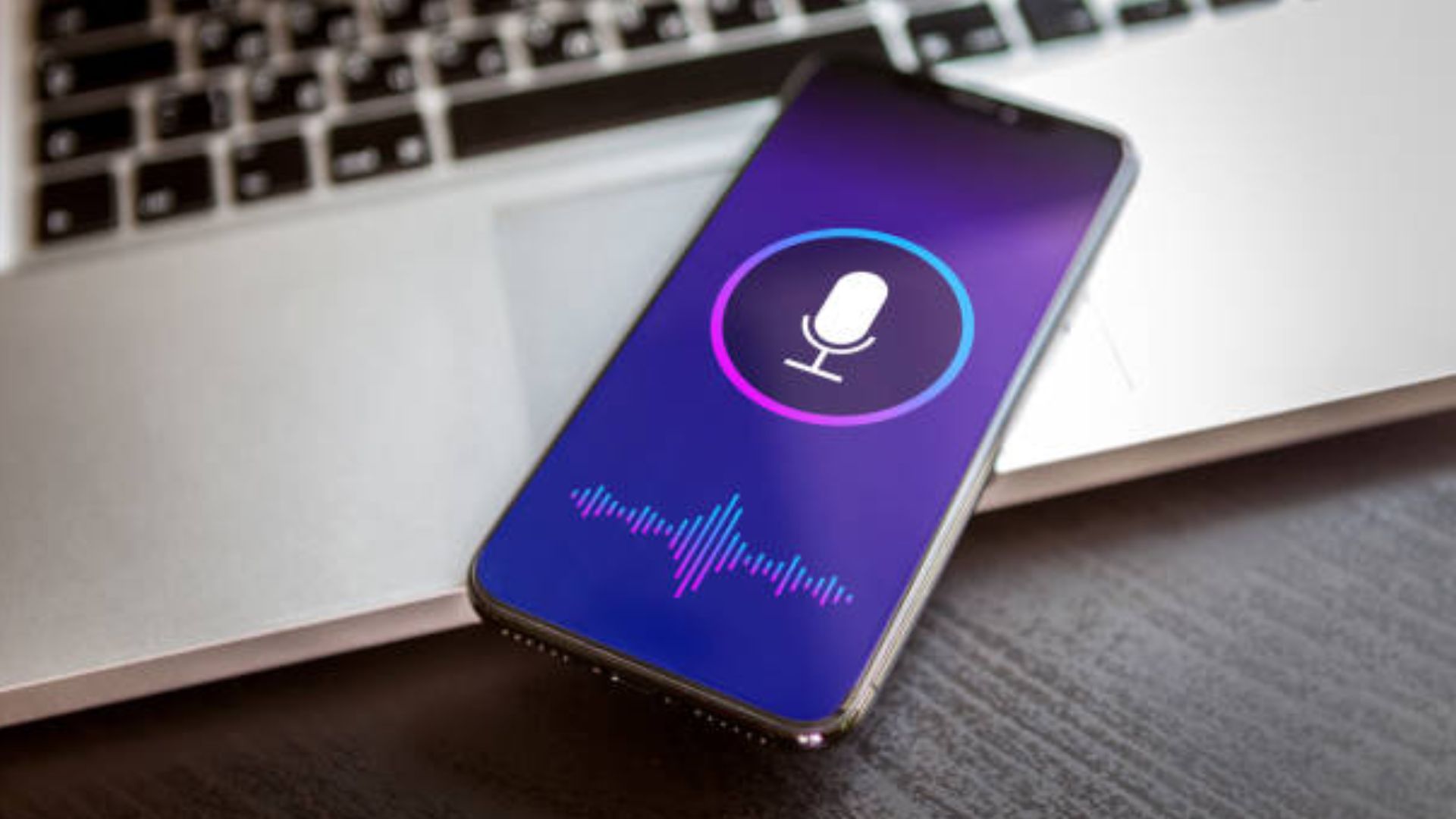
Voice recognition technology is driven by a combination of advanced algorithms and machine learning models. These systems convert spoken words into actionable data by analysing various vocal features such as tone, pitch, and rhythm.
This process provides businesses with valuable insights into how voice recognition devices operate.
Key technologies include:
1. Hidden Markov Model (HMM)
The Hidden Markov Model (HMM) has been a core model in voice recognition devices. It’s a statistical model that helps break down spoken words into smaller units known as phonemes.
This represents the distinct sounds in language. They are the building blocks of speech. It allows systems to decode complex words and phrases more accurately.
How HMM Works:
- HMM works by assigning probabilities to various states of the model, where each state corresponds to a segment of speech.
- It decodes speech by predicting the sequence of phonemes based on the probability of one phoneme following another.
- The model uses a sequence of observed speech features. Afterwards, through the process of pattern recognition, it tries to map these features to the most likely words or phrases.
2. Neural Networks
The rise of neural networks has significantly improved the accuracy, speed, and scalability of voice recognition devices. Neural networks, a form of deep learning, are particularly effective in processing sequential data like speech.
How Neural Networks Work:
- Neural networks contain multiple layers of nodes, which mimic the workings of the human brain. Each node processes data, and the network learns the best way to interpret complex patterns in speech through training.
- Neural networks process sequential data, meaning they can remember previous inputs and use that information to predict future ones. This is essential for understanding the nuances of spoken language, like tone or pauses.
- Recurrent Neural Networks (RNNs) and Long Short-Term Memory Networks (LSTMs) are especially popular for voice recognition. Since they can analyse sequences over time, this makes them better at understanding the meaning in longer phrases.
3. Pattern Recognition
Pattern recognition is another critical component of voice recognition systems. It refers to the system’s ability to identify recurring features in speech and match them to known patterns in its database.
How Pattern Recognition Works:
- Pattern recognition is essential in voice recognition because human speech varies from person to person in pitch, tone, and cadence. Here, the system learns to identify and authenticate the speaker.
- Over time, the system becomes efficient by learning from different voice characteristics and patterns, adapting to changes in a speaker’s tone.
4. RAM and Neural Platforms
The performance of voice recognition devices relies heavily on the available computing power and memory capacity.
Random Access Memory (RAM) and neural platforms enable systems to store massive amounts of data. This is needed for real-time speech recognition.
- RAM plays a crucial role by storing voice recognition models and data as they are being processed. The faster the system can access and process this data, the quicker the recognition process.
- Neural platforms, like TensorFlow and PyTorch, are now widely used to run the deep learning algorithms that power neural networks. These platforms support the training of models on large datasets, allowing for real-time processing.
You’ve likely heard ‘speech recognition’ and ‘voice recognition’ used interchangeably. However, for a business aiming to deploy this technology effectively, the difference is critical.
Are Voice Recognition and Speech Recognition the Same?
Before integrating voice technology, a critical strategic choice must be made: Do you need to understand what is being said, or who is saying it?
This is the core difference between speech and voice recognition. That’s why your decision directly impacts everything from customer experience to data security.
Here are the main differences you should be aware of:
| Aspect | Voice Recognition | Speech Recognition |
|---|---|---|
| Primary Focus | Identifies who is speaking | Understands what is being said |
| Main Purpose | Personalised interactions and secure identification | Transcription and interpreting commands |
| Technology Use | Speaker authentication, security (biometrics) | Dictation, text conversion, transcription |
| Example in Use | Voice recognition for customer authentication in banks | Automated transcription services in call centres |
| Complexity | Requires creating a voiceprint or profile for the user | Converts spoken words into text, focusing on content |
The true power for Indian businesses lies in coordinating both voice and speech recognition to create a user journey.
So, if your business is seeking to deploy speech analytics, Reverie’s Speech-to-Text API is built to deliver. Features such as accurate and accent-aware speech recognition ensure that the system performs consistently during peak demand.
However, if your business wants to focus more on voice recognition, it’s time to discuss where and how it can be used. The good news is, this system has numerous real-life examples.
How Businesses in India Are Winning with Voice Technology

What’s the cost of a call that never gets answered? Or what happens to a customer who can’t handle your interactive voice response (IVR) in their native language? As a solution, you can use Reverie’s Speech-to-Text API.
It can transcribe in 11 Indian languages, supporting various regional language combinations, such as Marathi-Urdu, into accurately punctuated text with proper formatting.
Without voice technology, these are a silent, steady drain on your growth. The businesses winning in India are using it to plug these leaks and capture the market that others are missing.
Here’s a list of real-world uses of voice recognisers:
1. Customer Service
In the Indian market, customer service is one of the top priorities for businesses. Voice recognition systems are now enabling companies to provide personalised interactions, improving both the customer experience and operational efficiency.
Example: Airtel runs an automated speech recognition algorithm on 84% of its calls coming into its contact centre. Telecom companies in India are increasingly adopting voice recognition technology to resolve queries automatically. This reduces the reliance on human agents, cutting costs and enhancing customer satisfaction.
2. Banking
Indian banks and financial service providers are increasingly adopting voice biometrics for customer authentication. This technology allows users to verify their identity through voice, reducing reliance on traditional PINs or passwords.
Example: Amazon Pay in India is actively working on integrating voice-based authentication for secure payments and transactions, highlighting the growing trust and adoption of voice technology in the country’s financial sector.
3. Healthcare
Voice recognisers are helping healthcare providers save time and enhance productivity. With voice-activated medical transcription, physicians can focus on patient care. So, they can spend valuable time manually documenting patient notes.
Example: Doctors in India are increasingly using this technology to transcribe patient information quickly. This improves the quality of documentation and simplifies administrative tasks.
4. Legal
The legal industry in India is embracing voice recognition technology to enhance efficiency in documentation. Real-time transcription of court hearings and legal proceedings is making a significant impact.
Example: Did you know? Delhi Courts launched a pilot hybrid courtroom equipped with a speech-to-text facility, using automatic speech recognition (ASR) and large language models to transcribe testimony and dialogue in real time.
Also, the Supreme Court of India has started using AI tools to transcribe live court arguments, producing instant text versions of oral proceedings. This ensures that all legal documentation is prepared efficiently and without error.
5. Retail
As e-commerce and retailers continue to grow, integrating voice recognition devices enhances the shopping experience.
Customers use voice commands to check prices, without manually typing queries into a search bar.
Example: Major retail brands in India are exploring voice-activated shopping to provide an innovative, hands-free experience. This helps speaking, making the process more user-friendly. For example, Meesho has deployed a generative AI-powered voice bot capable of handling approximately 60,000 calls daily.
If your business needs a reliable, India-tuned speech-to-text solution, Reverie’s Speech-to-Text API is built to help. It supports real-time transcription across multiple Indian languages and dialects.
Adopting any powerful technology comes with its own considerations. For voice recognition, key questions around accuracy in noisy environments and data security often arise. But these aren’t dead ends; businesses can design solutions, and some already have.
Read Also: AI Ticketing Systems: Complete Guide
Overcoming the Challenges of Voice Recognition
It’s a myth that voice technology is a simple “plug-and-play” solution. The gap between potential and reality is often defined by a handful of critical, yet solvable, challenges.
Recognising them is what ensures your investment actually delivers on its promise. Here’s what you can do:
1. Accuracy with Accents and Dialects
In India, there are numerous languages and accents. So, voice recognition technologies need to adapt to regional variations to ensure accuracy. Customisation is required to address these differences, especially in large, diverse markets.
2. Security Concerns
While voice biometrics is an advanced method of user verification, there are concerns regarding spoofing or fraudulent voice replication. Continuous improvements in voice recognition technology are necessary to combat these issues.
3. Background Noise
Environmental factors, such as noisy offices, traffic, or crowded spaces, can significantly impact the accuracy. Ensuring that the system can distinguish the primary speaker’s voice from external noises is critical to its success.
4. Privacy and Data Protection
As with any technology that captures and stores personal data, there are concerns about privacy and data protection. Businesses need to be transparent and compliant with regulations to build trust and avoid legal complications.
For a better outcome, if you’re looking to integrate voice recognition technology into your business, consider exploring Reverie’s Speech‑to‑Text API.
This becomes vital as a complementary tool. Also, these solutions improve the overall functionality of your systems.
Final Thoughts
Voice recognition systems have firmly shifted from a futuristic concept to a present-day strategic imperative. We’ve moved beyond simple commands to a new era of intuitive, efficient, and deeply personalised business interactions.
The journey to successful implementation, as we’ve explored, is built on a clear understanding of the technology’s capabilities. The market-leading businesses are those that are making strategic investments today. So, you don’t just adapt to the market; you begin to define it.
Reverie’s Speech-to-Text API supports both cloud and on-premise deployments, ensuring scalability and flexibility for businesses. The API includes features like keyword spotting, profanity filtering, and sentiment analysis, enhancing user experience and operational efficiency. Additionally, it provides smart analytics and detailed documentation to facilitate seamless integration and usage.
The next step is a conversation. Let’s move from insight to action. Sign up to explore how we meet your specific operational challenges and market opportunities.
FAQs
1. How accurate are voice recognition systems in India?
Voice recognition systems can be highly accurate. However, they may require customisation to adapt to the specific accents and dialects prevalent in India. Advanced artificial intelligence (AI) models are continually improving accuracy.
2. Can voice recognition be used for secure authentication?
Yes, voice recognition can be used for biometric authentication, enhancing security in sectors like banking. Because it’s crucial to verify user identity before conducting sensitive transactions.
3. What industries benefit most from voice recognition?
Key industries like banking, healthcare, customer service, and retail are benefiting greatly from voice recognition. They use it for tasks like authentication, transcription, and personalised customer interactions.
4.How can businesses overcome challenges with voice recognition?
Businesses can overcome challenges by customising systems to handle regional accents. It improves security measures to combat fraud and uses noise-cancelling technologies to enhance recognition accuracy.