Did you know that, on average, people remember only 20% of the key details shared during a conversation?
In sectors such as media, law, and healthcare, capturing every spoken word exactly as it’s said is a necessity. A single missed phrase can lead to compliance issues, misinterpretation, or lost opportunities. That’s where verbatim transcription comes in, helping organisations maintain precision, compliance, and transparency.
So, are you a legal head, a healthcare administrator, or a media product lead struggling with miscommunication, manual note-taking errors, or compliance risks due to incomplete records? This blog explains what verbatim transcription is, the types you should know, where it’s most effective, and how it can help you streamline operations and improve accuracy at scale.
Key Takeaways
- What It Means: Verbatim transcription converts every spoken word, including pauses and fillers, into text exactly as said. It helps you maintain complete, accurate, and reliable documentation.
- Types of Verbatim Transcription: The three main types are True Verbatim, Clean Verbatim, and Standard Verbatim. Each offering a different balance between accuracy, readability, and cost.
- Benefits: It strengthens compliance, improves documentation accuracy, provides better insights, streamlines workflows, and fosters trust through transparent record-keeping.
- Use Case Relevance: Legal teams use it for court proceedings and depositions, healthcare professionals for consultations and medical records, and media organisations for interviews and research analysis.
- Accuracy Tips: Use clear recordings, label speakers, provide industry-specific terms, establish transcription standards, and consistently review the final transcript for quality assurance.
What is a verbatim transcription?
Verbatim transcription is the process of converting every spoken word from an audio or video recording into text exactly as it was said. It ensures accurate documentation of content, capturing the full details of the original speech.
A verbatim transcript includes:
- Every spoken word
- Stutters
- Fillers
- Dialects
- Pauses, etc.
In industries such as legal, healthcare, and media, this exacting transcription creates a reliable audit trail and ensures unambiguous record-keeping.
To find the right transcription method for your workflow, it’s important to distinguish verbatim transcription from non‑verbatim alternatives.
How Verbatim Differs from Non‑Verbatim Transcription
Choosing the right transcription style depends on the purpose of your documentation. If precision and context are important in your industry, understanding the difference is crucial.
Here are the key factors that set verbatim transcription apart from non‑verbatim transcription:
| Aspect | Verbatim Transcription | Non‑Verbatim Transcription |
| Content | captures every utterance, including filler words like “um” or “uh”, stutters, background noises, and false starts. | Paraphrases or summarises the content instead of transcribing word‑for‑word. |
| Emotion | Captures the tone, emphasis, and emotion of the speakers. | Leaves out fillers, stutters, and other repetitive language. |
| Duration & Cost | Takes longer to transcribe. It may be more expensive than a non‑verbatim transcript. | Generally quicker and less expensive than a verbatim transcript. |
Choosing the right transcription approach is just the first step; understanding the specific types of verbatim transcription helps you align accuracy with your needs.
Common types of verbatim transcription
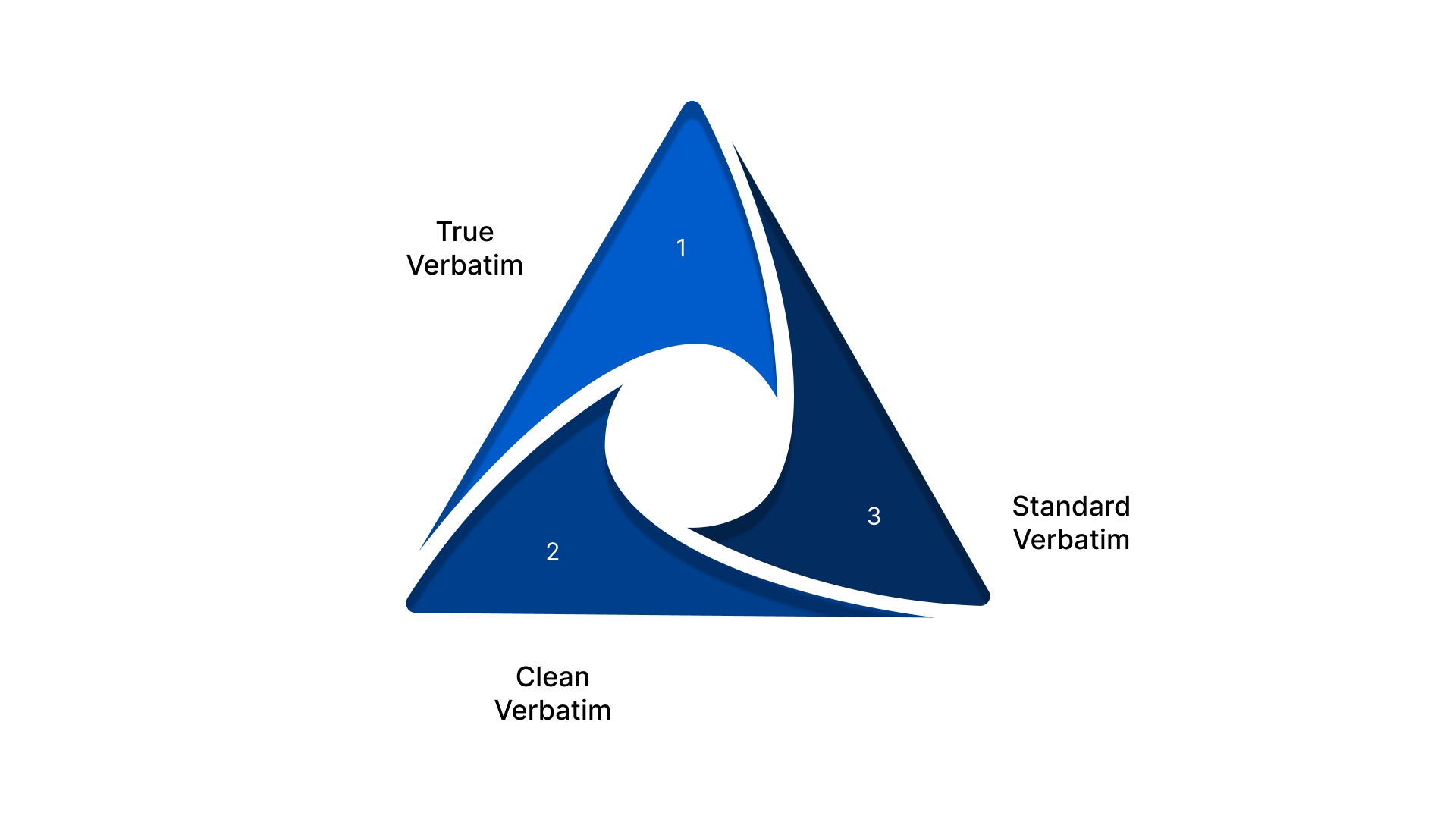
Different industries require different levels of transcription accuracy and clarity. Understanding the types of verbatim transcription helps you choose the one that best fits your operational and compliance needs.
Here are the main types you should evaluate:
1. True Verbatim (also known as Full Verbatim)
- What it is: True Verbatim means the transcript captures every spoken word exactly as uttered, including filler words (“um”, “uh”), false starts, stutters, background noises, speaker hesitations, and non‑verbal cues.
- Best for: Legal depositions, court hearings, witness statements, compliance‑sensitive healthcare consultations, essentially any scenario where how something was said matters as much as what was said.
- Pros: Maximises fidelity to original speech; preserves tone, hesitation, and context; strong evidentiary value.
- Cons: More time‑consuming and costly; transcripts can be harder to read and digest because of repetition, filler words, and non‑essential audio content.
2. Clean Verbatim (also called Intelligent Verbatim)
- What it is: Clean Verbatim retains the words as spoken but filters out non-essential elements, such as filler words, false starts, and some background noises, to improve readability without altering the actual content meaning.
- Best for: Corporate meetings, general interviews, where readability and clarity are more important than capturing every pause or utterance.
- Pros: Easier to read and work with; faster turnaround and lower cost compared to full verbatim; still retains the speaker’s original words and meaning.
- Cons: Some context or nuance (e.g., filler, pauses, tone) may be lost, which might matter in scenarios where full precision is mandatory.
3. Standard Verbatim
- What it is: Standard Verbatim sits between clean verbatim and full (true) verbatim. It captures spoken words exactly but may apply slight formatting or omit non-essential noises, providing a practical version where complete utterance-level detail isn’t required.
- Best for: Routine corporate meetings, internal executive briefings, and recorded webinars where a balance between detail and readability is needed.
- Pros: Balances accuracy and readability; lower cost than full verbatim while retaining word‑for‑word transcription.
- Cons: Doesn’t capture every nuance (pauses, background noises), so may not suffice for litigation use.
Each transcription type serves a specific purpose, but what makes verbatim transcription truly valuable lies in the impact it brings to your workflows.
The Benefits of Verbatim Transcription
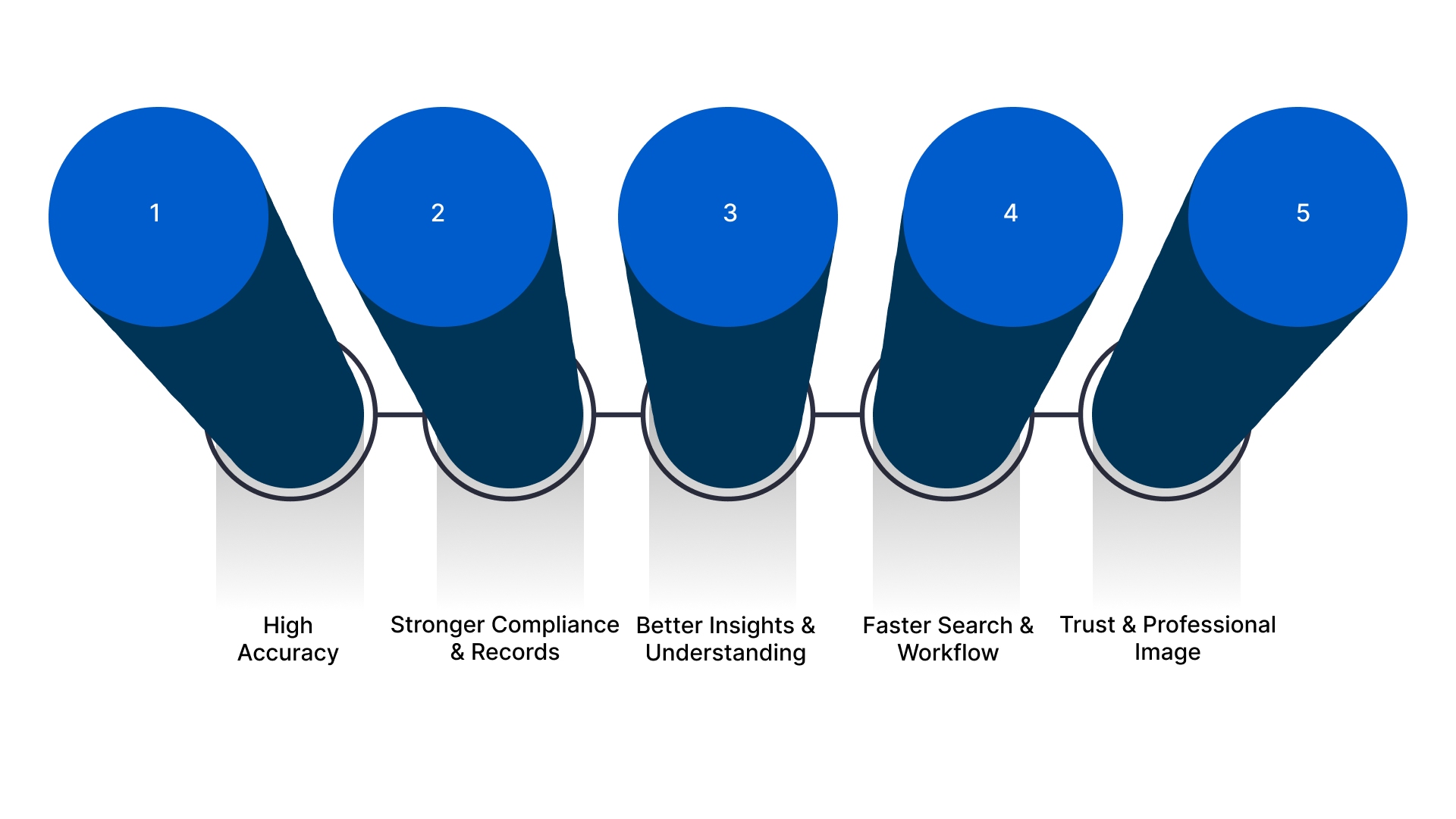
Accurate documentation plays a key role in industries where every word counts. Verbatim transcription helps you maintain clarity, compliance, and confidence in every recorded interaction.
Here are the key benefits of using verbatim transcription for your business:
1. High Accuracy
Verbatim transcription captures every single word spoken, including pauses, stutters, filler words, and background sounds. This ensures you receive an exact copy of what was said, which is particularly useful in legal and medical cases where details are crucial.
2. Stronger Compliance and Records
It helps you maintain complete records that are useful during audits, legal reviews, or regulatory checks. You won’t miss any information, and you’ll always have proof of what was said, reducing legal and operational risk.
3. Better Insights and Understanding
When you have full transcripts, you can review tone, intent, and emotional cues more effectively. This helps in analysing patient behaviour, media interviews, or client conversations in more depth to improve your processes or services.
4. Faster Search and Workflow
Having spoken content in written form makes it easier for your teams to search, refer to, or quote information quickly. You won’t need to go through long recordings again, saving time and improving efficiency.
5. Trust and Professional Image
When you follow detailed and transparent documentation practices, it shows clients, partners, and regulators that your organisation values accuracy and accountability. This builds credibility and trust for your brand.
This level of accuracy becomes especially valuable in specific industry scenarios where every word counts.
Also Read: What is Verbatim Transcription and How Does it Differ from Other Types of Transcription?
What are the use cases of verbatim transcription?
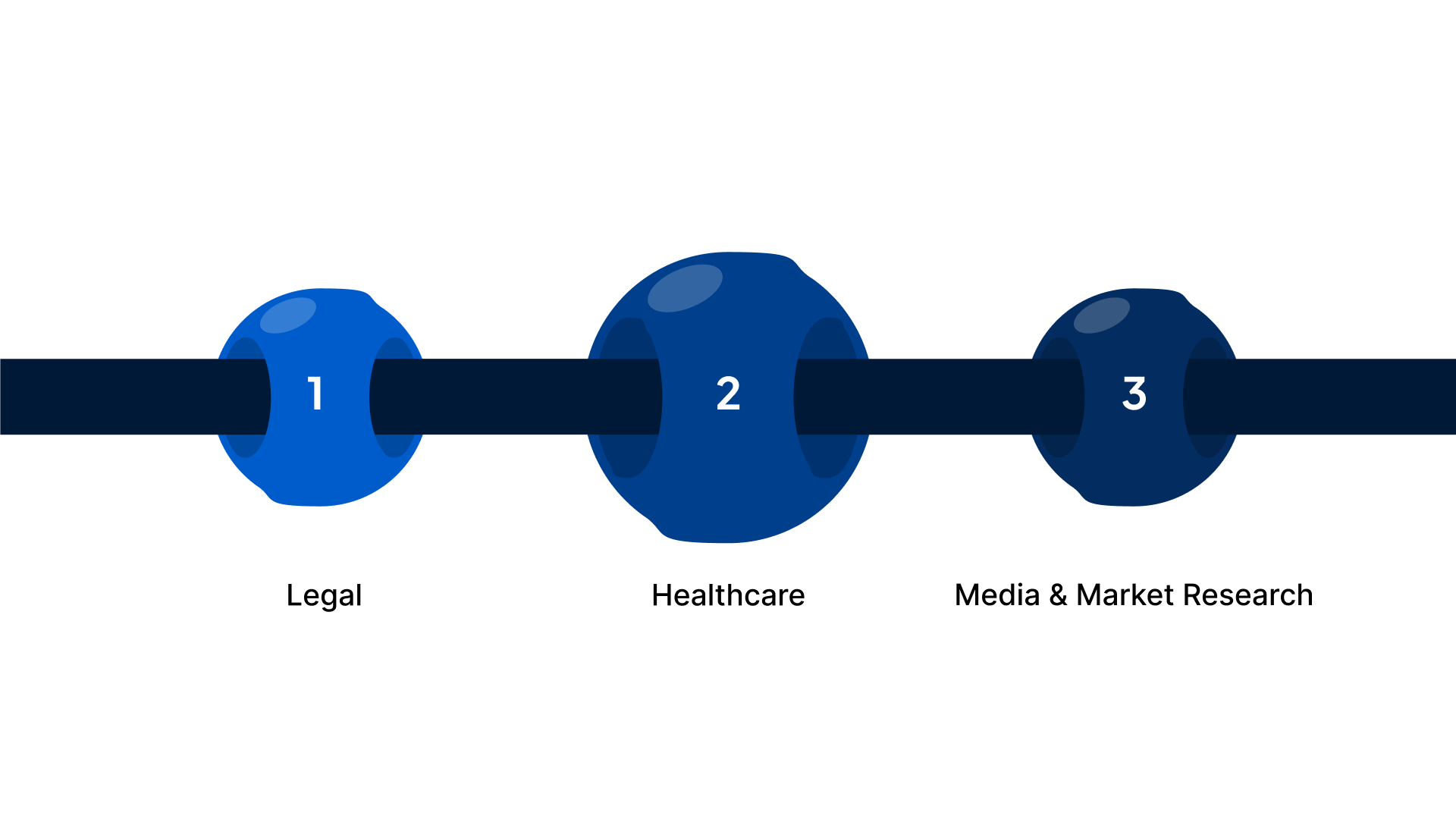
In industries such as law, healthcare, and media, accurate speech-to-text conversion supports compliance, clarity, and operational efficiency. This is where speech analytics, powered by Reverie’s Speech-to-Text API, helps capture 100% of conversations and highlight patterns you can act on.
Verbatim transcription is especially useful when the how is just as important as the what in recorded conversations. Here are some of the most common and practical use cases for your business:
1. Legal
Legal proceedings demand a high level of precision, as every word, pause, or hesitation can hold significance. Legal professionals depend on verbatim transcription for court proceedings, depositions, and witness testimonies. Capturing every filler word, pause, or hesitation ensures that the full intent and tone of a statement are preserved, which is crucial for building strong legal arguments.
Example: When transcribing a witness statement, repeated pauses, hesitations, or filler words such as “um” may influence the interpretation of intent, which could impact the case outcome.
2. Healthcare
Medical professionals rely on verbatim transcription to document patient interactions, diagnostic discussions, and physician notes with complete accuracy. These transcripts help maintain compliance with healthcare regulations and ensure clear, consistent communication among healthcare professionals, including doctors, nurses, and administrative teams.
Example: When a physician dictates treatment details or prescriptions, a verbatim transcript captures every word precisely as spoken, ensuring that no instruction is missed or misunderstood.
3. Media and Market Research
In media and research, verbatim transcription is crucial for accurately capturing the content of interviews, panel discussions, and focus groups. It helps preserve tone, emphasis, and nuance, which are vital when interpreting intent, context, or emotional responses. While standard verbatim may be used for formal interviews, clean verbatim is often preferred in media to improve readability and listener comprehension.
Example: A journalist conducting an interview for a feature story can rely on a verbatim transcript to ensure that quotes are not only accurate but also reflect the speaker’s tone and intent. However, for a televised or published news report, slight editing may be done to remove fillers or correct grammar for better audience clarity.
To get the most value from verbatim transcription, let’s explore some key tips for ensuring accurate results.
Tips for Ensuring Accurate Verbatim Transcription Results
When you’re relying on verbatim transcription for critical documentation, accuracy is essential. Here are the key tips you should follow to ensure your transcripts deliver reliable, high‑quality results:
- Use high‑quality recordings: Ensure your audio is clear, with minimal background noise and no overlapping speech. Poor‑quality recordings are the most common cause of transcription errors.
- Identify and label speakers: Knowing who is speaking helps maintain clarity in transcripts, especially when multiple participants or languages are involved.
- Provide domain‑specific terms and glossaries: Share industry jargon, acronyms, names of medications, legal terms, or technical phrases upfront so that transcribers capture them correctly.
- Set clear guidelines and expectations: Specify the level of detail you require (true, clean, or standard verbatim), turnaround time, and formatting styles to avoid misalignment with your workflow.
- Proof‑check the transcript before finalising: Even with automated tools or human transcriptionists, a review helps catch errors and ensures that the text mirrors the original audio accurately.
To meet these accuracy needs at scale, you need a transcription solution built for precision and performance.
How Reverie’s Speech-to-Text API Simplifies Transcription
When you oversee operations in legal, healthcare, or media sectors, integrating a transcription solution that scales and adapts to your demands is critical. The Speech‑to‑Text API by Reverie offers that strategic advantage. You get high precision, multilingual support, and enterprise‑ready readiness without the usual implementation overhead.
Here’s how Speech‑to‑Text API API directly addresses your needs:
- Multilingual & Indian‑language first: The API supports 11 Indian languages and Indian English, making it ideal for markets where multilingual communication is the norm rather than the exception.
- Precision through robust ASR tech: The underlying Automated Speech Recognition model combines grammar rules, language constructs, and audio‑signal analysis to deliver accurate transcription even in complex linguistic scenarios.
- Speaker Identification: Identify individual speakers based on training models to enable speaker-wise data separation and reporting.
- Optimised for your business workflows: With features like keyword spotting, profanity filtering, analytics, and custom vocabularies, you can turn raw voice data into structured insights that support decision‑making and compliance.
- Secure and Reliable Integration: Ensure enterprise-grade data privacy and security while integrating seamlessly with your apps, websites, or internal systems through detailed documentation and SDKs.
By adopting Reverie’s Speech‑to‑Text API, you position your organisation to handle high‑volume voice data from customer calls or interviews, convert it into exact text, and derive actionable insights, all while respecting the regulatory, linguistic, and operational demands of your industry.
Conclusion
Verbatim transcription is essential for industries where precision, compliance, and complete context are critical. Understanding the types of verbatim transcription, their practical use cases, and how to ensure accurate results can help you strengthen documentation, reduce errors, and improve workflow efficiency.
If you’re looking for a reliable transcription solution, Reverie’s Speech-to-Text API offers real-time, multilingual transcription. With advanced ASR models, speaker identification, and seamless integration, it simplifies your transcription workflows while ensuring precision and data security.
So, why wait? Sign up with Reverie today and empower your team with accurate, scalable, and domain-ready transcription.
FAQs
1. Can automated tools handle verbatim transcription for complex use‑cases?
Automated tools may manage basic transcripts but often struggle with fillers, stutters, accents, and non‑verbal cues. For high-stakes industries like law or healthcare, human review remains crucial.
2. Does verbatim transcription slow down workflows?
Yes, because it records every spoken word and cue, it takes longer to produce and may be more expensive.
3. Are there specific industry guidelines for verbatim transcription?
Yes. Many legal and healthcare organisations specify style guides that require word‑for‑word capture, speaker identification, and timestamping for verifiable records.
4. What’s the typical turnaround and cost difference?
Turnaround and cost vary by length, audio quality, speaker count, and the required level of verbatim strictness. Expect verbatim, human-checked transcripts to take longer and cost more than edited or AI-only transcripts.
5. Is verbatim transcription suitable for noisy recordings?
It can be done, but accuracy drops if background noise blocks speech. Better audio gives a more reliable transcript.